
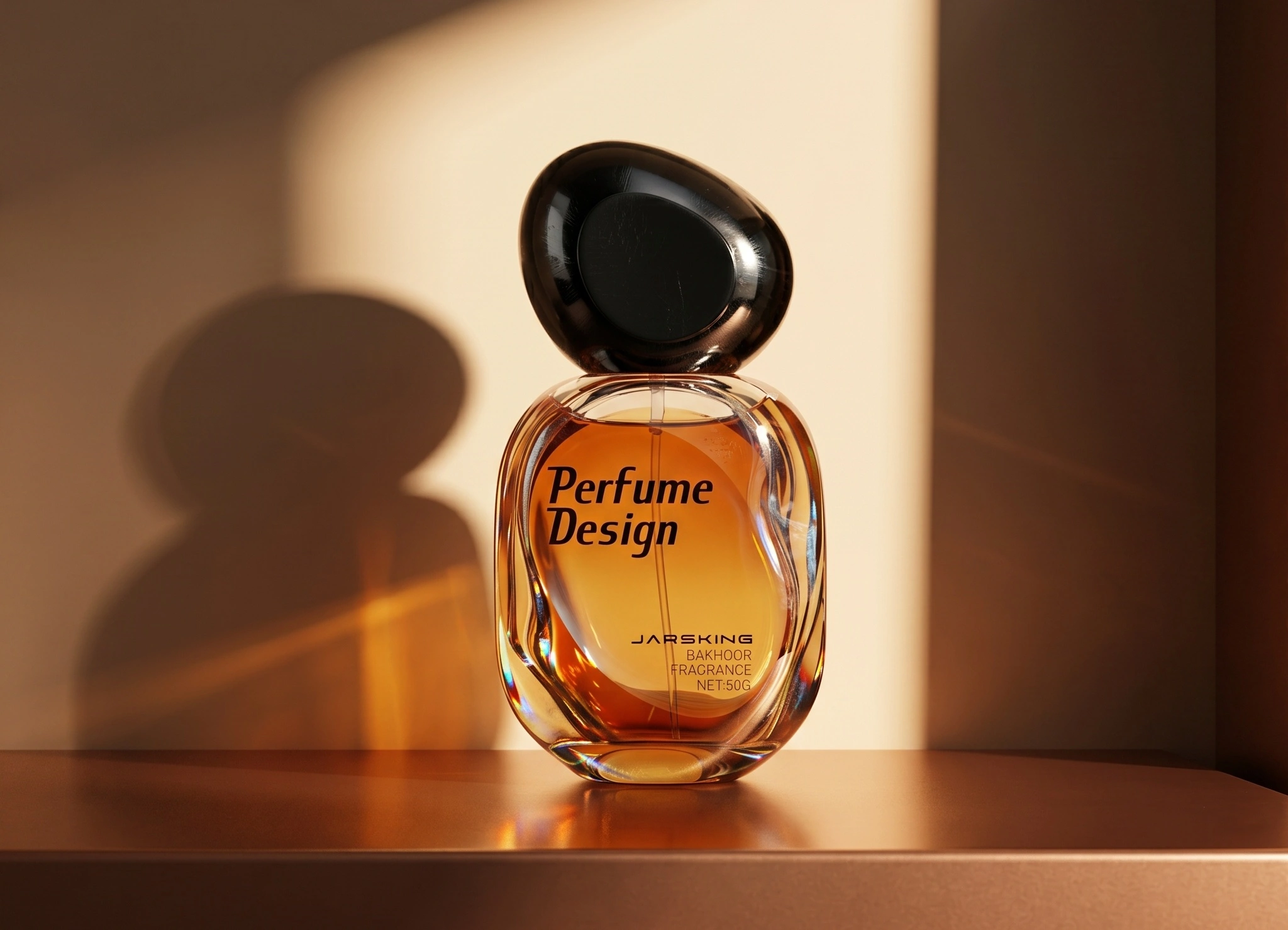


I’ve lost count of how many times I’ve watched a founder’s face change the moment they open a packaging quotation. There’s this brief pause, a little frown, and then the inevitable question: “Why is this so much more involved than what I saw on a stock catalog?” It’s not a naive question. It’s actually one of the smartest questions you can ask before you commit to a fragrance launch.
Let me tell you something that took me years of sitting in factory meetings to fully appreciate—custom perfume bottle complexity has almost nothing to do with arbitrary decisions and almost everything to do with engineering reality. A stock bottle already had its groundwork laid, by someone else, a long time ago. A custom bottle means you’re the one laying that groundwork, brick by brick, from a blank sheet of paper.
So let’s actually walk through what’s happening behind the scenes, because once you see it, the “why” stops feeling mysterious and starts feeling logical.
1. Custom Mold Development: Starting From Zero
Think about what it actually takes to go from a sketch on your desk to a functioning production mold. It’s not just “carving a shape into metal.” It’s industrial design work, 3D modeling iterations, prototype samples that get rejected and reworked, precision steel mold manufacturing, and then rounds of mold testing before the first usable bottle ever comes off the line.
A stock bottle skips all of this entirely. The mold already exists. It’s been used across thousands of previous orders from other brands over many years. When you go custom, you’re essentially commissioning a brand-new piece of industrial equipment that will only ever produce your shape, for your brand, exclusively. That’s a fundamentally different starting point, and it explains why mold development sits at the center of every serious conversation I’ve ever had with a client about custom packaging.
There’s also a psychological trap here worth naming: brands often fall in love with a shape before they understand what that shape demands from tooling. Sharp angles, deep undercuts, and unusual curvatures all make the mold harder to engineer and slower to validate. I always encourage clients to ask their engineering partner “what does this shape demand from tooling” before they get emotionally attached to a sketch. It saves heartbreak later in the process.
The testing phase deserves more attention than it usually gets, too. A newly cut mold rarely produces perfect bottles on the very first run. Engineers pour test shots, examine wall thickness, check for warping, and adjust the mold accordingly. This iterative back-and-forth is invisible to the brand but absolutely essential to getting a shape that’s both beautiful and structurally sound.
2. Premium Glass Materials: The Difference You Feel, Not See
Here’s something that surprises a lot of people—two bottles can look nearly identical in a product photo and still feel completely different in your hand. That difference usually comes down to glass grade and composition.
Luxury perfume brands tend to gravitate toward high-flint glass, crystal-clear glass, or thick-bottom glass construction. These materials aren’t chosen for vanity. They deliver genuinely better optical clarity, a more substantial weight when you pick the bottle up, and a refined appearance that standard glass simply can’t replicate.
Thick-bottom bottles are a particularly good example of hidden complexity. On the surface, a heavy base just looks like “more glass.” But in production, that extra mass changes how the glass cools, how it settles into the mold, and how consistently it forms without internal stress points. Manufacturers have to control the cooling process far more carefully than they would for a standard-weight bottle. It’s one of those details consumers never consciously notice but instinctively feel when they hold the finished product in their hand for the first time.
High-flint glass specifically removes the iron content that gives ordinary glass its faint greenish tint. This requires purer raw materials and more controlled melting conditions in the furnace. The payoff is a bottle that looks genuinely colorless and lets any liquid or embedded color inside show through with total clarity, which matters enormously for fragrances that use color as part of their visual identity.
3. Complex Bottle Shapes: Where Design Meets Physics
I want to be honest with you—glass doesn’t care how beautiful your mood board looks. It behaves according to physics, and complex shapes fight against that behavior in predictable ways.
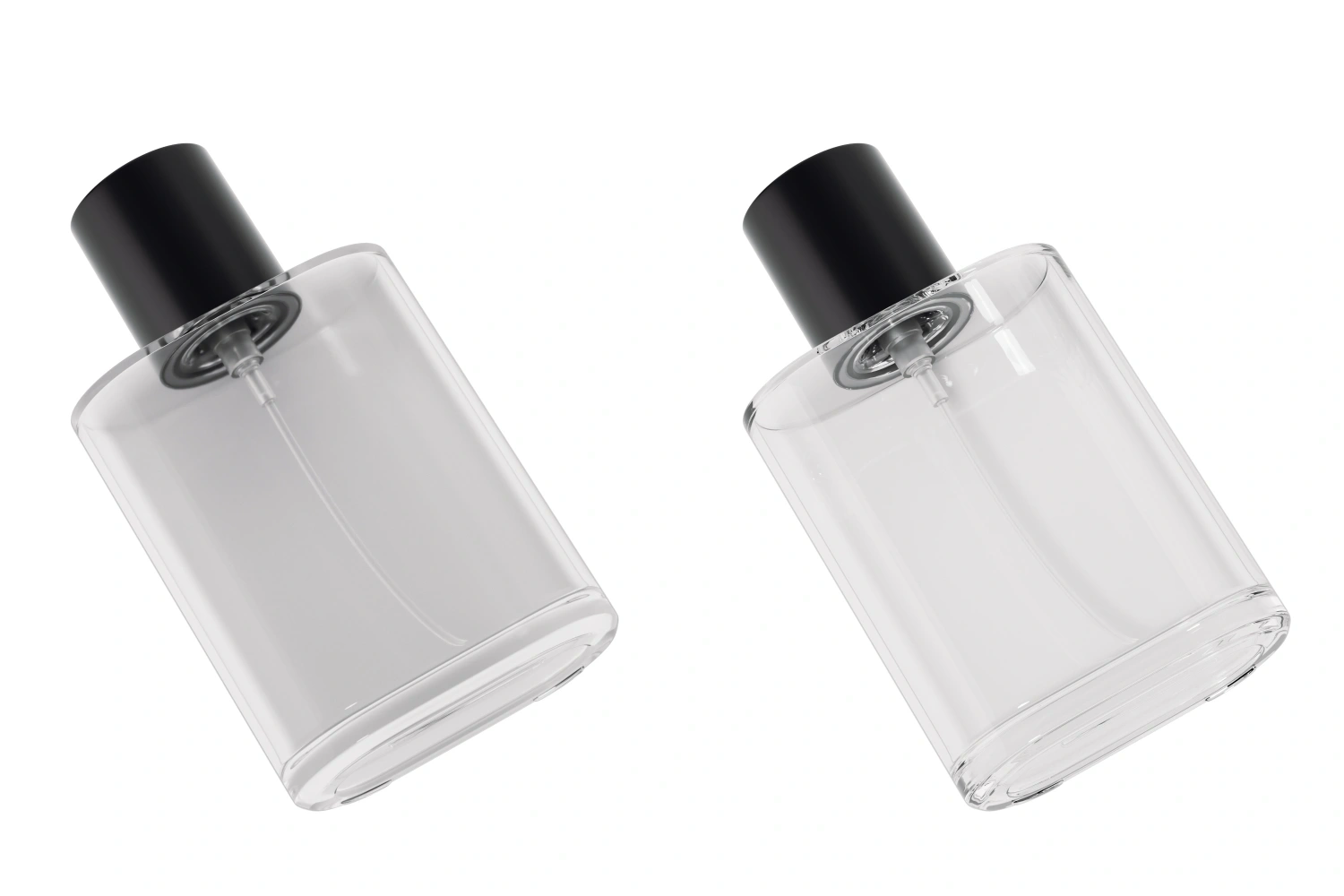
Simple cylindrical bottles are the easiest thing in the world to manufacture because molten glass flows evenly and cools predictably in every direction. The moment you introduce irregular silhouettes, heavy asymmetrical bases, curved surfaces, or sharp facets, you’re asking the manufacturing process to do something much harder. Air bubbles get trapped more easily in tight corners. Uneven wall thickness becomes a real risk, which can create weak points where the bottle is more prone to cracking. Mold engineers have to design venting and flow paths specifically tailored to that shape, and production teams need tighter process control to keep every single unit consistent with the last.
This is exactly why so many iconic perfume bottles that look deceptively “simple” from a distance are actually engineered with enormous care—the visual simplicity you see on the shelf is often the result of solving complexity that never reaches the customer’s eye.
Asymmetrical designs introduce an additional wrinkle during the cooling phase. Glass that cools unevenly, because one side of the bottle is thicker or shaped differently than the other, can develop internal stress that shows up later as unexpected cracking, sometimes weeks after the bottle has already left the factory. This is why experienced manufacturers insist on longer, more controlled annealing schedules for complex shapes rather than rushing bottles through standard cooling tunnels.
4. Decoration Processes: Layering Craftsmanship
Decoration is where a bottle stops being glass and starts becoming a brand statement, but it’s also where complexity multiplies fast if you’re not careful.
Common decoration techniques include:
Frosting for a soft, matte, tactile finish
Color spraying for bold, saturated exteriors
Gradient coating for that ombré, dimensional look
Hot stamping for crisp metallic logos
Silk-screen printing for detailed graphics
UV printing for vibrant, durable imagery
Electroplating for a mirror-like metallic shell
Laser engraving for permanent, precise detailing
Each one of these isn’t a simple add-on—it’s an entirely separate production stage with its own equipment, its own drying or curing time, and its own quality inspection checkpoint. Stack two or three of these together, say a frosted body with a hot-stamped logo and a gradient neck, and you’ve essentially run the bottle through three distinct production processes before it’s ready to ship. That layering is exactly what gives premium fragrance packaging its rich, tactile depth—but it comes from genuine manufacturing complexity, not decoration for decoration’s sake.
Frosting deserves special mention because it’s deceptively technical. Achieving an even, consistent matte texture across a curved surface requires careful control of the etching or spraying process, since any inconsistency shows up immediately as patchy or streaky patches once the bottle catches light. Electroplating, on the other hand, involves an entirely different chemical process, where a thin metallic layer is deposited onto the glass surface through an electrochemical bath. Getting that layer to adhere evenly, especially around curves and edges, takes real process expertise.
5. Premium Caps and Accessories: Finishing the Experience
Here’s a truth I’ve shared with dozens of clients: the cap makes or breaks the tactile impression of your bottle, often more than the glass itself does.
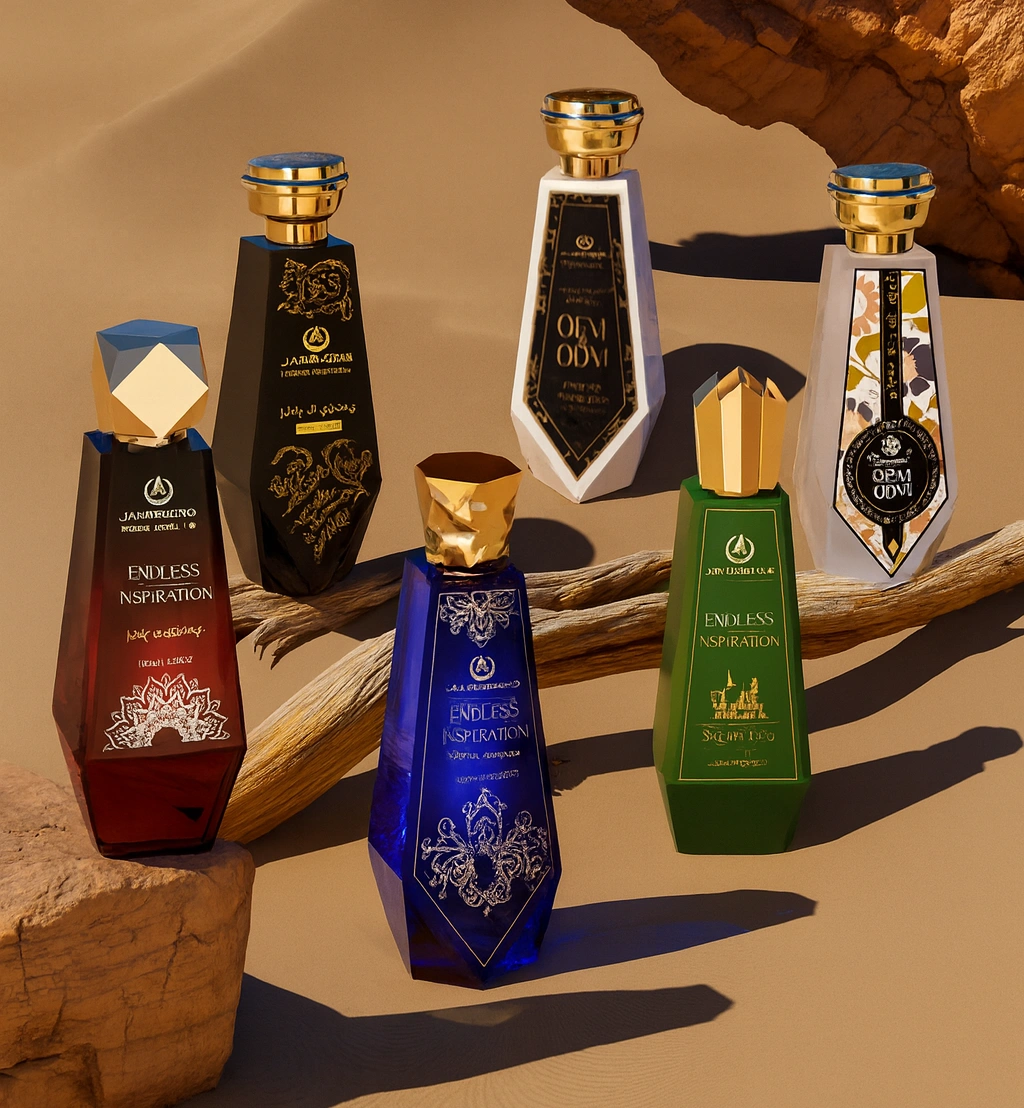
Luxury packaging frequently pairs the bottle with zamac caps, wooden caps, magnetic closures, aluminum caps, or decorative collars. These components go through their own manufacturing process entirely separate from the glass—metal casting, wood shaping and finishing, magnet embedding, precision fitting to ensure the cap seats perfectly on the neck every single time, with no wobble and no gap.
A heavy, well-machined cap communicates quality instantly, the moment someone picks it up in a store or unboxes it at home. That’s not accidental. It’s the result of choosing premium materials and engineering the cap-to-neck fit with real precision, which naturally adds complexity compared to a simple snap-on plastic cap that tolerates looser dimensional variance.
Wooden caps bring their own set of considerations, since natural wood expands and contracts slightly with humidity and temperature. Manufacturers need to account for this variability so the cap continues fitting properly months after it leaves the factory, not just on the day it’s assembled. Magnetic caps introduce yet another layer, since the magnets have to be embedded precisely enough that the cap snaps shut with a satisfying click every time, rather than an inconsistent or weak connection.
6. Low Order Quantities: Efficiency Favors Scale
Most manufacturing facilities are built and optimized around larger production runs. That’s simply how the equipment and labor scheduling work best.
When your order quantity is small, several inefficiencies compound: setup and changeover procedures have to happen more frequently relative to output, production lines can’t reach their optimal continuous rhythm, and material waste from startup and calibration runs represents a larger proportion of your total order. None of this is a manufacturer being difficult—it’s simply how industrial production behaves at smaller scale. Larger orders let the entire system run in its most efficient state, from mold usage to labor allocation to material handling and quality inspection throughput.
There’s a compounding effect worth understanding here too. Every additional decoration process you add to a small order multiplies this inefficiency, since each process has its own setup requirements. A small batch that goes through frosting, then hot stamping, then a final inspection pass accumulates setup time at every single stage, whereas a large batch spreads that same setup time across far more units.
7. Strict Quality Control: The Invisible Safety Net
Luxury fragrance packaging lives and dies by consistency, and that demands a level of scrutiny most people never see.
Manufacturers inspect bottle dimensions with genuine precision, checking that wall thickness and capacity remain consistent across thousands of units. They monitor weight consistency to catch any batch that drifted from spec during production. Neck finish accuracy gets checked because even a fraction of a millimeter of misalignment can cause a pump or cap to fit poorly, leading to leaks or an unsatisfying click when closing. Bubble defects, which happen when air gets trapped during glass formation, are screened out visually and sometimes with specialized backlighting equipment designed to reveal imperfections invisible to the naked eye under normal light.
Color consistency matters enormously for frosted or coated bottles, since even subtle shade variation between units looks unprofessional sitting side by side on a retail shelf. Spray performance gets tested to ensure the atomizer delivers a fine, even mist rather than a weak dribble or an uneven spray pattern that frustrates customers the very first time they use the product. And leak testing catches any seal failure before it ever reaches a customer’s bathroom shelf, protecting both the product inside and the brand’s reputation.
Every one of these checkpoints requires trained inspectors, specialized equipment, and time built into the production schedule. It’s tedious, meticulous work—but it’s the exact reason a luxury bottle feels trustworthy the first time you use it and every time after.
8. Packaging and Protection: Getting There in One Piece
Perfume bottles are genuinely fragile, and getting a beautifully finished bottle from the factory floor to a customer’s vanity table without a single chip or crack requires real engineering thought.
Foam inserts get custom-cut to hug the exact contour of your bottle shape, absorbing shock during transit and preventing any movement inside the shipping carton. Molded trays keep individual units separated and stable inside larger shipping cartons, preventing bottles from knocking against each other during the inevitable bumps of long-distance shipping. Individual cartons add another layer of structural protection and often double as the first branded touchpoint a customer sees before they even reach the bottle itself.
Luxury gift boxes go even further, combining protection with presentation, turning the unboxing moment itself into part of the brand experience. This layer of packaging engineering is easy to overlook because it happens entirely behind the scenes, but it’s directly responsible for the bottle arriving in pristine condition rather than shattered in transit after weeks at sea or in the back of a delivery truck.
9. International Compliance: Meeting Global Standards
If you’re planning to sell your fragrance beyond a single domestic market, your packaging has to satisfy regulatory requirements that vary significantly from region to region, and this is an area brands consistently underestimate until it becomes a problem.
This can include material safety requirements that verify glass and coating compositions are safe for consumer contact, heavy metal restrictions that limit trace elements sometimes used in colorants or metallic finishes, environmental regulations governing production emissions and material sourcing, and recycling guidelines that increasingly shape how packaging must be labeled or designed for end-of-life disposal in different countries.
Meeting these standards isn’t a box-ticking exercise. It requires actual compliance testing in accredited labs and careful documentation that proves your packaging meets the standards of every market you intend to enter. Brands that skip this step often discover, at customs, exactly how much of an oversight this can become, with shipments held or rejected entirely.
10. Brand Value and Market Positioning: The Real Payoff
Here’s the part I think gets underappreciated the most. A perfume bottle isn’t just a vessel that holds liquid—it’s a physical embodiment of everything your brand stands for.
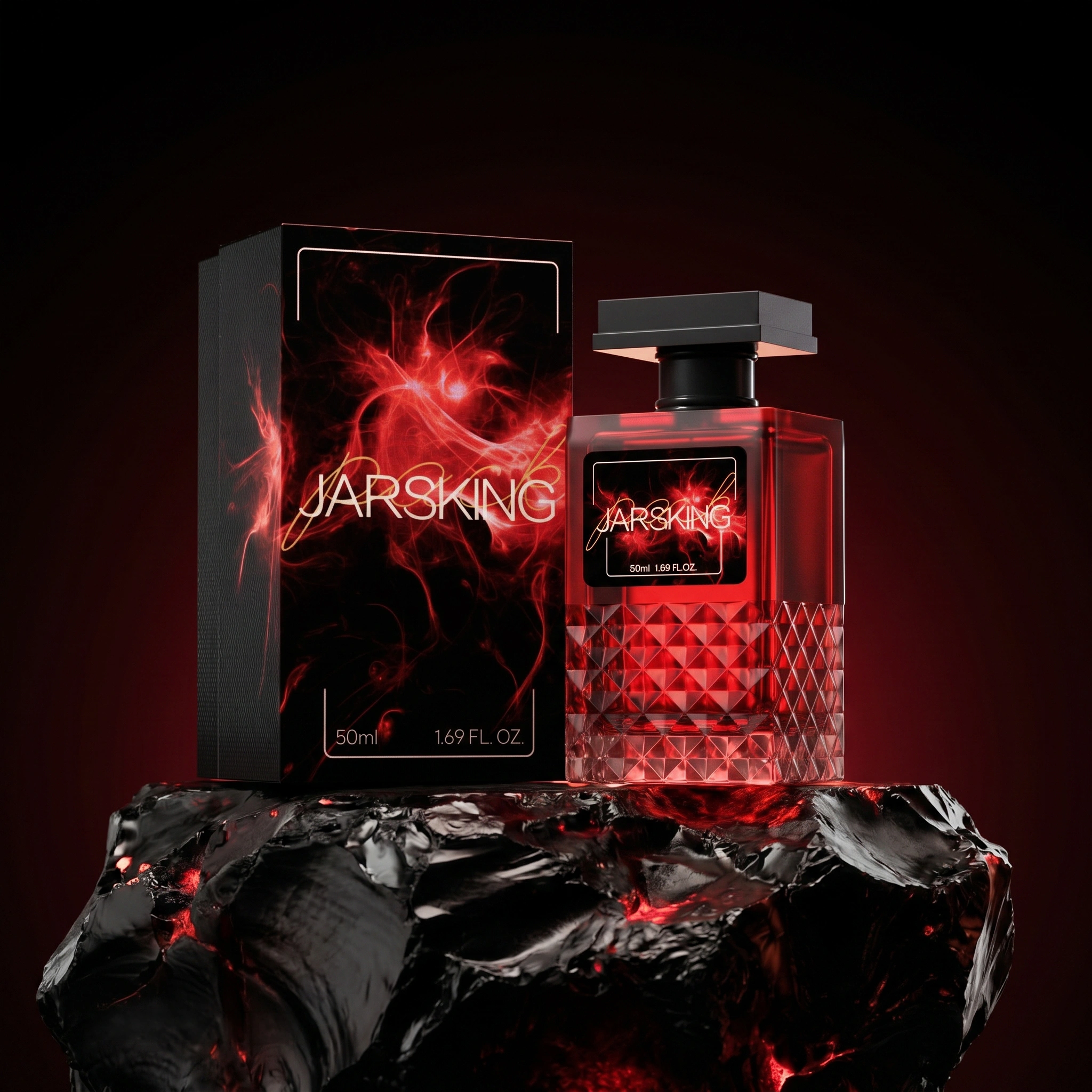
A genuinely custom bottle shape becomes something that’s uniquely yours, protectable and recognizable in a way a stock bottle simply can never be. It increases shelf appeal in a crowded retail environment where consumers make split-second visual judgments before they even pick up the product. It improves customer perception before they’ve even smelled the fragrance inside, shaping expectations purely through visual language. It supports the kind of positioning that a generic bottle could never justify. It transforms the unboxing experience into something customers want to photograph and share with others. And over time, it strengthens brand recognition, turning your silhouette into something people associate with you specifically, the way certain iconic bottle shapes have become instantly recognizable across the fragrance industry.
This is the piece I always ask brands to sit with. A distinctive bottle isn’t just a packaging decision—it’s a long-term brand asset that keeps working for you in ways a stock bottle simply can’t, reinforcing recognition every single time it’s seen, held, or photographed.
11. How Brands Approach These Tradeoffs
You don’t have to master every one of these dimensions simultaneously to build strong packaging. Consider these practical approaches:
Start with a modified stock mold instead of a fully custom design if you’re testing market fit
Simplify bottle geometry to reduce tooling and cooling complexity
Limit decoration to one or two premium finishes rather than layering many at once
Standardize caps and closures across your product line to reduce overall complexity
Work closely with an experienced manufacturer who can flag structural risks early in the design process
12. Bringing It All Together
Custom perfume bottles demand more because they genuinely involve more—more engineering, more material science, more inspection rigor, more compliance work, and more creative intention woven into every single stage. None of these factors exist in isolation. Mold complexity influences decoration options. Decoration choices influence quality control requirements. Quality control influences how confidently you can scale into new markets.
Understanding these layers doesn’t just satisfy curiosity—it gives you real leverage. When you understand exactly what’s driving each decision point, you can make smarter tradeoffs: simplifying a shape here, consolidating a decoration technique there, all while protecting the brand identity you’re actually trying to build.
If you’re standing at the beginning of a packaging project right now, ask yourself which of these factors matters most for your brand’s story. Is it the tactile weight of premium glass? The visual impact of a truly original silhouette? The reassurance of rigorous quality control? Knowing your priority helps every other decision fall into place more naturally—and that clarity is worth far more than any single spec sheet could ever capture.