
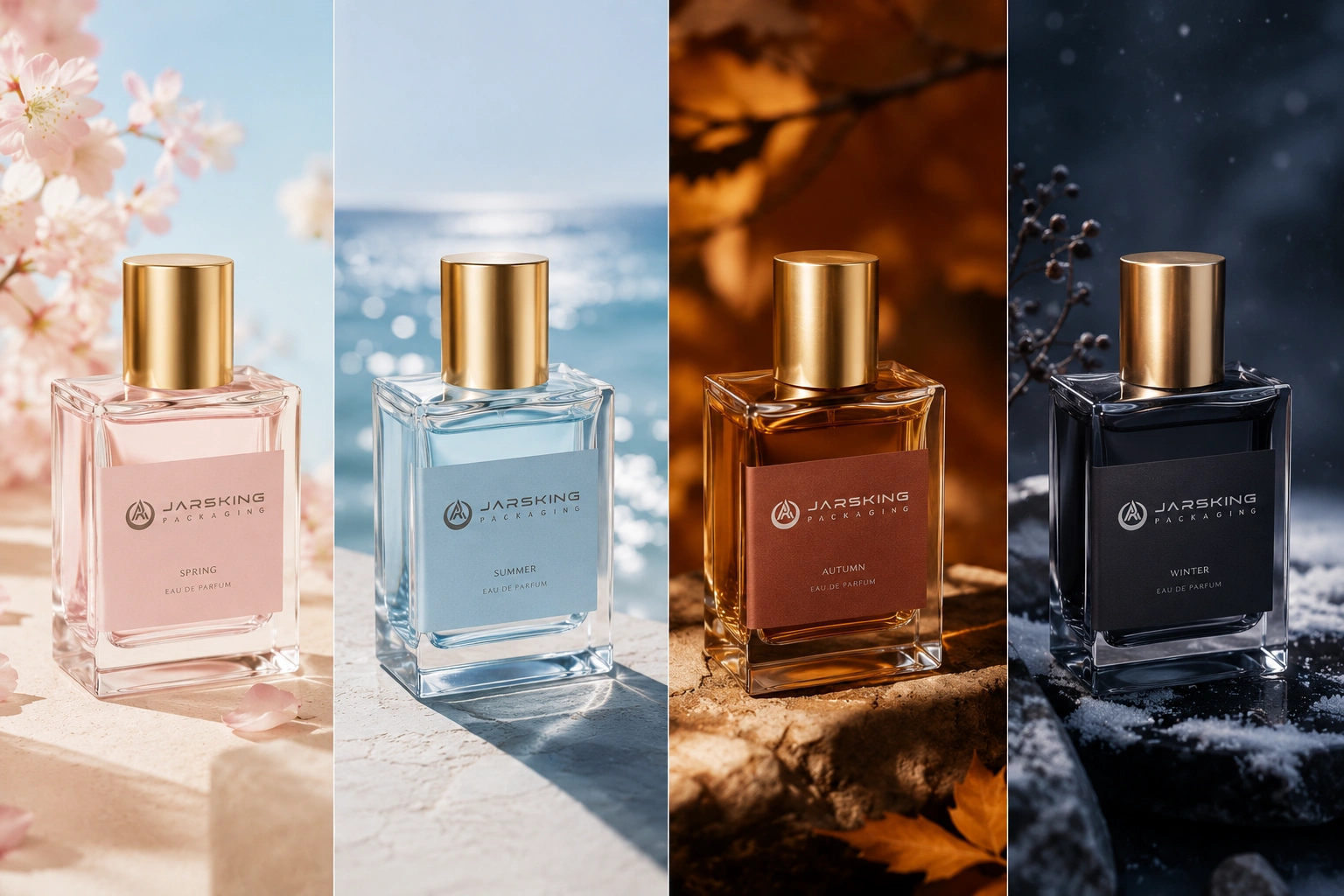


Think about the last time a smell threw you straight back into a memory.
Maybe it was a hint of jasmine that reminded you of a spring evening years ago. Maybe it was the salty-marine smell of sunscreen and ocean from a childhood summer. Or that familiar mix of vanilla and cold air that you only notice when you wrap a winter scarf around your neck.
Perfume doesn’t just sit on the skin; it lives inside seasons.
We accept that clothing is seasonal. Nobody argues with the idea that a wool coat belongs in January, not July. But if you look at how many fragrance brands still launch “one bottle fits all” designs and talk about “the only scent you’ll ever need,” you can feel the disconnect. In real life, people don’t use fragrance like that.
They rotate.
A fresh floral or green scent for spring.
Something citrusy, aquatic, or light for summer.
Woods and spices for early autumn evenings.
Richer, deeper, more intense notes when the cold really hits.
At the same time, people respond to how a fragrance looks just as much as how it smells—especially now that so many purchases happen online. The bottle, the decoration, the color, the materials, even the way the cap feels when you pull it off… all of that is already setting expectations long before the first spray.
So if you’re creating perfume today—whether you’re a brand, designer, or packaging manufacturer—you can’t ignore seasonality. The scent and its packaging need to work like a pair: telling the same story from different senses.
This blog walks through:
How fragrance preferences naturally shift from spring to winter.
How packaging design can align with these seasonal moods.
What this means for sustainability, refill systems, and the future of fragrance packaging.
1. Why We Don’t Wear the Same Scent All Year
There are two big reasons: one is physical, the other emotional.
Temperature changes how perfume behaves
Fragrance molecules don’t act the same way in 5 °C and 30 °C. In hot weather, perfumes evaporate faster and project further. A formula that smells cozy and comforting in winter can easily become suffocating in August. In cold weather, the opposite happens: very light compositions can disappear under coats, scarves, and dry air. You might smell it in the first five minutes, then nothing.
So:
In spring and summer, people tend to gravitate towards lighter, airier, fresher scents that don’t blow up in the heat.
In autumn and winter, they are more open—even eager—for denser, richer, longer-lasting fragrances that cut through layers and stick around.
The same juice can feel wrong or right depending on the season.
Each season carries its own emotional script
Beyond temperature, there’s the emotional side. Each season comes with its own set of images and feelings:
Spring feels like new beginnings, fresh routines, and clean air.
Summer feels like freedom, water, travel, and long evenings outside.
Autumn feels like maturity, reflection, harvest, and cozy interiors.
Winter feels like celebrations, long nights, indulgence, and intimacy.
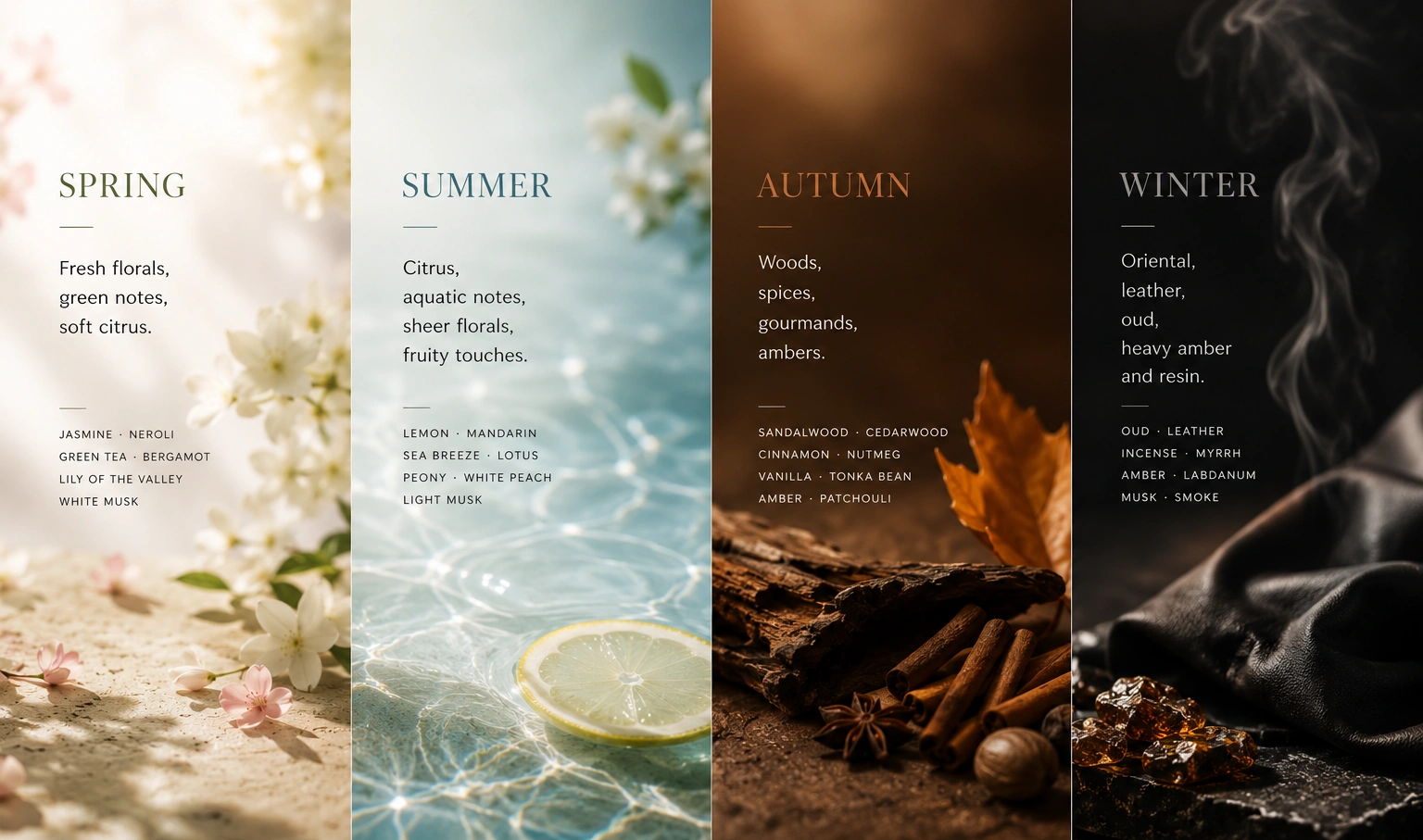
Fragrance families very naturally map onto these “scripts”:
Spring → fresh florals, green notes, soft citrus.
Summer → citrus, aquatic notes, sheer florals, fruity touches.
Autumn → woods, spices, gourmands, ambers.
Winter → oriental, leather, oud, heavy amber and resin.
Once you see it, you can’t unsee it.
The rise of the “scent wardrobe”
Most real fragrance lovers don’t have just one perfume; they have a small scent wardrobe. They may not use that term, but that’s how they behave.
A typical wardrobe might look like:
1–2 light, uplifting scents for spring.
1–2 bright, refreshing, “I could spray this on a hot day” scents for summer.
1–2 warm, woody, spicy scents for autumn.
1–2 intense, lasting perfumes for winter evenings and holidays.
Some people go further and break it down into micro-seasons:
Early spring vs late spring.
Late summer vs early autumn.
The festive holiday period vs the quiet depth of winter.
For brands, this is gold. It means you’re not fighting to be “the one scent forever,” which is unrealistic. You’re aiming to own specific seasonal roles in people’s lives: my spring morning scent, my summer beach scent, my autumn office scent, my winter party scent.
Packaging should help the consumer instantly recognize which role a fragrance could play.
2. Spring: Fresh Starts and Bottles That Breathe
How people feel in spring
After months of cold and heavy clothes, most people are mentally ready to switch into “light mode.” They want to feel fresher, cleaner, more energized.
In fragrance terms, that usually means:
Less sweetness, more freshness.
A sense of “air” and space.
A stronger connection to nature—flowers, grass, rain, gardens.
Anything that feels dark, thick, or sticky tends to get pushed to the back of the shelf around this time.
What spring fragrances smell like
Spring perfumes often live in the floral and green families with a bright but soft citrus touch. You’ll frequently see:
Top notes like bergamot, lemon, mandarin, pear, and green tea. These give a sparkling, crisp opening without becoming aggressive or bitter.
Heart notes like rose, peony, lily of the valley, jasmine, and cherry blossom. Think “blooming garden,” not “monolithic flower bomb.”
Base notes like white musk, light cedar, soft sandalwood, and a very gentle amber. These keep the fragrance from feeling too thin while preserving lightness.
The overall impression? Something like a thin, breathable trench coat for the senses. It’s definitely there, but it lets air through.
How spring packaging should feel
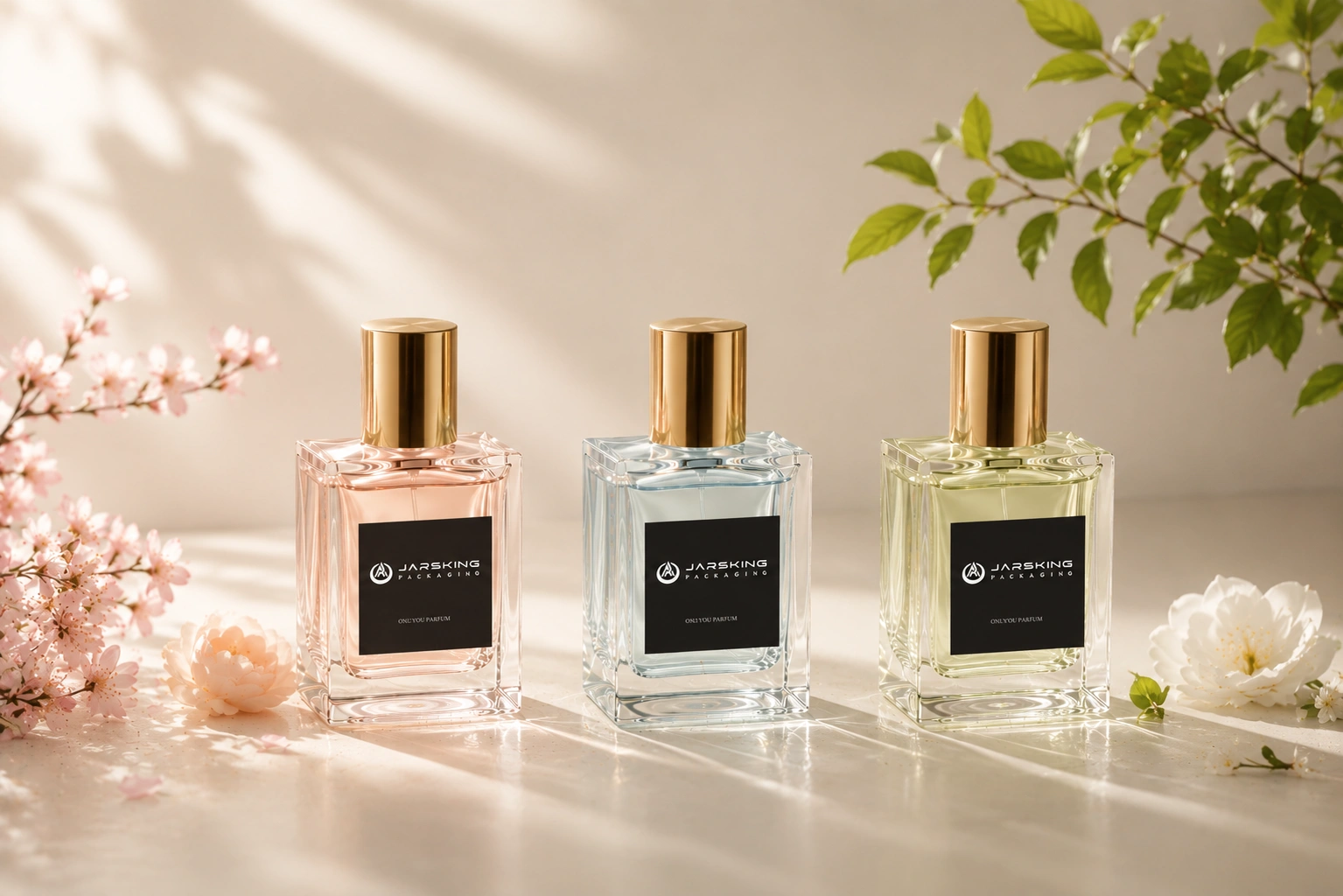
Visually and physically, spring fragrance packaging almost always leans toward softness and clarity.
Colors:
Pastel pinks, lilacs, mint greens, powder blues, soft yellows, and plenty of white space. These shades instantly suggest something gentle, floral, and calming.
Glass:
Clear or lightly tinted glass (pale pink, soft green, barely blue) so the liquid is visible. Transparency and lightness in color support the idea of a clean, honest, “nothing to hide” perfume.
Decorative elements:
Embossed petals, engraved blossoms, botanical drawings, petal-shaped caps, and rounded silhouettes. These cues visually echo the spring ingredients and themes.
Sustainability signals:
Spring is a great moment to introduce recycled glass, FSC-certified cartons, water-based inks, and lighter structures. The story of “fresh beginnings” and “nature” makes eco-friendly choices feel natural rather than forced.
For a brand, spring is also the ideal time to launch a new bottle platform—especially a refillable or more eco-forward one—that will anchor the fragrance line and carry through the rest of the year.
3. Summer: Heat, Water, and Travel-Friendly Design
How people feel in summer
Summer is the season that punishes the wrong perfume choices. High temperatures amplify everything. Smells that felt cozy in February suddenly feel suffocating in July.
Typical summer expectations:
“I want something that feels like a cold shower or a breeze.”
“I don’t want to choke myself—or anyone else—out in the heat.”
“I need a bottle I can throw into a bag without anxiety.”
On top of that, summer is peak time for travel and impulse buying, especially at airports. Packaging has very little time to communicate “this is the right scent for hot weather” on a shelf or a tiny thumbnail.
What summer fragrances smell like
The winners here tend to be:
Citrus-heavy.
Watery or aquatic.
Clean, with sheer florals or light woods.
You’ll often find:
Top notes of grapefruit, lemon, lime, orange, or yuzu—bright, juicy, and often layered for a natural-feeling citrus.
Heart notes with marine and ozonic accords (sea breeze, salty air), neroli, water lily, coconut water, tropical white florals.
Base notes built around driftwood, vetiver, light musk, and soft amber. These offer texture and a bit of warmth without heaviness.
Ideally, a summer perfume should feel like a breeze or a sip of iced water, not like a thick dessert.
How summer packaging should feel
Summer packaging needs to do two things: look cool and feel practical.
Colors:
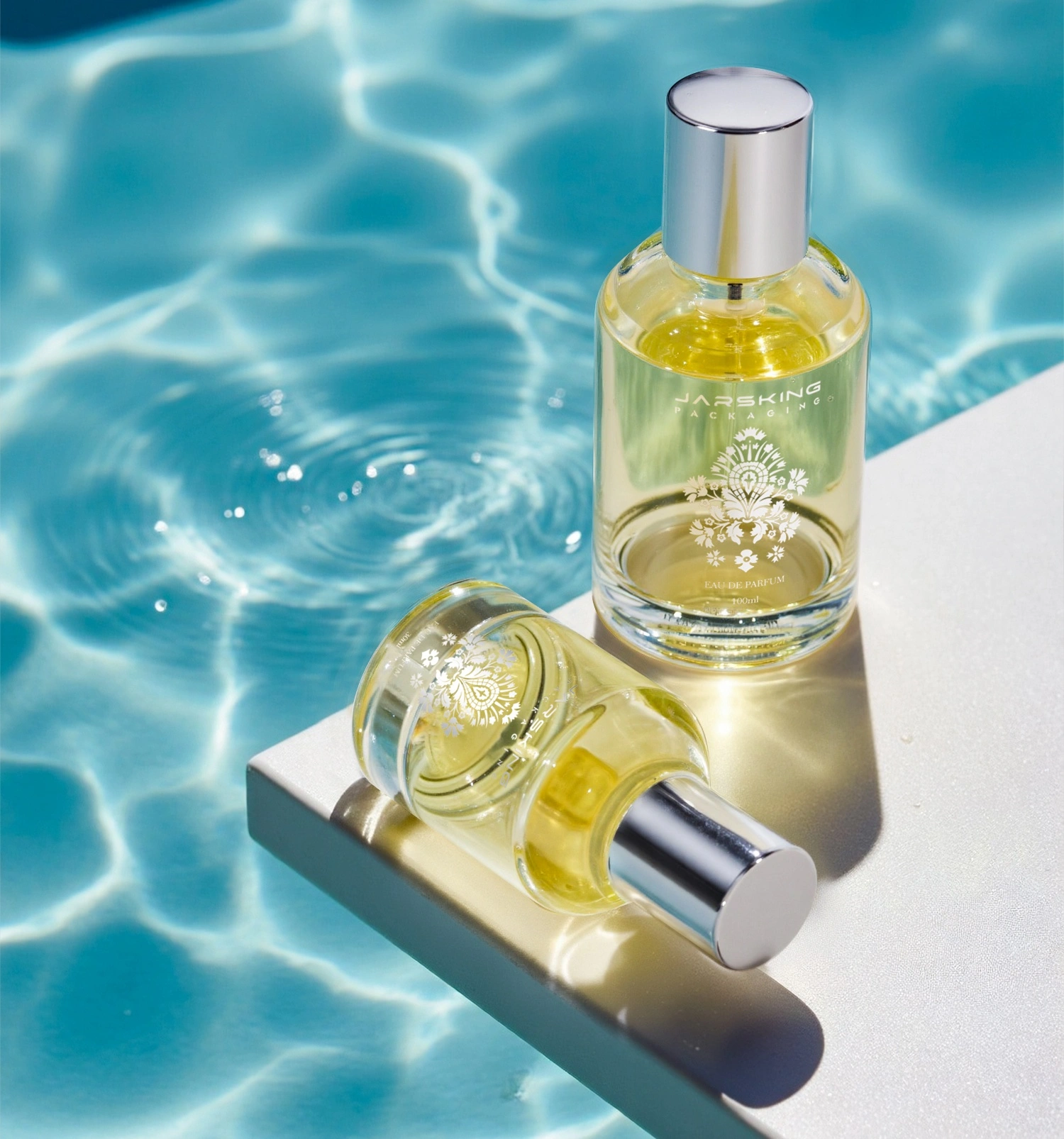
Aqua, turquoise, deep marine blue, bright sky blue, clean white, with occasional coral or sand tones. This palette screams “water, sky, coast, holiday” before anyone reads a single word.
Finishes:
Frosted or semi-frosted glass immediately gives a “chilled” feeling, like condensation on a cold drink. Smooth, matte textures feel good in a warm hand and visually cool things down.
Formats:
Slim bottles, 10–30 ml travel sprays, rollerballs, robust caps, leak-resistant pumps. Everything about the structure should say “throw me in a tote and let’s go.”
Design language:
Minimalist layouts, simple typography, clean lines, and plenty of blank space. Visually, this matches the idea of spaciousness and lightness. It also photographs well in modern “clean aesthetic” social feeds.
There’s a technical angle too: many summer fragrances rely heavily on citrus, which is sensitive to light. Thoughtful brands often use UV-protective coatings, slightly tinted glass, or more protective boxes to preserve quality—without sacrificing that clear, fresh look.
4. Autumn: Woods, Spice, and Comfortable Weight
How people feel in autumn
When the air gets cooler and days get shorter, people start to look for warmth and depth again. Summer’s crisp citruses can suddenly feel a bit too simple. Autumn invites a different kind of complexity.
The mood is:
More introspective and mature.
Rooted in images of falling leaves, forests, harvests.
A little nostalgic—books, old leather, coffee, wine, fireplace evenings.
This is when many perfume lovers switch their “signature” or bring out scents they wouldn’t touch in summer.
What autumn fragrances smell like
Autumn perfumes are often built around woods, spices, and gourmand touches.
Common combinations:
Top notes such as cardamom, cinnamon, saffron, clove, ginger, fig, or apple. These immediately bring to mind autumn kitchens and markets.
Heart notes featuring tobacco leaf, iris, patchouli, cedarwood, and sometimes darker florals like dried rose or osmanthus.
Base notes with vanilla, tonka bean, sandalwood, amber, cocoa, and moss, giving a rounded, cozy, almost edible warmth.
The goal is a scent that feels like a soft, well-worn sweater: comforting, but still with personality.
How autumn packaging should feel
Autumn packaging leans into earth, texture, and quiet luxury.
Colors:
Amber, caramel, cognac, burgundy, rust orange, chocolate brown, forest green. These anchor the fragrance visually in a world of woods, harvests, and warm interiors.
Materials and finishes:
Uncoated or linen-textured papers, soft-touch coatings, prominent embossing and debossing. You want boxes people instinctively run their fingers over.
Wood and natural elements:
Wooden caps, wood-textured sleeves, or even bamboo accents align perfectly with woody scent profiles and with a broader move toward natural materials.
Vintage and heritage cues:
Apothecary-style bottle shapes, classic label frames, serif typography, slightly aged metallic detailing. Autumn is where nostalgia and “story-rich” design feel especially at home.
From a commercial point of view, autumn is also the staging ground for the holiday season. Many brands introduce more elaborate rigid boxes, early gift sets, and limited designs here so they can roll seamlessly into winter campaigns.
5. Winter: Intense Scents, Heavy Glass, and Holiday Theatre
How people feel in winter
Winter is when fragrance goes into high drama. You’ve got holidays, New Year, Valentine’s Day, and more indoor events packed into a few months. It’s also when people wear more layers and the air is colder and drier.
In this season, many consumers are actively looking for:
Strong, long-lasting fragrances that don’t disappear under coats.
Rich, luxurious compositions that feel “worth it” for evening wear.
Beautiful, gift-ready objects they’re proud to give and display.
If spring and summer are about freshness, winter is about presence and indulgence.
What winter fragrances smell like
Winter scents often live in the oriental, woody, leather, and resin families.
Typical profiles:
Top notes: black pepper, incense, rum or whisky accords, dark fruits like plum or blackcurrant. These announce themselves straight away.
Heart notes: rose absolute, leather, oud, labdanum, smoky or incense notes. Dense, powerful, and complex.
Base notes: vanilla, benzoin, amber, heavy musks, sandalwood, strong cedar—built for projection and staying power.
The fragrance should feel like it has a “voice” even in cold air and crowded rooms.
How winter packaging should feel
Winter packaging is where brands usually let themselves be bold.
Colors:
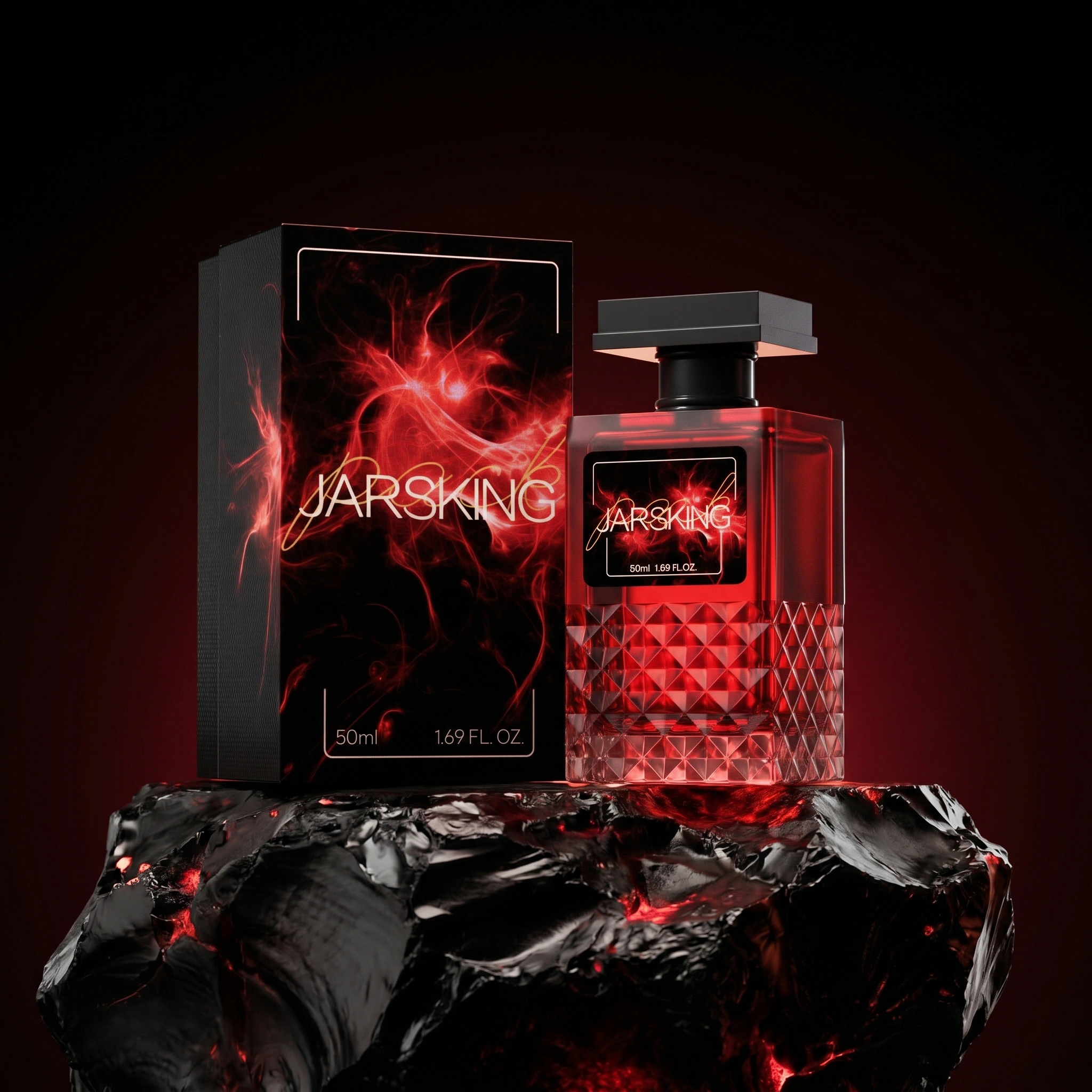
Black, midnight blue, emerald green, deep red, often combined with gold or silver. This palette communicates evening, glamour, and special occasions instantly.
Metallics and high-gloss:
Gold and silver foils, hot stamping, metallic coatings, electroplated caps, sometimes subtle glitter or holographic effects. When executed thoughtfully, this doesn’t feel cheap; it feels festive.
Weight and form:
Thicker glass, solid bases, faceted or sculptural shapes. Lifting the bottle should feel satisfying—almost like lifting a small crystal or a piece of art.
Collector’s editions:
Special shapes, jewel-like caps, numbered runs, artist collaborations, and elaborate gift coffrets. These play directly into the gifting mindset and the desire for limited, collectible objects.
In winter, the line between fragrance and art object becomes especially thin—and that’s where packaging can really shine.
6. Aligning Fragrance, Packaging, and Season
So how do you make all of this actionable?
A useful way to think about it is: don’t let your packaging and your juice tell different seasonal stories. They should support each other.
Some easy-to-remember pairings:
Fresh, light florals → pastels, translucent glass, floral details, lighter structures.
Citrus and aquatic scents → blues and whites, frosted glass, minimalist design, travel-friendly formats.
Woods, spices, and gourmands → earth tones, textured papers, wood accents, heritage cues.
Oriental, oud, leather, resins → dark colors, jewel tones, heavy glass, metallic finishes, rigid gift boxes.
It’s not that you can never break these “rules.” Sometimes subverting them can be interesting. But if the scent smells like winter and the bottle looks like a spring water mist, don’t be surprised if customers feel confused or disappointed, especially when buying online.
7. Using Seasonal Editions Smartly (Without Creating Chaos)
You might be thinking: this all sounds great, but does it mean I need four new formulas and four new bottles every year?
Not necessarily.
One of the most efficient approaches is to:
Keep your core fragrance stable.
Use seasonal packaging and formats to tell different stories around that core.
Introduce flankers and higher concentrations selectively where it makes sense.
Some practical ideas:
Seasonal sleeves or jackets over a standard box: floral for spring, ocean/sky for summer, foliage for autumn, stars and metallic patterns for winter.
Seasonal caps: wood for autumn, metal or jewel-tone caps for winter editions, all using the same neck finish.
Seasonal sets and formats: travel kits in summer, discovery sets in autumn, deluxe gift coffrets in winter, simple single bottles in spring.
This gives you room to play with seasonality and storytelling, without wrecking your production schedule or inventory.
8. Sustainability: The Layer That Must Run All Year
Seasonality is visible. Sustainability is becoming non-negotiable underneath everything.
Customers, especially younger ones, are watching what brands do, not just what they say. Regulations in many markets are tightening around recyclability, recycled content, and waste. And in premium segments, sustainable packaging is increasingly seen as part of good taste, not as a downgrade.
What this looks like in practice:
Refillable bottles and replaceable inner cores, so the outer object—the heavy glass, metal, or decorative shell—stays while only the inner cartridge changes.
Higher recycled content in glass and plastics, thoughtfully balanced against clarity, color, and performance.
Mono-material or easy-to-disassemble designs for caps, pumps, and cartons so recycling actually happens in the real world.
Lightweighting glass and boxes where possible, while using clever form and texture so the product still feels luxurious in the hand.
You can angle the same sustainable platform differently with each season:
Spring & summer: talk about freshness, reduced footprint, connection to nature.
Autumn: emphasize longevity, “objects made to last,” and natural materials like wood and bamboo.
Winter: present refills and circular design as smart, modern luxury—“you invest once in a bottle that stays with you, and refills keep the story going.”
In other words, sustainability should feel like part of the brand’s intelligence and elegance, not a compromise.
A Quick Brand Playbook
If you’re working on your own fragrance line, here’s a simple process you can follow:
Define the seasonal role of each fragrance: spring daily, summer travel, autumn signature, winter evening, or all-season classic.
Check alignment: do the notes, concentration, and packaging all point to the same season and function? If not, adjust.
Plan packaging on three levels—bottle, box, and shipping—so they tell one coherent story and meet your ESG and logistics needs.
Use seasonal editions strategically to test new materials, refill systems, or digital experiences without over-committing.
Let sustainability sit underneath everything, with clear, simple communication that helps consumers understand how to reuse, refill, or recycle.