
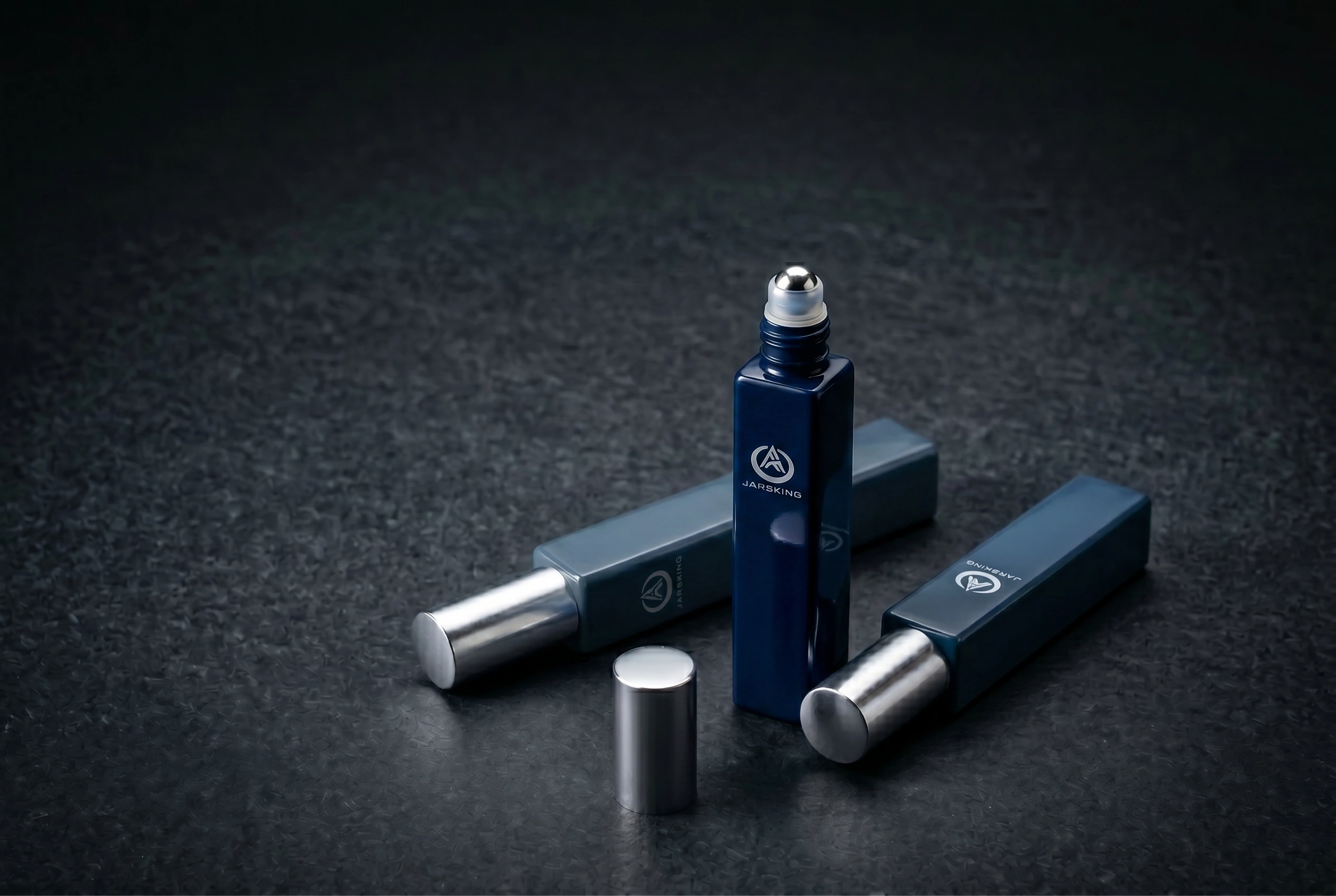


There’s something almost meditative about applying a rollerball perfume. You uncap the small bottle, press the cool glass or metal ball against the inside of your wrist, and drag it slowly across your skin. The fragrance blooms almost immediately — quiet, warm, intimate. It doesn’t announce itself to the room the way a spray does. It whispers instead of shouts. And if you’ve ever wondered why that experience feels so fundamentally different from picking up a traditional spray bottle and spritzing away, the answer lies in some genuinely fascinating science.
Rollerballs are often dismissed as the “travel size” option, the cheaper alternative, the thing you throw in your purse for touch-ups. But there’s a lot more happening in that tiny bottle than most people realize. The way the ball transfers liquid, the way oil interacts with your skin, the way your body heat takes over from there — it’s a whole chain of physical and chemical events that unfolds every time you reach for that little roller. Understanding it doesn’t make the experience less magical. If anything, it makes it more so.
So let’s pull back the curtain on what’s really happening when you roll on a fragrance — from the engineering of the applicator itself, all the way down to the molecular level of your own unique skin chemistry.
1. The Ball Itself: Tiny but Surprisingly Sophisticated
Let’s start at the most literal level: the ball. It seems simple enough — a small sphere sitting in the mouth of a bottle, rolling when pressed against a surface. But the engineering behind a well-made rollerball applicator is more precise than it looks.
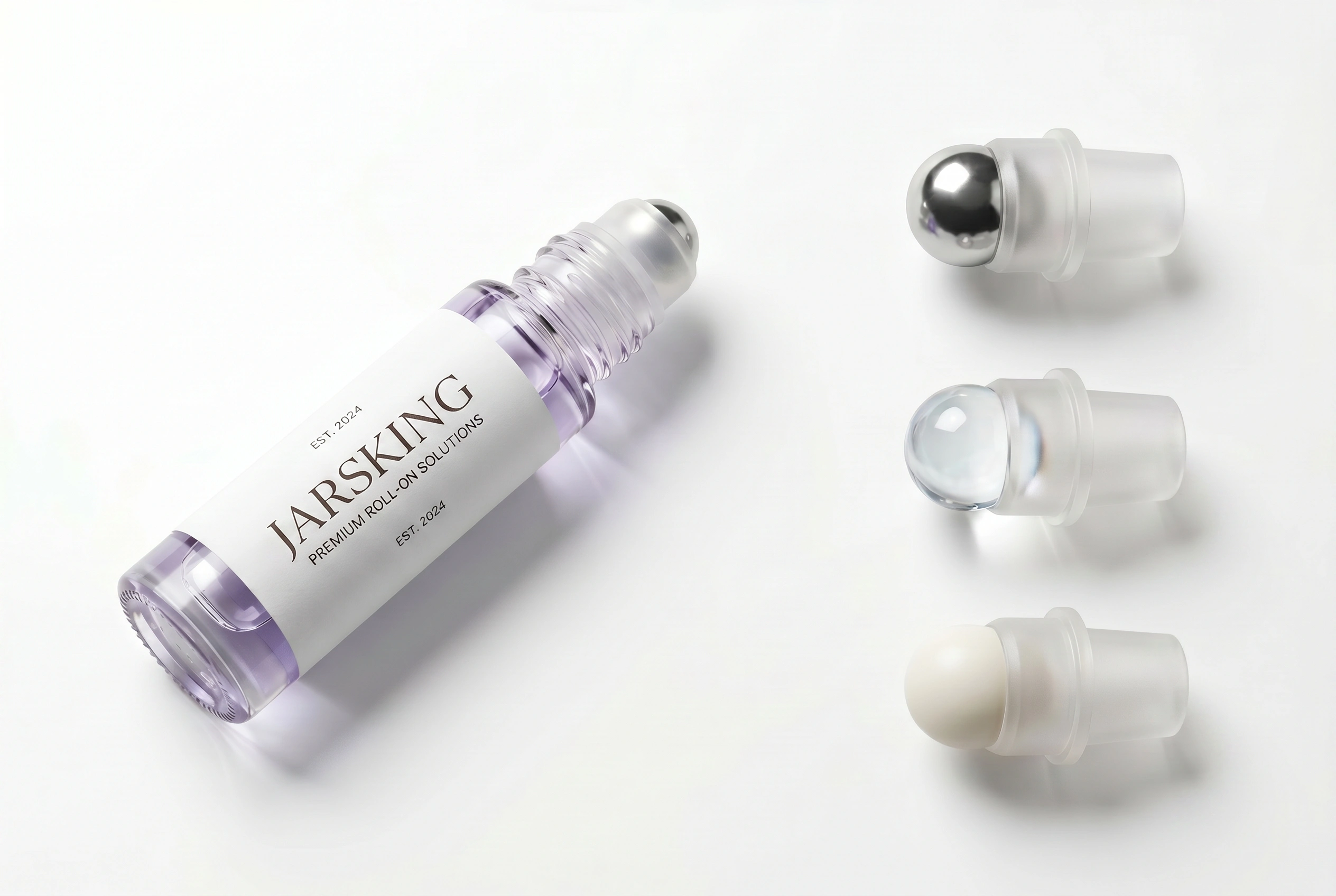
The ball is typically made from stainless steel, glass, or sometimes a hard plastic. Each material has its tradeoffs. Glass balls are smooth and luxurious against the skin, and they’re chemically inert, meaning they won’t react with the fragrance oil inside. Stainless steel balls are durable and give a satisfying cool-to-the-touch sensation. The choice of material isn’t purely aesthetic — it affects how the ball rolls, how much liquid it picks up, and how evenly it deposits that liquid on your skin.
The ball sits inside a socket — a precision-engineered housing that holds it snugly enough to prevent leaking, but loosely enough to allow free rotation. The tolerances here are genuinely tiny. If the gap between the ball and its housing is too large, the oil leaks out when the bottle is tipped. Too small, and the ball won’t roll smoothly, delivering a patchy, uneven application. Getting that gap right — typically measured in fractions of a millimeter — is what separates a quality rollerball from a frustrating one.
When you press the ball against your skin and drag it, a few things happen simultaneously. Gravity and the downward pressure you apply push oil up through the socket and onto the surface of the ball. As the ball rotates, it carries that oil forward and deposits it in a thin, even film on your skin. It’s a beautifully low-tech system — no pumps, no valves, no aerosol propellants — but it works with remarkable consistency when built well.
One underappreciated aspect of this mechanism is the controlled dosage it provides. When you spray a traditional perfume, you’re releasing a mist and hoping some of it lands where you want it. With a rollerball, you are physically directing the fragrance to a specific spot in a specific amount. This precision isn’t just convenient — it actually changes the chemistry of what happens next, because the fragrance is concentrated exactly where your body can do the most with it.
2. Oil vs. Alcohol: The Formula That Shapes Everything
Here’s where the science gets really interesting, and where rollerballs diverge most fundamentally from spray perfumes. It’s not just the application method that’s different — the fragrance itself is usually formulated differently for each format.
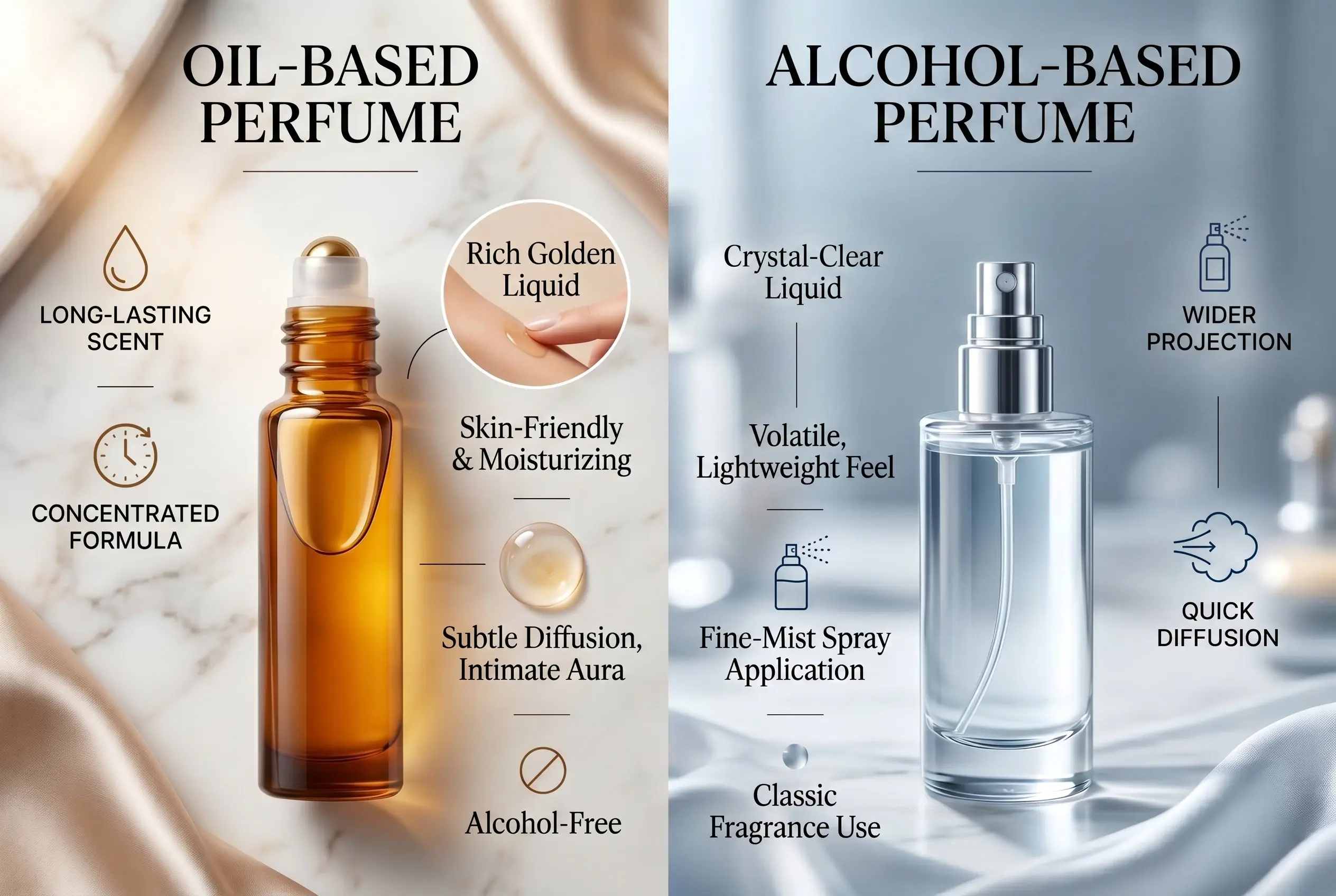
Traditional spray perfumes are alcohol-based. The fragrance concentrate — the actual aromatic compounds — is dissolved in ethanol, which typically makes up 70–90% of the formula. Alcohol is used for good reasons: it’s a highly effective solvent for fragrance compounds, it’s preservative (meaning it prevents microbial growth), and it evaporates quickly, which is precisely the point. When you spray an alcohol-based perfume onto your skin or clothes, the alcohol evaporates almost instantly, and as it does, it carries those fragrance molecules up into the air around you. This is what creates sillage — that trail of scent you leave as you walk through a room.
Rollerballs, on the other hand, are typically oil-based. The fragrance concentrate is mixed into a carrier oil — jojoba, fractionated coconut oil, and sweet almond oil are among the most common choices — which serves as the delivery medium. Oil behaves very differently than alcohol on skin. It doesn’t evaporate. Instead, it absorbs slowly into the outer layers of your skin, and as it does, it releases fragrance molecules gradually and continuously over many hours.
This one difference — oil versus alcohol — is responsible for nearly everything that distinguishes the rollerball experience from the spray experience. Oil-based fragrances tend to have more staying power on skin, often lasting six to twelve hours compared to four to six for many alcohol-based sprays. They project differently too: rather than radiating outward into a room, they create what fragrance enthusiasts often call a “skin scent” — something detectable only when someone gets close to you.
There’s also the question of how each base affects the fragrance notes themselves. Perfumers traditionally describe fragrances in terms of top notes (what you smell immediately after application), heart notes (what emerges after the top notes fade), and base notes (the deep, lasting foundation of the scent). In an alcohol-based spray, this progression is often dramatic and fast — the top notes can disappear within twenty minutes as the alcohol whisks them away. In an oil-based rollerball, the progression is slower and more gradual. The top notes stick around longer. The whole arc of the fragrance unfolds more like a slow story than a fast conversation.
Some people love the immediacy of sprays for this reason. Others find the gentler unfolding of a rollerball more satisfying, more nuanced. Neither is objectively better — it’s a matter of what you want from a fragrance experience.
3. Pulse Points: Your Body Is the Diffuser
Now the oil is on your skin. What happens next is where your own biology takes over — and it’s genuinely elegant.
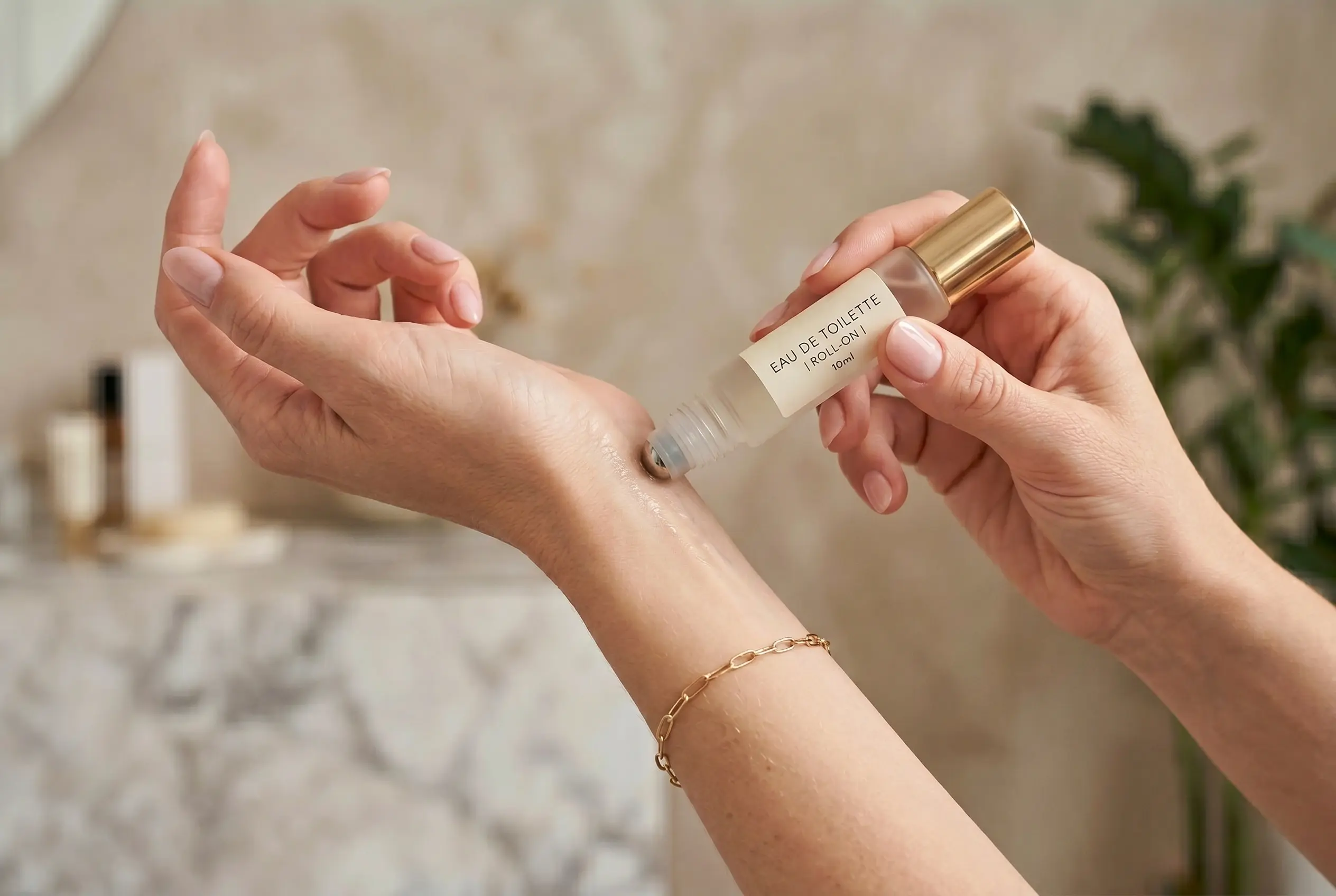
Fragrance diffusion is driven by heat. The warmer the surface that fragrance sits on, the more the aromatic molecules evaporate into the air and reach your (and others’) olfactory receptors. This is why perfumers and fragrance enthusiasts universally recommend applying scent to pulse points — the wrists, the inner elbows, the base of the throat, behind the ears, the back of the knees.
Pulse points are locations on the body where major blood vessels run close to the surface of the skin. At your wrist, you can literally feel your radial artery pulsing beneath the surface. The blood flowing through these vessels is warm — close to your core body temperature — and that warmth transfers to the skin above. This makes pulse points consistently warmer than, say, the back of your hand or your forearm, which means fragrance applied there will diffuse more actively and consistently.
Think of it like this: your body is essentially a slow-release diffuser, and pulse points are the vents. Placing fragrance there lets your own circulation do the work of gently pushing the scent outward over the course of the day. The effect is subtle and continuous rather than bold and front-loaded, which is a big part of why rollerball scents feel so intimate and personal.
There’s also an interesting argument for applying rollerball perfume to the base of the throat and décolletage — areas that are often left exposed and generate warmth from proximity to the neck’s blood supply. When you move, lean toward someone, or simply warm up in a heated room, the scent there activates and rises. It’s a dynamic system, constantly responding to your body and your environment.
Some fragrance lovers also swear by applying rollerball scents to the hair. Hair holds fragrance beautifully because it doesn’t generate the kind of natural skin oils that can subtly alter a scent over time. The downside is that oil-based rollerballs can, if overused, make hair feel greasy. The trick is a light touch — rolling the ball gently over a brush before running it through your hair, rather than applying directly to the strands.
4. The “Don’t Rub” Rule: Science Settles a Beauty Debate
If you’ve spent any time in fragrance communities online, you’ve almost certainly encountered the great wrist-rubbing debate. For decades, people applied perfume to their wrists and then rubbed them together — it seemed intuitive, like you were spreading and warming the scent. Then the fragrance world started pushing back, and now “don’t rub your wrists together” has become something of a mantra. But why?
The answer has to do with the molecular structure of fragrance compounds and what friction does to them. Fragrance molecules — especially the delicate aromatic compounds that make up a perfume’s top notes — are relatively fragile. They’re volatile by design, meaning they’re built to evaporate easily. When you rub your wrists together, you generate heat from friction, which accelerates the evaporation of those top notes dramatically and prematurely. The top notes essentially burn off before they’ve had a chance to properly unfold on your skin.
There’s also a mechanical dimension to the damage. The physical friction of skin rubbing against skin can literally break apart molecular structures — particularly the larger, more complex molecules that contribute to a fragrance’s depth and character. Perfumers spend enormous care constructing the balance of a scent, layering compounds that interact and evolve together. Rubbing disrupts that carefully planned chemistry, changing the smell in ways that weren’t intended.
With an oil-based rollerball, this matters even more than with a spray. The oil needs time to settle into your skin and begin its slow-release process. Rubbing immediately after application interferes with that process — you’re essentially forcing the fragrance to do something before it’s ready.
The right move is to apply the rollerball, let the oil sit, and simply wait. Within thirty seconds to a minute, the oil will have absorbed enough to feel dry to the touch. Within a few minutes, the scent will begin to open up properly. Patience, it turns out, is a fragrance technique.
5. Skin Chemistry: Why the Same Perfume Smells Different on Everyone
This is perhaps the most fascinating piece of the science, and it’s one that rollerballs bring into sharper relief than sprays. Because rollerball fragrances make direct, intimate contact with your skin and are oil-based, they interact much more closely with your individual skin chemistry than a spritzed mist would.
Your skin is not a neutral surface. It has a pH level, typically ranging from 4.5 to 5.5 on the slightly acidic side. It harbors a microbiome — a community of bacteria and other microorganisms that are unique to you. It produces natural sebum, the oils your sebaceous glands secrete to keep skin moisturized, and those oils have their own chemical composition that varies from person to person. It holds traces of what you’ve eaten, medications you take, hormones circulating through your system, and even your genetic individuality. All of this influences how a fragrance smells once it makes contact.
Fragrance compounds are themselves chemically reactive. When an aromatic molecule lands on your skin, it doesn’t just sit there passively — it begins a slow process of interaction with the compounds already present. Acidic skin can subtly alter the perceived intensity of certain notes. The bacteria in your microbiome can metabolize fragrance molecules, breaking some down faster than others and creating byproduct compounds that weren’t in the original formula. Your natural skin oils can blend with the carrier oil in the rollerball, changing the rate at which fragrance is absorbed and released.
The practical result of all this is something every fragrance enthusiast knows from experience: the same perfume smells different on different people. Not drastically different, usually — but noticeably different. A floral rollerball might read as clean and powdery on one person and richly sweet on another. A woody scent might turn slightly sharp on someone with naturally acidic skin. A musk might amplify on someone with warm, naturally oily skin and nearly disappear on someone with very dry skin.
This isn’t a flaw — it’s a feature. It’s why finding a rollerball scent you love is such a personal, individual experience. The perfumer creates the raw material; your skin completes the work. The fragrance that ends up in the air around you is, in a very real sense, a collaboration between the chemist and your biology.
This is also why fragrance recommendations are so tricky. A friend who tells you that a particular rollerball smells incredible on them isn’t wrong — it really does smell incredible on them. But whether it will smell the same on you is genuinely unknown until you try it. This is why testing on your own skin, rather than sniffing a sample strip, is so important.
6. The Waste Equation: Precision vs. Projection
One of the less-discussed advantages of rollerballs is surprisingly significant: almost none of the fragrance goes to waste. This sounds like a minor practical point, but it actually connects to a deeper truth about how rollerballs and sprays deliver fragrance differently.
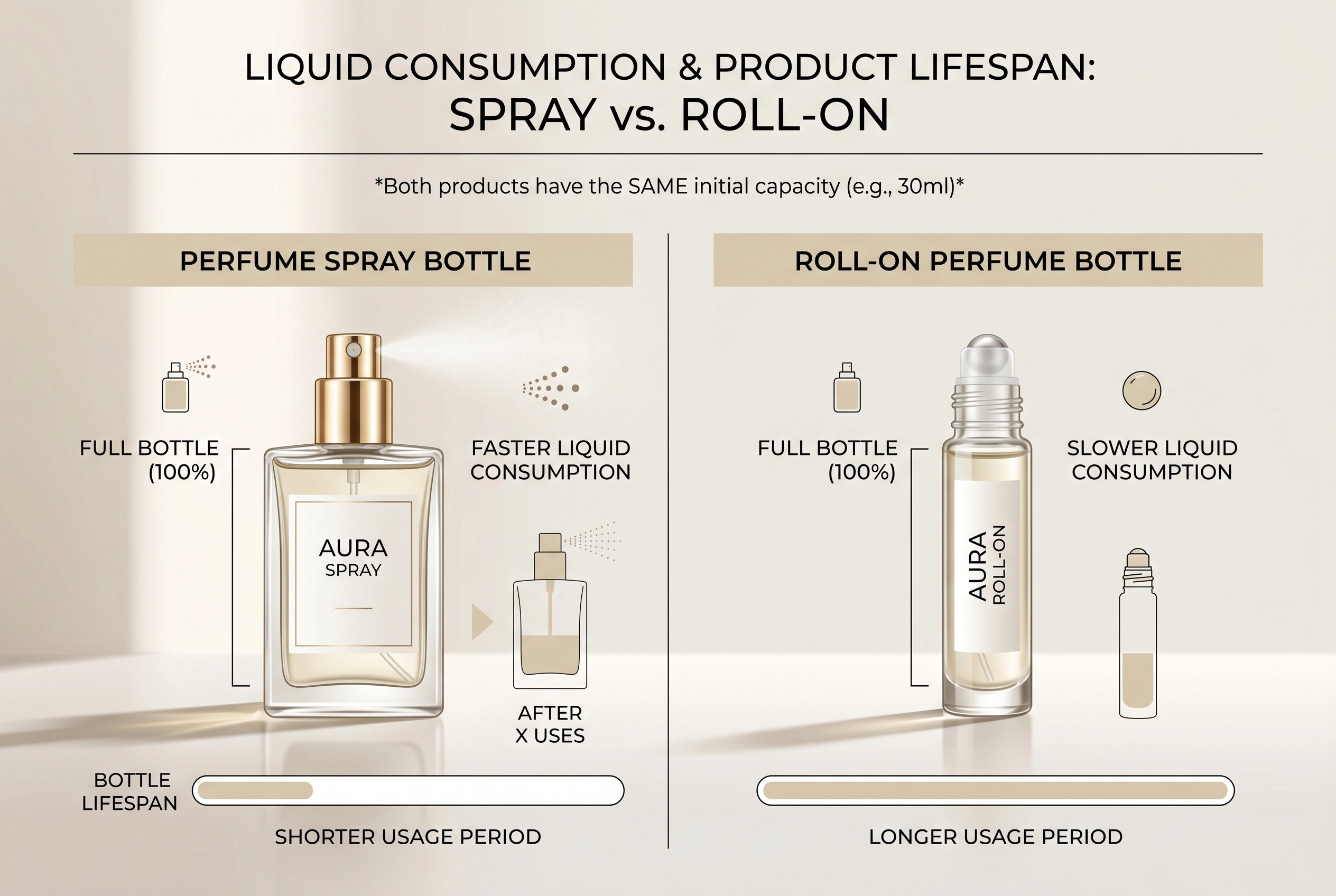
When you depress the pump on a traditional spray bottle, you release a fine mist of alcohol and fragrance particles into the air. Of that mist, an estimated 70% never actually reaches your skin — it drifts sideways, falls onto your clothes, disperses into the room, or settles on surrounding surfaces. This is actually part of how sprays work (the cloud of scent in the air contributes to projection), but it does mean that a meaningful fraction of every spray is, from a pure skin-fragrance standpoint, wasted.
A rollerball puts virtually 100% of what leaves the bottle onto your skin. There’s no mist, no drift, no overspray. You can apply exactly as much or as little as you want, precisely where you want it. This has several downstream effects.
First, rollerball fragrances can be more economical to use, even if the upfront cost per milliliter is sometimes higher. Because nothing is wasted, a 10ml rollerball can last as long as a much larger spray bottle used at normal frequency.
Second, the precision of application means that the concentration of fragrance on your skin is higher and more controlled than with a spray. This isn’t always desirable — sometimes you want that diffuse cloud of scent — but for workplaces, intimate settings, or situations where you want to be considerate of others’ fragrance sensitivities, a rollerball lets you be much more judicious.
Third, this precision is part of why rollerballs have found such a devoted following among people with fragrance sensitivities or skin conditions. Rather than blanketing yourself in a spray cloud, you can apply just a small amount, exactly where you want it, and manage the intensity carefully.
7. Why Rollerballs Create a “Personal Bubble” Scent
Fragrance professionals use a term that neatly captures the rollerball experience: “skin scent.” A skin scent is a fragrance that doesn’t project loudly outward but instead clings warmly to the wearer, detectable to someone within arm’s length but not to the whole room.
This is the natural result of all the science described above. An oil base doesn’t evaporate rapidly. A controlled application means fragrance is concentrated at specific points rather than distributed as a mist. The gradual, body-heat-driven diffusion creates a quiet, continuous effect rather than an initial loud burst.
For many people, this is exactly what they want. There’s an argument that a fragrance should be something personal — something someone discovers about you when they get close, not something you’re broadcasting to everyone who walks into the same room. Rollerballs are perfectly suited to this philosophy. They make scent intimate.
This is partly why rollerballs have become so popular in professional settings. Offices, medical environments, public transportation — anywhere that shared space requires a degree of consideration for others’ comfort — are environments where a loud, projecting spray might be inappropriate. A rollerball lets you wear fragrance without imposing it. You still get the pleasure of your scent; the person across the conference table doesn’t have to.
There’s also something emotionally different about the intimacy of a rollerball. Because the scent is so close to your skin, it becomes part of your personal atmosphere rather than your public presentation. You catch it in quiet moments — lifting your wrist near your face, leaning into a scarf, waking up with traces of it on your pillow. It’s a scent experience that’s less about being noticed and more about being present.
8. Temperature, Season, and Environment: The External Variables
The science of rollerball application doesn’t stop with your skin. The environment you’re in plays a significant role in how a rollerball fragrance performs.
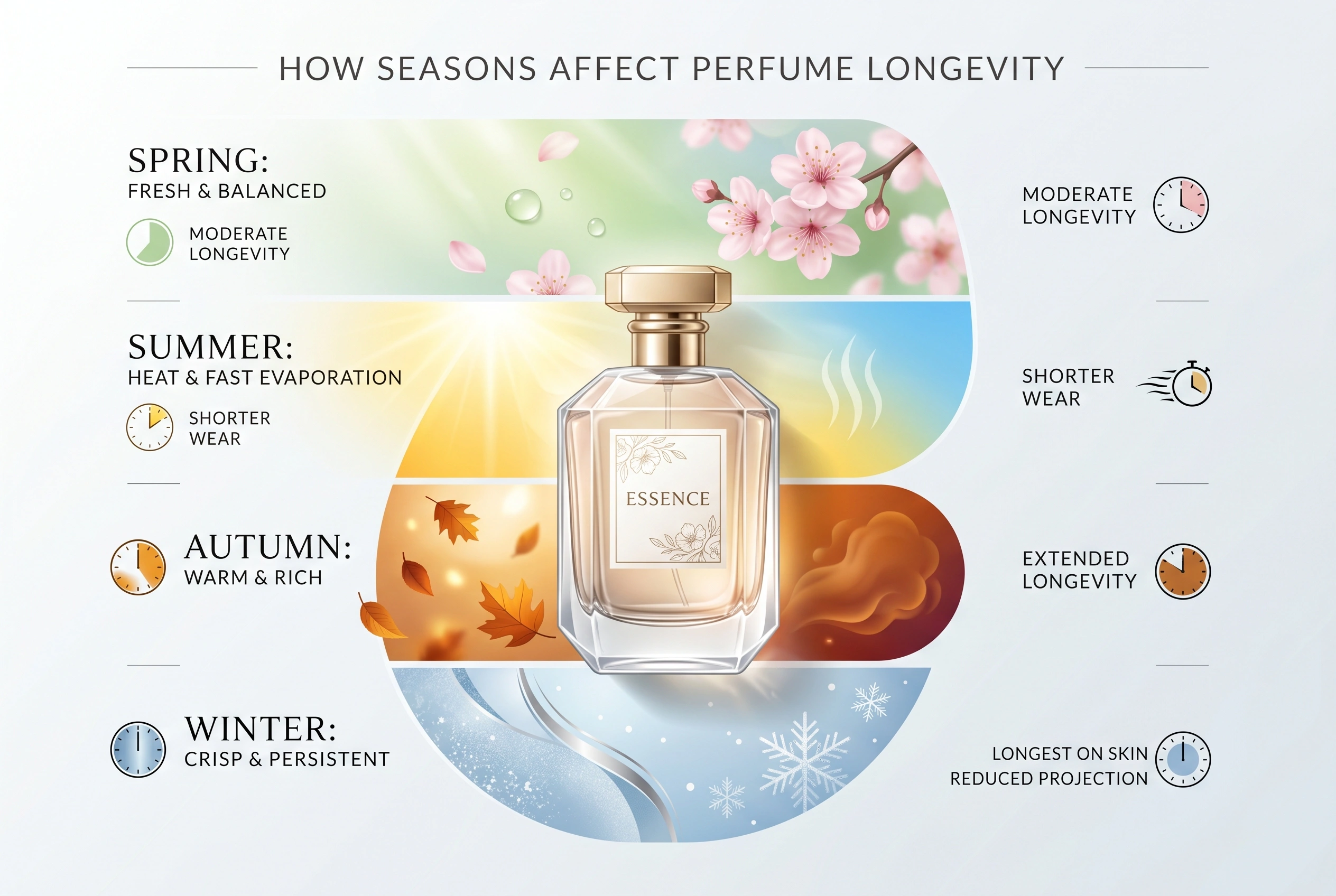
Temperature is the most obvious factor. On a warm summer day, your skin naturally runs hotter, which means fragrance molecules evaporate more quickly. A rollerball that seems perfectly calibrated in spring might feel stronger and more assertive in July. The same scent might nearly disappear in a cold, dry winter environment, where your skin is cooler and less active as a diffuser. Experienced rollerball wearers often apply more generously in cold weather and more sparingly in heat.
Humidity matters too. Moisture in the air can actually help fragrance travel — aromatic molecules hitch a ride on water vapor and reach your olfactory receptors more readily. This is why many people find that their fragrance performs beautifully in warm, humid climates or after a shower when their skin is still slightly moist. Applying a rollerball right after showering, before your skin has fully dried, can intensify the effect.
The moisturization level of your skin is another variable. Dry skin doesn’t hold fragrance as well as moisturized skin — the fragrance molecules have less to bind to and evaporate faster. A thin layer of unscented moisturizer applied before your rollerball creates a better surface for the fragrance to adhere to and extends longevity noticeably. This is a small, practical piece of chemistry with a real, tangible effect.
Clothing and fabric also play a role, though in a slightly different way. Unlike sprays, which are commonly applied directly to fabric (and which can sometimes leave stains), rollerballs are almost always applied only to skin. But the fabrics you wear around those application points affect how the scent disperses — tighter weaves trap warmth and hold the scent close, while looser, breezier fabrics let it escape more freely.
9. The Rollerball and the Nose: How We Actually Detect It
All of this science is ultimately in service of one thing: getting fragrance molecules to your olfactory receptors. And the way your nose processes those molecules is worth understanding, because it completes the picture of why rollerballs feel the way they do.
When you inhale, air carrying fragrance molecules travels up through your nasal passages to the olfactory epithelium — a small patch of tissue near the top of your nasal cavity. There, thousands of specialized receptor neurons detect specific molecular shapes and trigger signals that travel to the olfactory bulb, which sends them onward to the brain’s limbic system — the emotional center. This is why scent is so powerfully connected to memory and emotion: it’s the only sense with a nearly direct line to the limbic system, bypassing the thalamus that filters most other sensory input.
The molecules that a rollerball releases are almost exclusively detected through this orthonasal pathway (through direct inhalation). But there’s another pathway — retronasal olfaction, where aromatic molecules travel from the back of the mouth and throat up into the nasal cavity from the inside. This is the pathway responsible for much of what we experience as “flavor” in food. With skin scents and rollerballs, where fragrance concentrations in the air are low but persistent, both pathways contribute subtly to the experience.
What this means practically is that the rollerball scent you experience throughout the day is a dynamic conversation between your skin, the environment, and your own nose. You’ll catch it differently at different moments — a fleeting whiff when you lift your arm, a warm wave when you step inside from the cold, a quiet presence when you’re calm and still. The fragrance adapts. Your perception of it adapts. The whole experience is alive in a way that a fixed, static spray application rarely achieves.
10. Layering and Customization: Advanced Rollerball Science
Once you understand the fundamentals of how rollerballs work on skin, a world of more advanced technique opens up. Chief among these is the practice of layering — applying multiple rollerballs in sequence to build a customized, complex scent profile.
Because rollerballs are precise and oil-based, layering is actually easier and more controllable with rollerballs than with sprays. You can apply a base-heavy sandalwood rollerball first, let it settle for a minute, then apply a lighter citrus or floral rollerball on top. The oil bases blend on your skin, and the different volatility levels of the different fragrance notes create an evolving scent that’s genuinely more complex than either component alone.
The science here is essentially about volatility gradients. Different fragrance compounds evaporate at different rates. When you layer two rollerballs, you’re creating a small fragrance laboratory on your skin, where molecules from each formula interact, evaporate at their respective rates, and combine in the air above the application point. The result is something neither formula would produce on its own.
This is exactly what niche and indie perfumers have been exploring with rollerball formats for years — the idea that the wearer can become a co-creator of their own fragrance experience. It’s fragrance as an expressive medium rather than a fixed product, and it’s one of the more exciting developments in how people are thinking about personal scent.
11. The Full Picture: A Small Bottle with a Big Story
So the next time you reach for a rollerball — on your way out the door, in the middle of a long afternoon, before a quiet evening at home — you’re holding something that has a lot going on beneath its simple exterior. There’s engineering in the ball and socket keeping the oil precisely contained. There’s chemistry in the oil base, preparing to bond slowly and intimately with your skin. There’s biology in your pulse points, already warming up to do their quiet work of diffusion. There’s your own unique skin chemistry, ready to put its personal fingerprint on the scent. And there’s physics governing every step of the process, from the moment the ball rolls across your wrist to the moment a fragrance molecule finally reaches the receptors in your nose.
What makes rollerballs remarkable isn’t that they’re more convenient than sprays (though they are) or that they’re better suited to travel (though they are). What makes them remarkable is that they work with your body in a more direct, more intimate way than almost any other fragrance format. A spray creates a cloud of scent and hopes for the best. A rollerball hands the process over to you — to your skin, your heat, your chemistry, your specific and unrepeatable biology.
The science is real, it’s elegant, and it’s happening every single time you roll on your favorite scent without giving it a second thought. But now that you know what’s actually going on, maybe you’ll pause for just a moment, watch the oil settle into your skin, feel the pulse point warm up underneath it, and appreciate that this tiny, unassuming little bottle is doing something genuinely extraordinary.