
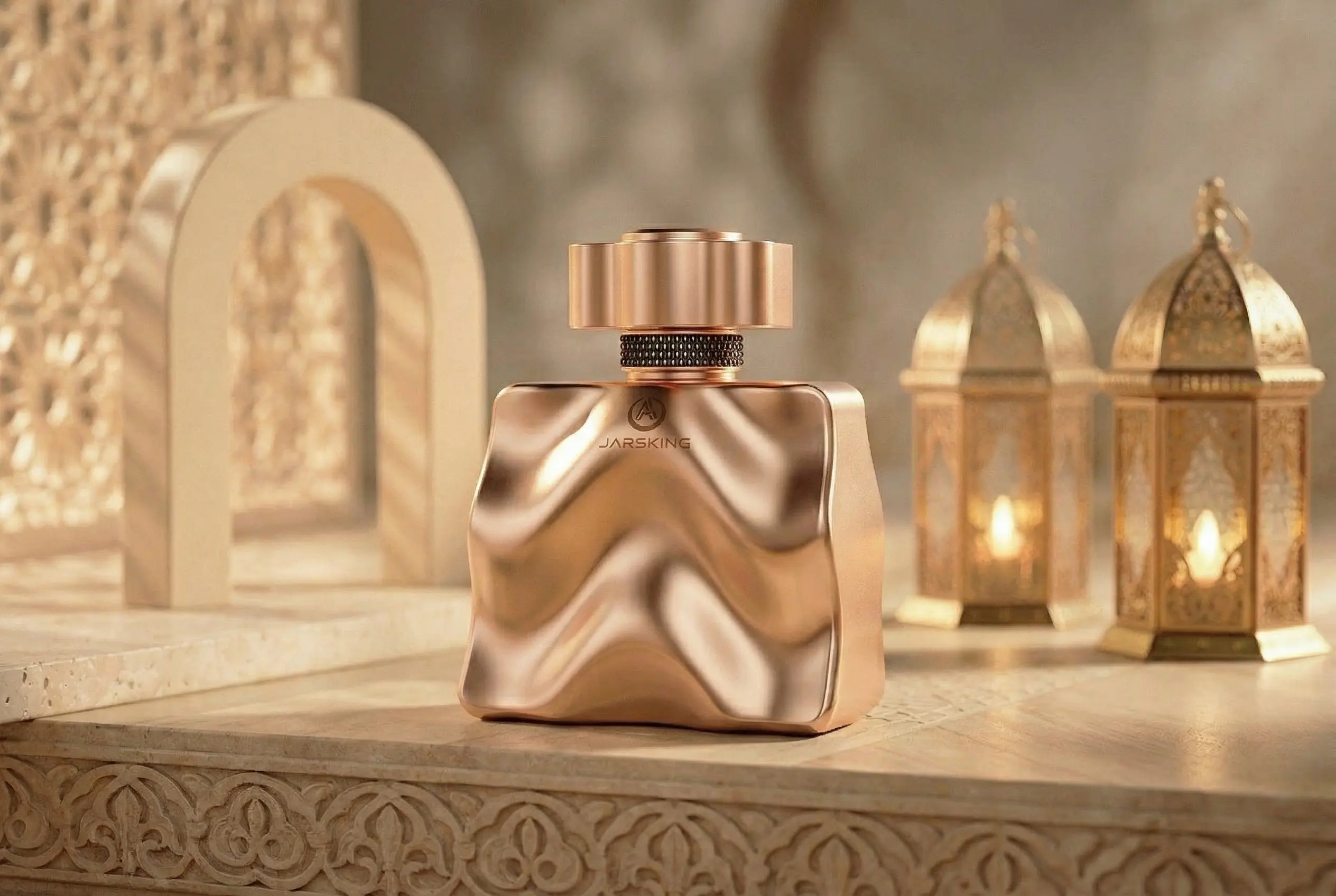


1. Introduction: The Middle East Has Something to Teach the Whole World About Perfume
There is a moment that happens sometimes in a Middle Eastern fragrance souk — in Dubai, in Riyadh, in Abu Dhabi — when you stop thinking about perfume as a product and start experiencing it as something far older and richer than that. The air is thick with oud and amber and something sweeter underneath. The bottles on the shelves look less like packaging and more like objects that belong in a collector’s cabinet, or in the hands of someone who understands exactly what they are holding. The ritual of choosing a scent, having it wrapped, presenting it, receiving it — all of it carries a weight of meaning that a trip to a department store perfume counter rarely approaches.
That feeling is not accidental. It has been cultivated over centuries of fragrance culture that runs deeper in the Middle East than almost anywhere else on earth. And it is increasingly shaping the way the whole world thinks about what a perfume bottle should look like, feel like, and mean.
Perfume bottle design trends in the Middle East — and particularly across the Gulf region led by the UAE — have moved well beyond their origins as regional design codes. They have become global luxury references. Brands from Paris to Seoul to New York are borrowing from Arabian aesthetics, ritual symbolism, and decorative richness to create packaging that feels more emotionally weighted, more worthy of display, and more genuinely collectible. The influence is real, it is growing fast, and it is worth understanding deeply — whether your brand is rooted in the Gulf, drawing inspiration from it, or simply trying to understand where the most compelling ideas in luxury fragrance packaging are coming from right now.
2. The Cultural Foundation: Why Middle Eastern Packaging Feels Different
Before exploring the specific trends, it helps to understand why Middle Eastern fragrance packaging has such a different emotional register from its Western counterparts — because the difference runs much deeper than aesthetics. It is cultural at its core.
In much of the Western world, perfume has become a relatively personal, fairly casual purchase. You find a scent you love, you use it daily, and when the bottle runs out you replace it. The packaging might be pleasant to look at and sit nicely on your bathroom shelf, but it does not carry much ceremonial meaning. It is, ultimately, a product.
In the Middle East, perfume is something else entirely. It is woven into the fabric of hospitality — guests are welcomed with fragrance, and inviting someone to scent themselves is a genuine gesture of warmth and respect. It is part of daily ritual — oud is burned in the home, worked into clothing, worn to prayers. It is central to the culture of giving — a beautiful fragrance bottle, presented in sumptuous packaging, is one of the most meaningful gifts imaginable for a wedding, an Eid celebration, a business relationship, or a family gathering. And it has been an expression of personal identity and social standing for generations, not decades.
That cultural context shapes everything about how perfume packaging is designed and received. The bottle is not just a vessel. It is part of the ritual itself. It needs to feel substantial enough to hold in both hands with reverence. Beautiful enough to display long after the fragrance is gone. Worthy enough to be given, received, and kept. Once you understand that starting point, everything else about Middle Eastern packaging design begins to make complete sense.
3. Trend 1: Opulence Is a Design Philosophy, Not Just a Decoration Choice
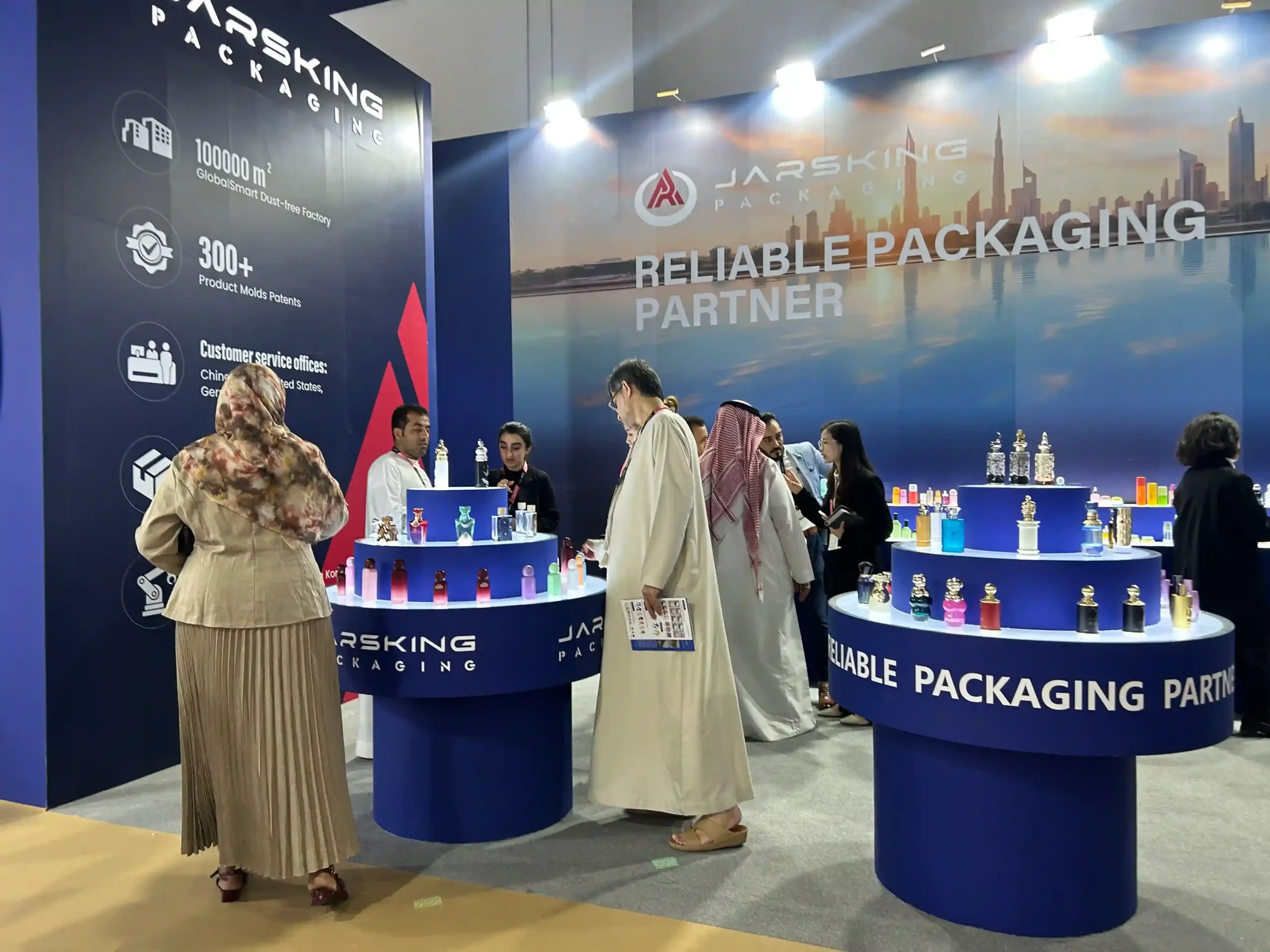
The word “opulent” gets used constantly to describe Middle Eastern perfume packaging, and it is sometimes misunderstood — conflated with excess, with piling on decoration until the bottle buckles under its own visual weight. But that is not what the best Arabian-inspired fragrance packaging actually does. What it does is something considerably more thoughtful: it uses richness of perception as a deliberate and disciplined design strategy.
Opulence, understood properly in this tradition, means designing for the full sensory experience of encountering a premium object. The bottle should feel consequential in the hand — not arbitrarily heavy, but weighted in a way that says something valuable lives inside it. The color should have genuine depth — not just a surface tone but the sense that the glass or lacquer has inner richness. The cap should feel like a small act of ceremony to remove — an object with presence and precision, not a functional afterthought bolted on at the end of the design process. The metalwork, where it appears, should feel like it belongs to the world of fine jewellery rather than industrial finishing.
When all of those elements work together with real intention, the result is a bottle that earns a particular quality of attention. Not the quick glance of someone registering that something looks nice, but the slower, more engaged gaze of someone who feels that this object is genuinely worth their time. That quality — gravitational, almost magnetic — is what the finest Middle Eastern fragrance packaging consistently achieves. And it turns out to be deeply appealing to consumers everywhere, not just in the Gulf.
For packaging manufacturers, the essential lesson here is that opulence needs structure. Without a clear hierarchy of design decisions — without one dominant gesture that leads and supporting elements that follow — a rich bottle tips quickly into chaos. The most successful Arabian-inspired perfume bottles are almost always organized around a single powerful idea: a jewel-like cap that commands the eye; a deeply engraved body that rewards closer inspection; a metallic frame that gives the bottle its whole architecture. Everything else in the design serves that central idea. Richness with intention is design. Richness without it is just noise.
4. Trend 2: Ritual, Symbolism, and the Bottle as Something Worth Keeping
One of the most distinctive and moving qualities of Middle Eastern fragrance packaging — and one of the things that makes it so fascinating to designers from other traditions — is its relationship with time. In many markets, a perfume bottle is designed for the moment of purchase and the period of use. It has a beginning and an end. In the Middle East, a truly great fragrance bottle is designed for much longer than that.
This is because the culture of gifting, display, and collection means that bottles are often kept indefinitely. A beautiful oud bottle received as a wedding gift might sit on a dressing table for a decade. A limited-edition presentation from a beloved perfumer might be displayed alongside others from the same house, in a cabinet that tells the story of a family’s relationship with fragrance across years and occasions. The empty bottle of a beloved scent might be kept simply because it is too beautiful to discard. Packaging has to earn that long-term relationship — and it does so through a combination of physical quality and genuine symbolic depth.
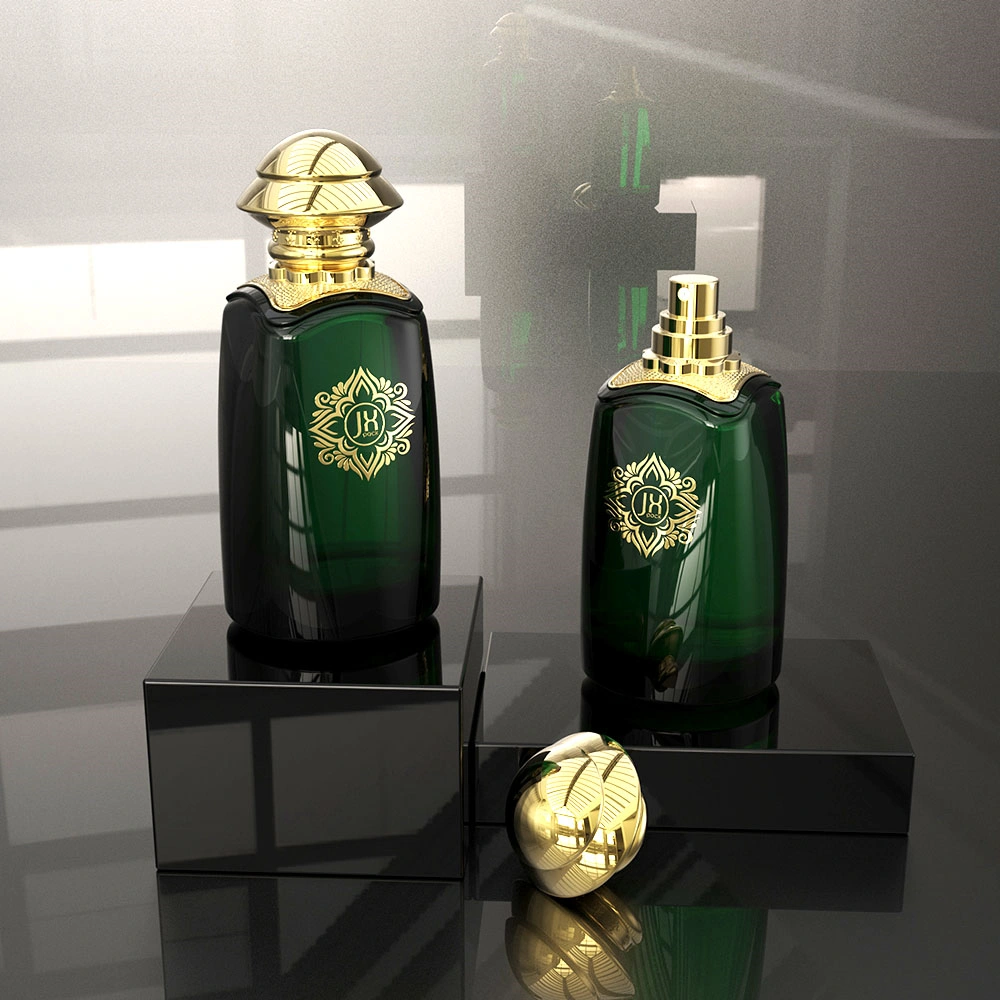
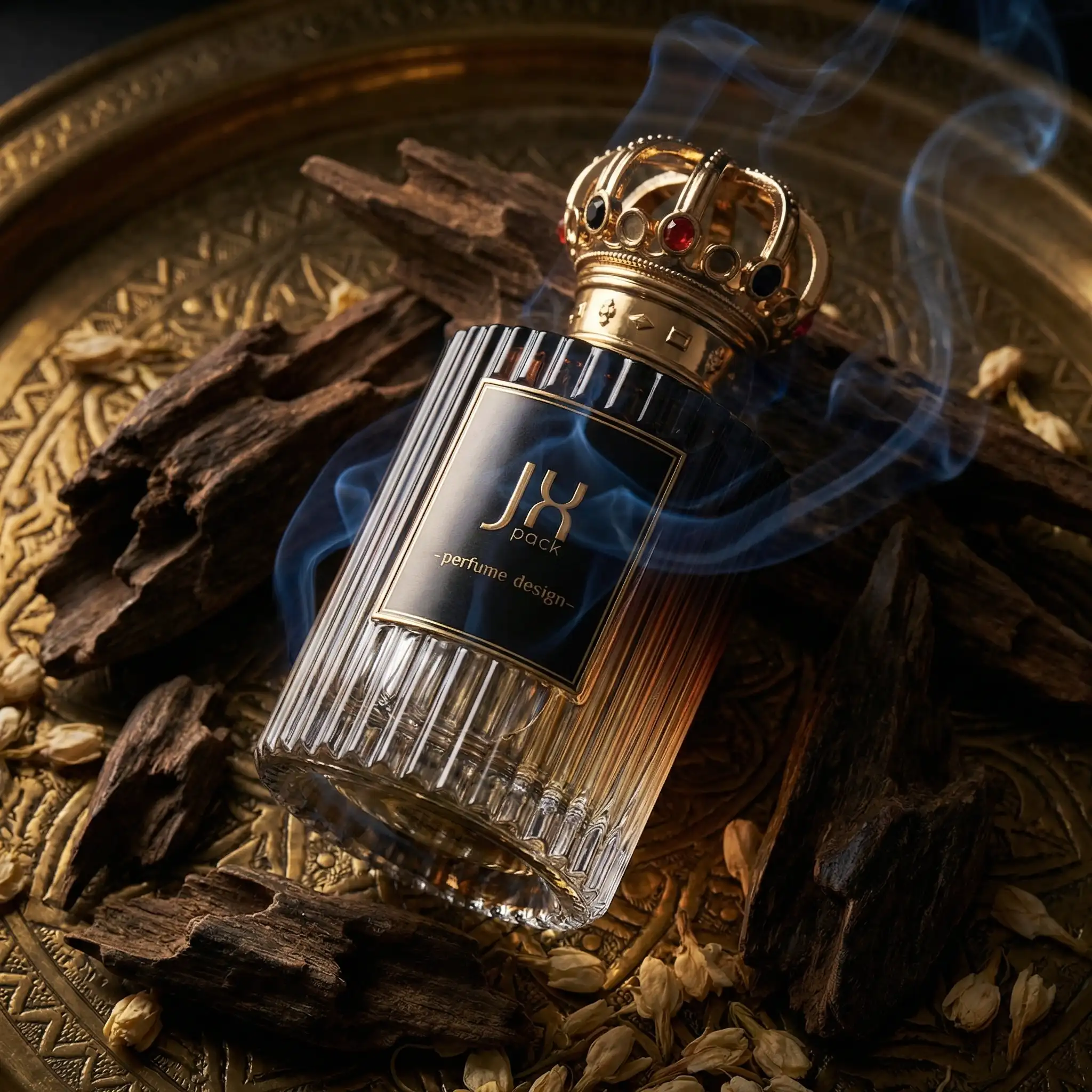
The symbolic vocabulary that Middle Eastern designers draw from is rich and specific. Architectural forms are everywhere — domed caps that reference mosque silhouettes, geometric bodies that echo traditional Islamic tiling, arched shapes that suggest the doorways of ancient palaces. Calligraphic rhythm influences how decorative lines move across surfaces. Incense burner forms inspire cap structures that carry both visual and cultural resonance. Gemstone references appear in faceted glass, jewel-toned colors, and stone-set cap details. Even material choices carry meaning: gold for royalty and spiritual significance; deep blue for wisdom and protection; black for mystery and gravitas; amber for the warmth of heritage and home.
The most interesting contemporary Arabian fragrance packaging often works with these references in abstracted form — a cap shape that suggests a dome without recreating one architecturally; a body engraving that echoes calligraphic rhythm without reproducing actual script; a color choice that references the warmth of amber without being literally amber-tinted. The cultural memory is activated without the design becoming a reproduction. That subtlety is, arguably, the deepest skill in this whole tradition.
This ritual dimension extends naturally into the unboxing and presentation experience, which carries enormous weight in Middle Eastern gifting culture. Secondary packaging — the outer box, the inner tray, the ribbon closure, the velvet insert, the tissue wrap — often plays as large a role as the bottle itself in the perceived luxury of the product. For fragrance brands and suppliers working with this tradition, the bottle genuinely cannot be developed in isolation. The entire presentation system needs to be designed as a single emotional experience, from the moment someone lifts the outer lid to the moment the bottle is finally in their hands.
5. Trend 3: Bold Color, Precious Metalwork, and the Art of Contrast
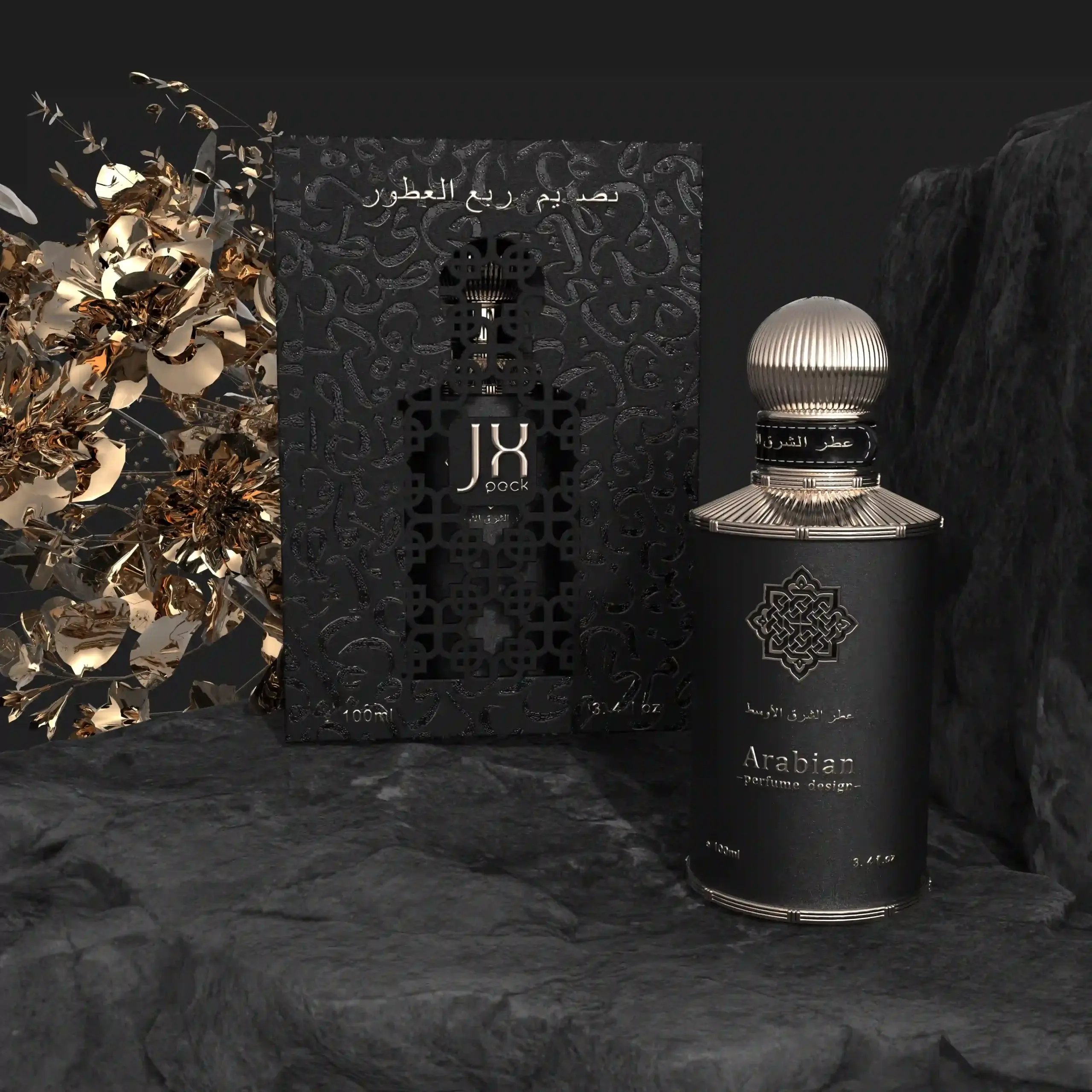
Color in Middle Eastern fragrance packaging is not a neutral decision made after the form is settled. It is an active meaning-making tool, and the colors that carry the most power in this tradition are ones that Western minimalist design has often treated cautiously: deep black, warm amber, rich burgundy, emerald green, royal sapphire, molten bronze, sovereign gold.
These colors work not just because they are visually arresting but because they carry centuries of accumulated cultural resonance. In the Gulf, black is not cold or severe — it is deep, mysterious, and sophisticated, associated with the finest oud and the quiet elegance of traditional dress. Gold is not flashy; it is genuinely royal, spiritually significant, and historically associated with the most beautiful objects across the Islamic world. Amber and warm earth tones connect to oud wood, saffron, and the desert landscape — they feel rooted in a specific and deeply loved part of the world. When a fragrance bottle uses these colors with confidence and precision, it is not just making a visual choice. It is making a cultural one.
Metalwork carries its own special significance. A precisely cast metal overcap with a satisfying weight and a flawless finish can single-handedly elevate a bottle from premium to genuinely extraordinary. A collar in brushed gold or blackened steel gives a bottle a structural dignity that no amount of printed decoration can replicate. Ornamental trim, medallions, plaques, and frames — when they are well-made — make a bottle feel like something that will still be beautiful in twenty years.
The technical challenges are real and worth naming honestly. Decorative metal elements need precise dimensional tolerances to mate cleanly with glass bodies. Plating finishes need durability to withstand Gulf humidity and the repeated handling of daily use. Metal overcaps need to integrate cleanly with spray mechanisms without creating frustration for the person using the fragrance every morning. These demands mean that ambitious Middle Eastern-inspired packaging almost always benefits from a supplier who can coordinate glass, metal, collar, spray mechanics, and outer packaging under a single, coherent development strategy. The more complex the decorative vision, the more essential that coordination becomes — from the very first design conversation, not as an afterthought at the production stage.
6. Trend 4: Contemporary Arabian Luxury — A Design Language That Travels
Something genuinely significant has happened in the fragrance industry over the past several years. Arabian fragrance aesthetics have moved from being a regional design tradition to becoming a globally influential luxury reference. And as they have done so, they have evolved.
The most traditional expressions of Gulf fragrance packaging — the elaborately jewelled caps, the filigree metalwork, the multi-layered presentation cases — remain important and commercially successful within the Gulf market and for special-occasion gifting around the world. But alongside them, a more contemporary Arabian luxury style has emerged, one designed to travel freely across international retail while holding onto the essential qualities that make Middle Eastern packaging so distinctive.
This contemporary style is defined by a quieter kind of gravitas. A bottle in deep matte black with a precisely cast brushed-gold cap and minimal surface decoration carries an unmistakable sense of Arabian luxury without relying on ornamental complexity. A bottle in warm amber glass with a weighted metal closure and a single discreet engraving communicates cultural depth through restraint rather than elaboration. These bottles can sit in a Parisian niche boutique, a London department store, a Tokyo concept shop, or a Dubai flagship and feel equally right in all of them — because they translate the feeling of Arabian luxury rather than its literal vocabulary.
Global fragrance houses have clearly noticed. References to oud, amber, and incense-inspired accords have proliferated across mainstream prestige launches, and many of them are accompanied by packaging that draws on Middle Eastern visual codes: darker palettes, heavier cap proportions, richer surface treatments, more ceremonial presentation architectures. The most successful of these translations are done with genuine cultural intelligence. The less successful ones borrow the surface without grasping what makes the original feel the way it does. The difference, almost always, comes down to understanding the cultural foundation rather than just copying the aesthetic.
7. Trend 5: The Collector’s Dimension — When a Bottle Becomes an Object of Art
No honest survey of Middle Eastern fragrance packaging trends would be complete without talking about collecting — because in this market, the collectible perfume bottle is not a niche enthusiasm. It is a mainstream expression of how the whole category is understood and loved.
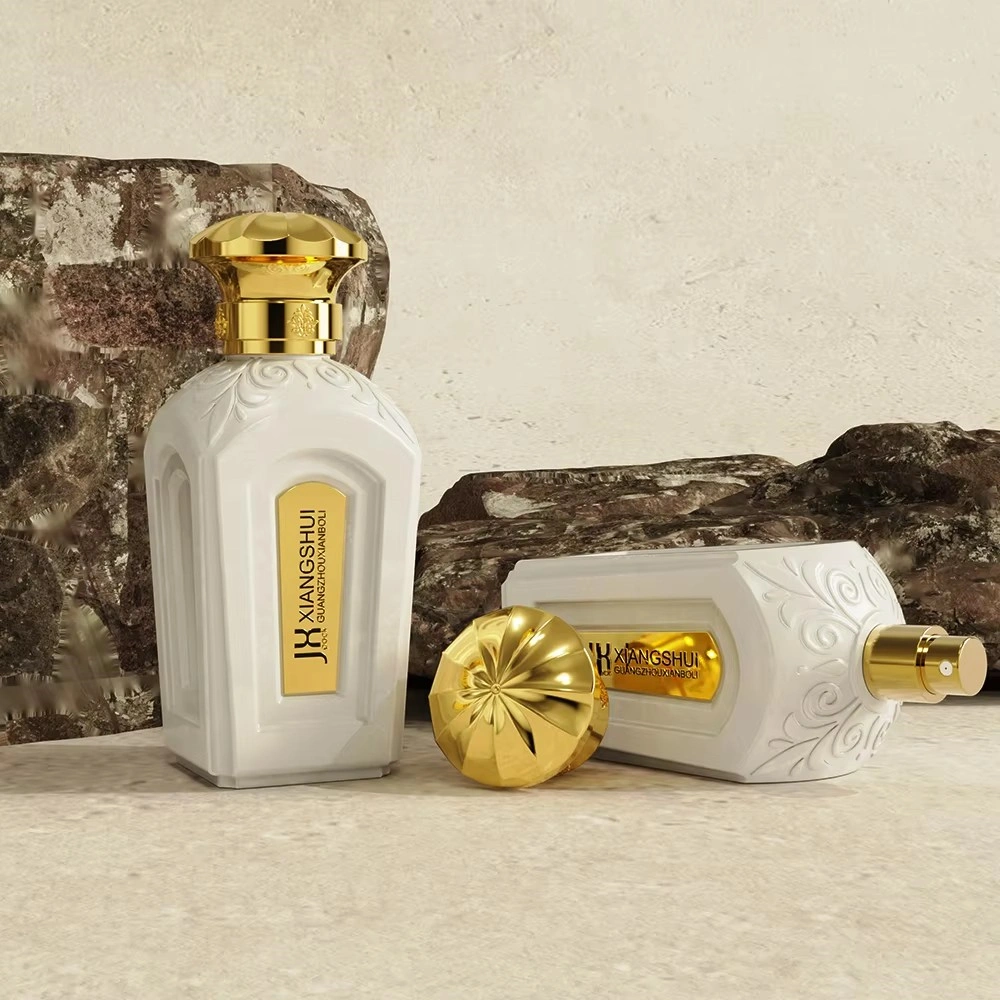
Across the Gulf, collecting fragrance bottles is a genuine and widespread practice. Limited-edition releases from beloved houses are anticipated and purchased as much for the bottle as for the scent it contains. Special Ramadan editions, Eid collections, and royal commemorative releases are designed with the full understanding that many of them will be kept, displayed, and treasured long after every last drop of fragrance is gone. The most ambitious of these bottles — featuring handcrafted metalwork, stone inlays, commissioned artwork, or references to significant cultural or architectural heritage — achieve something close to genuine art object status, displayed in private collections alongside fine jewellery and antique decorative objects.
This collector dimension has important implications for how packaging is designed and built. A bottle intended for a collector’s shelf must hold its beauty over time — which means thinking carefully about the long-term durability of finishes, the structural integrity of decorative elements, and the quality of materials under conditions of display and handling across years rather than months. It means the presentation packaging needs to be genuinely worthy of what it contains, because a collector’s bottle deserves to be stored and displayed with care. And it means the design needs real narrative depth — a story, a cultural reference, an artistic vision, a craft tradition — that gives the collector a reason to care about this specific bottle, not just the category it belongs to.
For fragrance brands, the collector dimension is also a meaningful commercial opportunity — one that generates genuine press coverage, social sharing, gifting traffic, and the deep brand loyalty that mass-market launches simply cannot produce. For suppliers, it is an invitation to demonstrate the highest level of what they can do: the ability to create objects that are genuinely extraordinary, not merely commercially functional.
8. What Global Brands Can Learn From Arabian Packaging Design
The influence of Middle Eastern fragrance packaging on the global industry is not a trend that will peak and fade. It is a deepening conversation between a design tradition of genuine depth and richness, and a global fragrance market that is increasingly hungry for emotional resonance, cultural meaning, and objects worthy of long-term ownership.
For fragrance brands anywhere in the world, there are several things worth carrying from this tradition into their own packaging thinking.
Weight and ceremony matter more than minimalism suggests. The global drift toward lighter, thinner, simpler packaging has real virtues — digital performance, cost efficiency, sustainability. But it can leave consumers feeling that they are holding something disposable. The Middle Eastern tradition is a powerful reminder that tactile substance — the satisfying weight of a well-made bottle, the precise engagement of a thoughtfully designed cap, the feeling that something is built to last — creates an emotional connection that visual design alone cannot fully replicate.
Symbolism creates depth that decoration alone cannot. The most resonant Arabian bottles are not simply decorated — they are legible. A dome-shaped cap is not just a nice form; it is a cultural reference that carries centuries of meaning. A calligraphic line on a bottle body is not just an ornament; it is an invitation to look closer and feel something. Brands that give their packaging genuine symbolic depth — connecting form to meaning, material to narrative, design to heritage — consistently create objects that inspire the kind of loyalty and collection behavior that every fragrance brand hopes for.
The full presentation is part of the product. In a culture where gifting and ritual are central, the unboxing experience is not an afterthought. The outer box, the inner tray, the ribbon closure, the way the bottle rests inside its housing — all of this is part of what the recipient receives and feels. Brands and suppliers who treat the complete presentation architecture as an integrated design challenge, rather than building the bottle first and packaging it later, consistently produce results that are more emotionally powerful and commercially successful.
Opulence travels better than you might expect. There was a time when rich, ceremonially inspired packaging was considered too regional for international markets. That perception has shifted significantly. Consumers globally have shown that they respond warmly to fragrance packaging with genuine weight, symbolic depth, and decorative sophistication — as long as it is executed with intention and clarity rather than mere accumulation. The global rise of Arabian fragrance aesthetics is partly a story about scent, but it is equally a story about a worldwide appetite for objects that feel meaningful.
9. Conclusion: A Design Language the World Is Learning to Speak
Perfume bottle design trends in the Middle East are ultimately about what fragrance becomes when it is given the cultural weight it deserves. They are a reminder — generous and beautiful and practically useful — that a bottle can be so much more than a container. It can be a ritual object. A gift worthy of a significant occasion. A keepsake that holds its beauty for decades. A collectible that earns a permanent place in someone’s home and life and story.
The global rise of Arabian fragrance aesthetics is not a fashion moment that will be replaced by the next trend. It reflects something deeper: a hunger, felt by consumers everywhere, for objects that mean something. For packaging that feels considered and substantial. For beauty that carries history and intention rather than simply following the most current visual mood.
For fragrance brands seeking emotional richness, genuine luxury signaling, and the kind of lasting impact that turns a first purchase into a lifelong relationship, Middle Eastern packaging design offers one of the most powerful and most generously instructive design languages in the world right now. Learning to speak it well — with the cultural respect, technical excellence, and genuine human warmth it deserves — is one of the most rewarding things a fragrance brand or packaging supplier can do.