
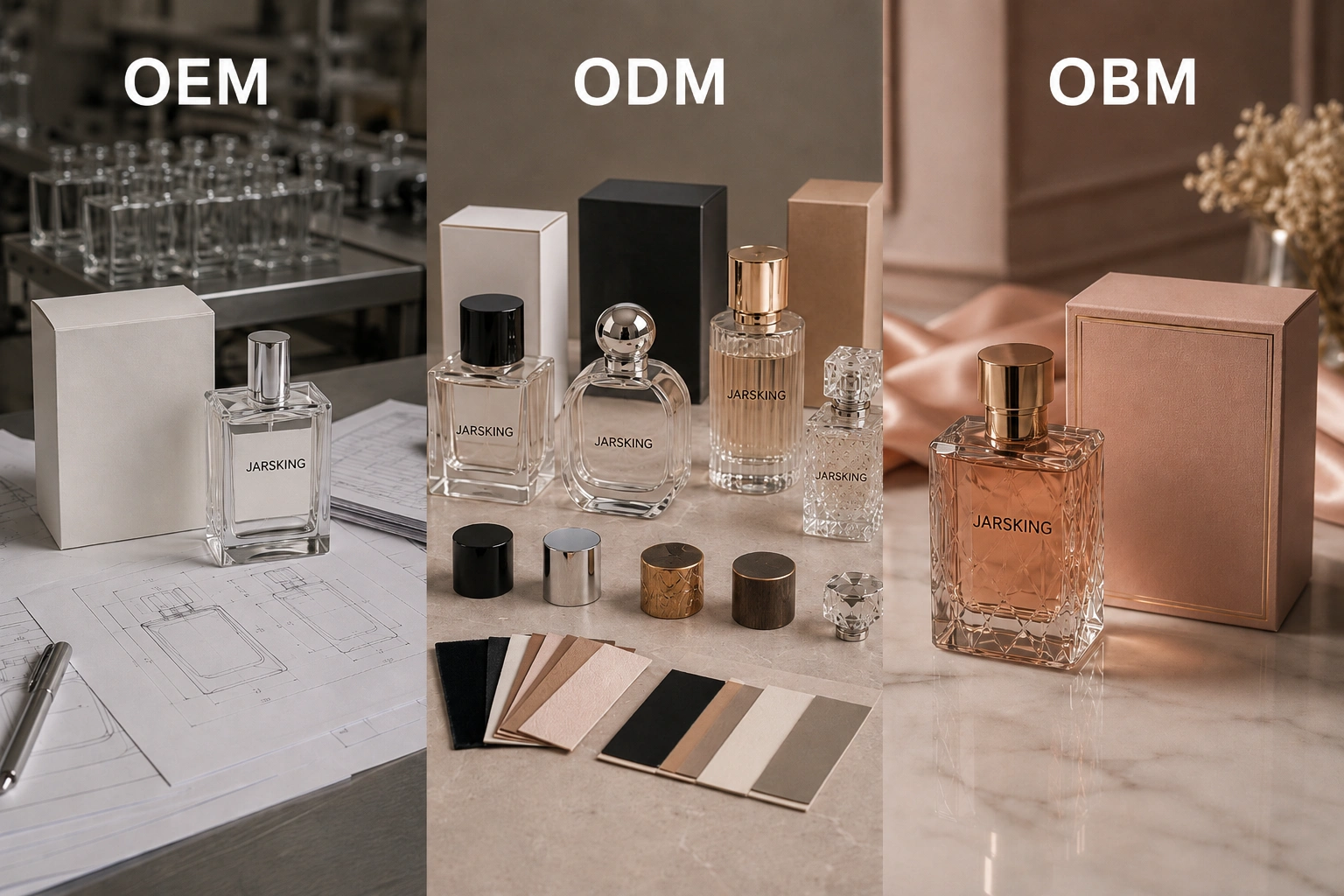


There’s a question that almost every fragrance founder, perfume buyer, or packaging manager eventually asks—and usually asks at the worst possible time, right when a launch deadline is looming: “Should I design this from scratch, customize something that already exists, or just use a proven system and focus all my energy on the brand experience?”
It’s a deceptively simple question, and the answer shapes everything that follows. How long it takes to get to market. How much it costs. Who owns what. And ultimately, how distinctive your product feels when it lands on a shelf or in a customer’s hands.
At Jarsking, these are the kinds of conversations we’ve been having with brands for years. We know the real friction points—the late-night emails about tooling delays, the surprise mold compatibility issues, the slow creep of budget when iteration rounds multiply. We’ve worked through enough of these scenarios to understand something important: there isn’t one right model for every brand, and there never will be. What matters is matching the right model to the right moment.
That’s exactly why we’re excited to share a significant step forward this year. Alongside our established OEM and ODM capabilities, Jarsking has proudly launched a full-scale OBM (Original Brand Manufacturer) collaboration service—an approach that positions us as far more than a supplier. It positions us as a genuine brand-building partner.
But before we dig into what makes the OBM model so compelling, it’s worth making sure the language is clear—because the acronyms get tossed around a lot, and they don’t always mean the same thing to everyone.
1. OEM: When Your Design Leads the Way
OEM, or Original Equipment Manufacturing, is the model most established brands are already familiar with, even if they don’t always call it by that name. In the simplest terms: you bring the design, we handle production.
In a packaging context, this means you arrive with your CAD files, your material specifications, your Pantone references, your drop-test requirements—and we execute. We manufacture to your exact specs, provide DFM (Design for Manufacturability) feedback when we spot potential issues, build tooling if needed, and run production under an agreed quality plan.
For many fragrance brands, OEM is the gold standard. It’s what you use when your packaging is genuinely a brand asset—when the silhouette of a perfume bottle, the weight of a luxury flacon, or the tactile feel of a decorative cap is something you’ve worked hard to make yours. Intellectual property is generally clean: the brand retains design ownership, the supplier retains manufacturing process knowledge, and with proper contracts, there’s no ambiguity about who owns the tooling.
OEM works beautifully for hero fragrance flacons, long-lifecycle bottle platforms, and situations where you have strict performance or compliance requirements—niche perfumery and fine fragrance being clear examples where material compatibility and presentation standards are non-negotiable.
The honest trade-off? OEM asks more of you upfront. Tooling costs are real. Iteration cycles take time. If you over-design before getting DFM input, you can find yourself reworking an aesthetic you’ve already fallen in love with. And without strong packaging engineering on your side, those specification gaps—the infamous “frosted glass bottle” with no surface treatment standard, no coating durability spec, no collar tolerance—can turn into surprisingly expensive surprises.
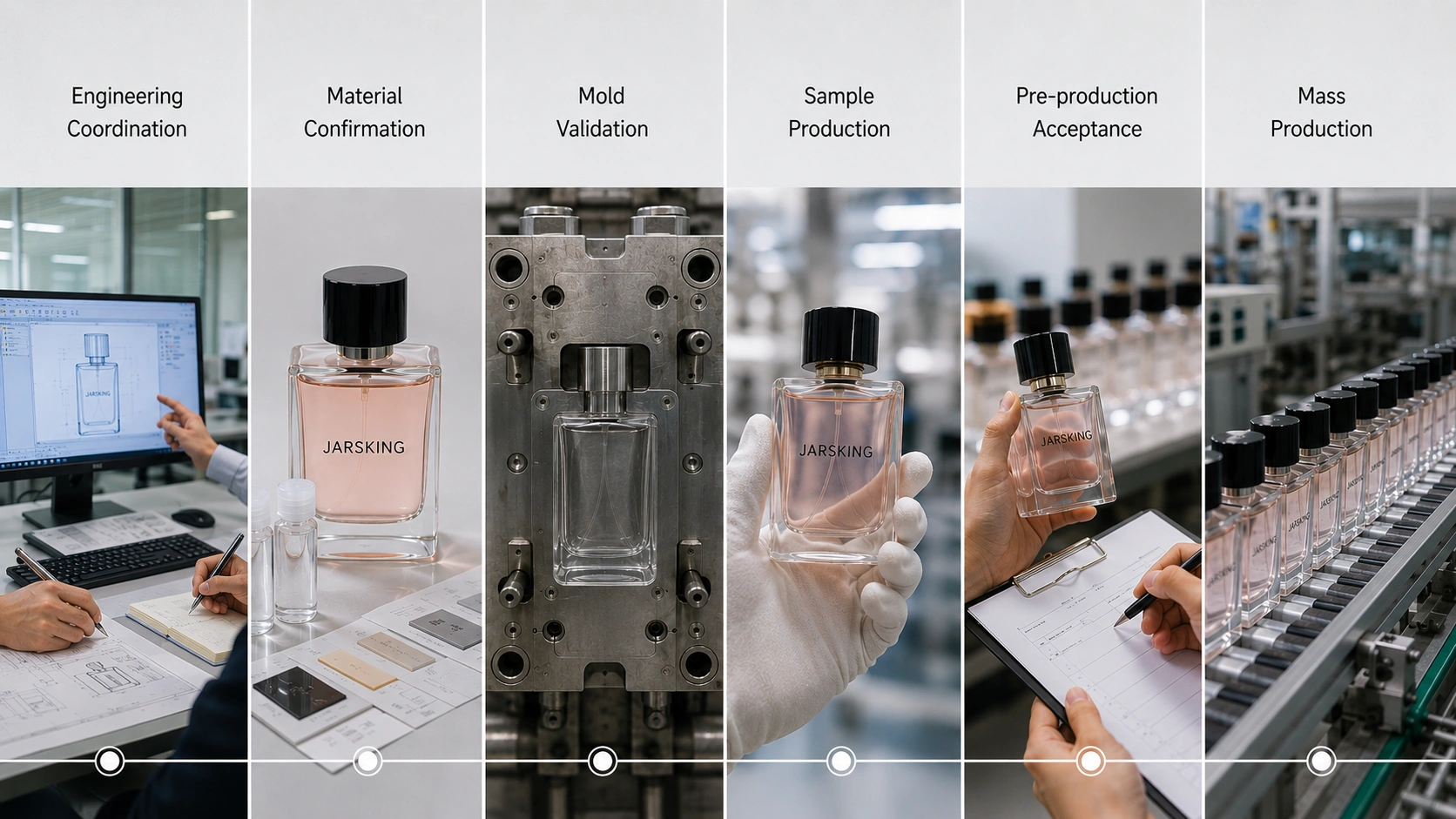
At Jarsking, OEM is something we’ve refined into a disciplined, stage-gated process: engineering alignment, material confirmation, tooling validation, sampling, pre-production sign-off, and mass production—with every step documented. When OEM is the right call, we make sure it moves as efficiently as possible.
2. ODM: Speed, Smarts, and the Art of Smart Customization
ODM, or Original Design Manufacturing, flips the model. Here, we bring the design platforms—our library of proven perfume bottles, fragrance flacons, decorative caps, collar systems, and pump dispensers—and you make them yours through customization.
This is faster almost by definition, because you’re working with structures that have already been validated. We know how they behave in transit, what coatings hold up over time, what decoration techniques work beautifully on which surface geometries. That accumulated knowledge is genuinely valuable, and it’s yours to leverage.
But here’s something we push back on whenever we hear it: ODM does not mean generic. A well-executed ODM project can produce fragrance packaging that feels completely brand-specific—through differentiated decoration stacks (frosting, metallization, silkscreen, hot stamping layered together), signature color systems, custom collar and cap combinations, and gift box secondary packaging that ties the whole experience together.
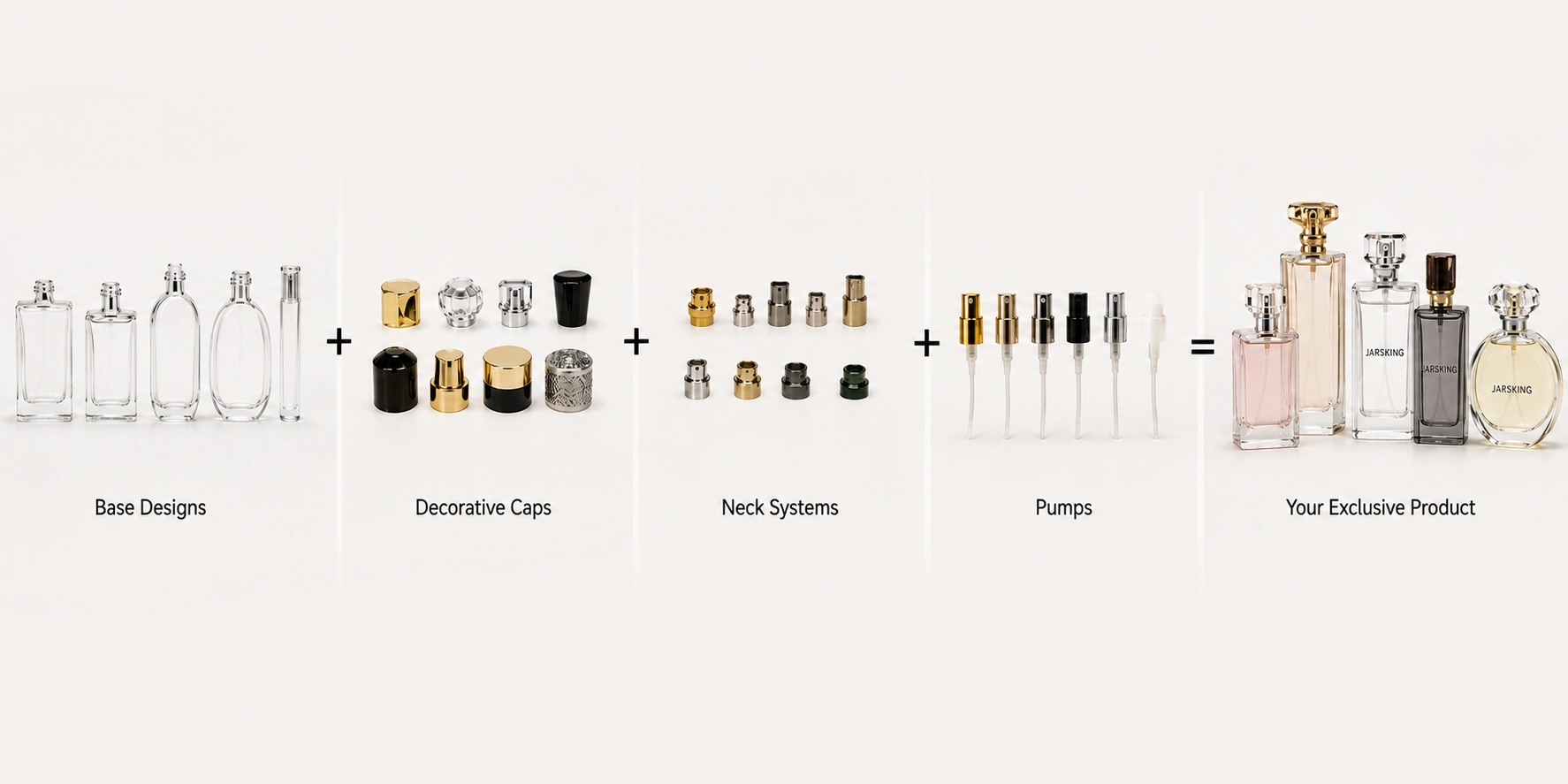
In fact, one of the things Jarsking has built into our ODM approach is component pairing—the ability to mix and match fragrance bottles, pumps, decorative caps, and collars from our catalogue to create combinations that no other brand is using. Add eco-friendly decoration options and premium finishing, and a “stock mold” flacon can look anything but stock.
ODM tends to be the smartest choice when speed is a genuine competitive advantage—seasonal fragrance launches, limited-edition drops, regional exclusives, multi-SKU perfume line extensions where the bottle platform can be shared but decoration carries the differentiation. If you’re entering a new export market and want to control risk before committing to full custom tooling, ODM lets you test with confidence.
The trade-offs are real and worth knowing going in. The base bottle structure may not be exclusive unless you negotiate it explicitly. The IP picture is more complex—we own our platform designs, and you own what you’ve added to them. Switching suppliers down the line requires careful conversation about what moves with you. And ODM samples can look magnificent before anyone has tested formula compatibility with the glass, pump, and collar materials, which is why we always build a proper engineering and test plan, not just a beautiful prototype.
3. Why Both Models Have Their Limits—And Why Something New Was Needed
Here’s where it gets interesting.
Both OEM and ODM are service models. At their core, they position the supplier as an executor—someone who takes your brief and turns it into physical packaging. That’s not a criticism; it’s a description of a well-defined and valuable relationship.
But over the years, working with fragrance brands across niche perfumery, mass-market scent, designer fragrance, and home fragrance—across markets from North America to Europe to Latin America to East Asia—we kept noticing something. The brands that grew fastest weren’t just buying packaging. They were partnering with someone who understood the market, who could bring validated innovation to the table, who could think alongside them about what customers actually want, what stories are resonating on shelf, what sustainable material choices carry real credibility versus those that just look good in a spec sheet.
They needed something more than a supplier. They needed a collaborator with skin in the game.
That insight is what led us to develop our OBM service.
4. OBM: The Model Where We Build Together
OBM stands for Original Brand Manufacturer, and it represents a genuinely different kind of relationship.
In traditional manufacturing terminology, an OBM is a company that designs, produces, and markets products under its own brand name—controlling the entire value chain, from R&D through to the end consumer. It’s the highest position in the manufacturing value chain, where the factory is no longer a contract producer but a market player with its own identity, distribution channels, and brand equity.
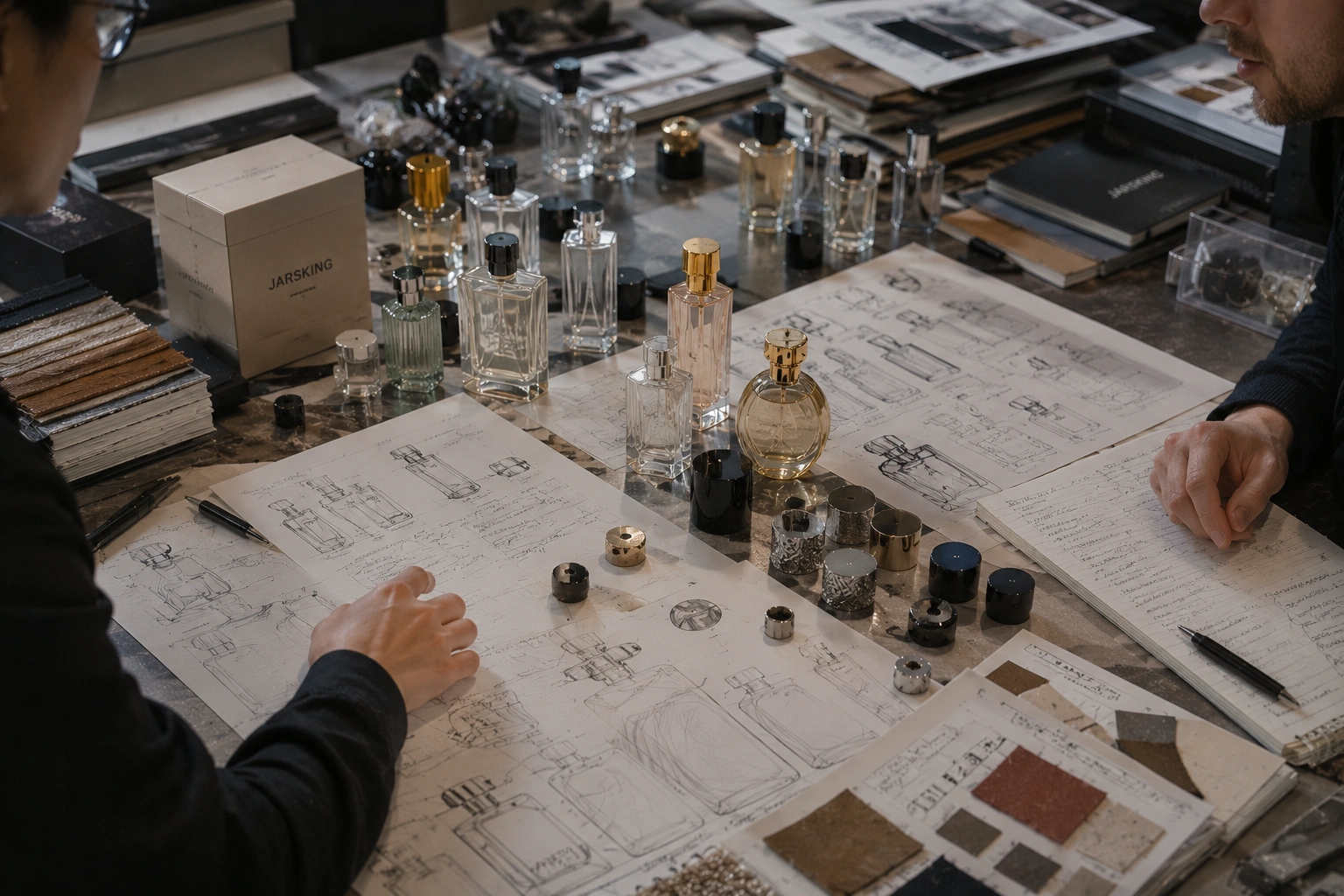
At Jarsking, our OBM service takes the best of what that model offers and channels it into a collaborative partnership with the fragrance brands we work with. Instead of simply building our own product lines and competing in the market, we’re using the capabilities, proprietary systems, innovation R&D, and deep technical expertise that define an OBM to help your brand grow.
Think of it this way: we’ve done the hard work of building proven systems, investing in material innovation, developing our own proprietary fragrance packaging technologies, and understanding what drives performance across categories and markets. Our OBM service makes that investment available to you—not as a generic catalog purchase, but as a structured co-development engagement.
5. What the Jarsking OBM Collaboration Actually Looks Like
When a fragrance brand partners with us through the OBM model, the relationship starts differently than a typical packaging order. It starts with a conversation about your brand strategy.
Where are you trying to go? Not “what bottle do you need for this SKU,” but: what is this fragrance brand trying to build, who is it speaking to, how does the packaging need to perform in those conversations? We’re asking about your customer, your competitive landscape, your sustainability commitments, your market entry plans.
From that strategic foundation, we bring our own proprietary fragrance packaging systems, validated platforms, and material innovations into the discussion. If we’ve developed a refillable flacon mechanism that aligns with your sustainability positioning, you get access to it—tested, iterated, and proven, rather than something you’d spend months developing from scratch. If we’ve built a proprietary pump system that performs beautifully in a luxury fragrance context, that’s on the table.
The collaboration runs deep across several dimensions:
Co-development and Innovation Access. Because Jarsking operates as an OBM—investing in R&D for our own brand systems—we’re genuinely at the frontier of fragrance packaging material innovation, sustainable glass design, and premium pump dispensing technology. OBM partners invest heavily in R&D because they’re building their own brand equity, which makes them early adopters of new materials, sustainable technologies, and novel decoration techniques. As an OBM partner, you benefit from that pipeline directly.
Proprietary System Licensing. Where we’ve developed and validated fragrance packaging systems—magnetic closure technologies, refillable flacon architectures, premium atomizer formats—we can structure licensing arrangements that give you access without the development cost and timeline. You’re not starting from zero; you’re starting from proven.
Deep Technical Consultation. Because OBM companies market their own products, they maintain deep technical expertise in their specialty areas and can provide sophisticated consultation. Our team isn’t just advising on manufacturability; we’re drawing on the experience of having built and launched our own branded fragrance packaging solutions across real market conditions.
Quality as a Signal. One of the genuine advantages of working with an OBM partner is that their quality standards are tied to their own brand reputation—not just a client’s satisfaction. When we say a fragrance pump system performs, it’s because our own brand name is attached to that standard. That’s a different kind of accountability than a contract manufacturer who simply executes to spec.
6. The Strategic Advantages of OBM—and the Honest Considerations
We don’t believe in overselling a model just because it’s new and exciting. So here’s a balanced look at what the OBM approach genuinely offers, and where it asks something of you in return.
The real advantages:
Proven systems, faster. If your fragrance brand needs a validated refillable flacon infrastructure quickly—particularly relevant given the EU’s Single-Use Plastics Directive pushing beauty brands toward refillable formats—OBM gives you access to architecture that would take months and significant cost to develop independently.
Sustainability credentials that hold up. Regulatory pressure in 2026 has moved from voluntary commitments to enforceable standards. Extended Producer Responsibility programs are in operational stages, and PFAS bans now apply to inks, coatings, and labels—not just containers. Leveraging OBM-developed, sustainability-validated fragrance packaging systems means your claims can be backed by actual testing and documentation, not just aspirations.
Innovation partnership, not just procurement. Working with an OBM partner means you have a collaborator who is thinking about what’s next—new glass formulations, new functional atomizer formats, new consumer insights from across the fragrance category. That’s a fundamentally different relationship than placing a repeat bottle order.
Lower development burden. For fragrance brands without large in-house packaging engineering teams, OBM collaboration transfers significant technical management to a partner who does this deeply and continuously.
The honest considerations:
Exclusivity requires conversation. Because OBM systems are built to serve multiple partners, exclusivity on base technologies typically isn’t available—or comes at a premium. The differentiation you create will live in your decoration, your gift box and secondary packaging, your brand story, and your fragrance formulation—not necessarily in the structural bottle platform itself. If your strategy absolutely requires a fully proprietary flacon silhouette with no possible overlap with competitors, OEM may still be the right choice for that hero piece.
IP clarity matters. In an OBM relationship, the core system IP stays with us. What you own is your branding, your custom decoration, your secondary packaging, and your fragrance formulations. Understanding that boundary clearly—before production begins, not after—is essential. We’re committed to transparent conversations about this from day one.
Partnership requires alignment. OBM collaboration works best when both sides are genuinely invested in the long-term relationship. It’s not the right model for a one-off order. It’s designed for fragrance brands that are building something over time and want a partner who’s thinking ahead alongside them.
7. Why Jarsking Can Offer All Three—And Why That Matters
One of the things we’re most proud of is that we don’t force a choice between these models. We offer OEM, ODM, and OBM—and the most successful fragrance launches we work on almost always draw from more than one.
A luxury perfume house might use OEM for the hero flacon structure (the proprietary silhouette that becomes a recognizable brand icon), ODM for proven pump and collar components (speed and reliability for supporting SKUs), and OBM for access to our branded sustainable glass and refillable system (sustainability credentials that are documented and defensible).
A niche fragrance brand might use OEM for the signature bottle form, ODM for standard decorative cap platforms from our catalogue, and OBM for a branded premium atomizer system that carries recognized quality signals.
This flexibility—the ability to invest packaging budget precisely where differentiation and control matter most, while leveraging proven platforms where speed and efficiency win—is what we mean when we say we’re building something different from a conventional supplier relationship.
We’re not just a factory. We’re not just a catalog. We’re a fragrance packaging partner that can meet you wherever your strategy is, and grow with you as it evolves.
8. Who Is Jarsking’s OBM Service Built For?
If you’re asking whether this is for you, here are some honest indicators.
You’re likely a great fit for OBM collaboration if:
You’re a fragrance or perfume brand in active growth mode—building out a line, entering new markets, or refreshing a core collection with sustainability at the center
You don’t have large in-house packaging engineering capacity and want a partner who can carry more of that technical weight
Speed to market is a genuine business priority, but you don’t want to sacrifice quality or brand coherence to get there
Sustainable fragrance packaging isn’t a checkbox item for you—it’s a core part of your brand promise, and you need solutions that can be substantiated, not just stated
You’re thinking beyond a single launch and want a supplier relationship that builds over time
If you have highly proprietary flacon designs, strict IP requirements, or a dedicated packaging engineering team that needs full design control, OEM may remain your primary model—and that’s completely valid. Our job is to help you find the right fit, not to push one approach over another.
9. A New Chapter in How We Work Together
The launch of Jarsking’s OBM service isn’t just a new product offering—it reflects a philosophy about what the best supplier relationships actually look like.
We’ve spent years watching the fragrance packaging industry evolve. The conversations have shifted. Brands don’t just want a bottle that holds their juice; they want packaging that tells a story, earns trust, holds up to regulatory scrutiny, performs against sustainability commitments, and still arrives on schedule and on budget. That’s a lot to ask of a conventional manufacturer-client relationship.
The OBM model answers that need—not by blurring boundaries, but by expanding them. By bringing genuine innovation, deep technical expertise, proprietary system development, and long-term strategic thinking into the partnership. By giving fragrance brands access to the capabilities we’ve built for ourselves, and turning those into tools for your growth.
We’re proud to offer all three paths—OEM when you lead the design, ODM when speed and platform intelligence matter most, and now OBM when you want a true co-development partner who’s genuinely invested in where your brand is going.
Whatever stage you’re at, whatever your launch looks like, that conversation starts with us listening. And it ends with packaging that works—for your customers, for your team, and for the market you’re building toward.
Ready to explore what OBM collaboration with Jarsking could look like for your fragrance brand? Let’s talk.