



1. The Call That Changed Everything
It was January 2025 when the message came through—brief, almost cautious in its wording. A purchasing manager from Saudi Arabia, representing a perfume brand with 25 years of history, was looking for something. But as we’d soon discover, his question wasn’t about how to design the packaging, but rather, “How can I convince the company to switch to a different supplier?”
“We have suppliers we’ve worked with for many years,” he wrote, “but they are increasingly unable to keep up. I know we need to change, but I also know that if something goes wrong, it will affect not only the packaging but the entire product launch plan.”
Reading those words, we could feel the weight he was carrying. This wasn’t a purchasing manager casually shopping for better deals. This was someone lying awake at night, knowing his company needed change but terrified of being the person who broke what was still—barely—working.
His annual packaging budget? 10 million yuan. His timeline? Impossibly tight, with a major 2026 brand repositioning already locked in. His internal support? Fragile at best. Twenty-five years of “we’ve always done it this way” stood between him and the transformation his company desperately needed.
We knew then that if we treated this like a typical sales opportunity—If we simply quote prices, talk about production capacity, and mention certifications as usual, he’ll at most say “thank you” and then move on to the next supplier. He didn’t need another vendor. He needed someone who understood what it feels like to stand at the edge of necessary change, knowing that one wrong step could end your career.
2. Understanding the Real Problem
A Brand at a Crossroads
His company operated two distinct perfume brands across more than 20 stores throughout the Middle East, each with its own identity and dreams for the future.
Their children’s brand had become something special—the top name parents trusted when they wanted their children to feel beautiful without compromising on safety or quality. In the Middle East, where perfume is woven into the fabric of daily life and social tradition, creating a fragrance brand for children that parents would embrace required walking a delicate line. The packaging had to whisper “safe,” “pure,” and “premium” all at once, with soft macaron colors that felt gentle but looked sophisticated. European minimalism meeting parental love.
The adult brand told a different story—bold, dramatic, drawing from European and American luxury traditions. But 2026 would bring a transformation. They were eliminating traditional gender boundaries in their marketing, embracing a more inclusive vision of beauty and self-expression that resonated with younger, globally-minded consumers. This wasn’t just a packaging refresh. This was the brand declaring who it wanted to become.
And all of it—the children’s trust, the adult brand’s reinvention, the company’s future market position—rested partly on whether their packaging could rise to meet these ambitions.
His Impossible Position
He was new to the purchasing manager role, which meant he had fresh eyes to see the problems but no track record to cushion the risk of solving them. The previous supplier relationship had worked for decades, which made it both familiar and sacred. Even when delivery delays happened, even when quality slipped, even when they couldn’t execute the sophisticated designs the 2026 repositioning demanded, there was always someone in his company ready to say, “Better the devil you know.”
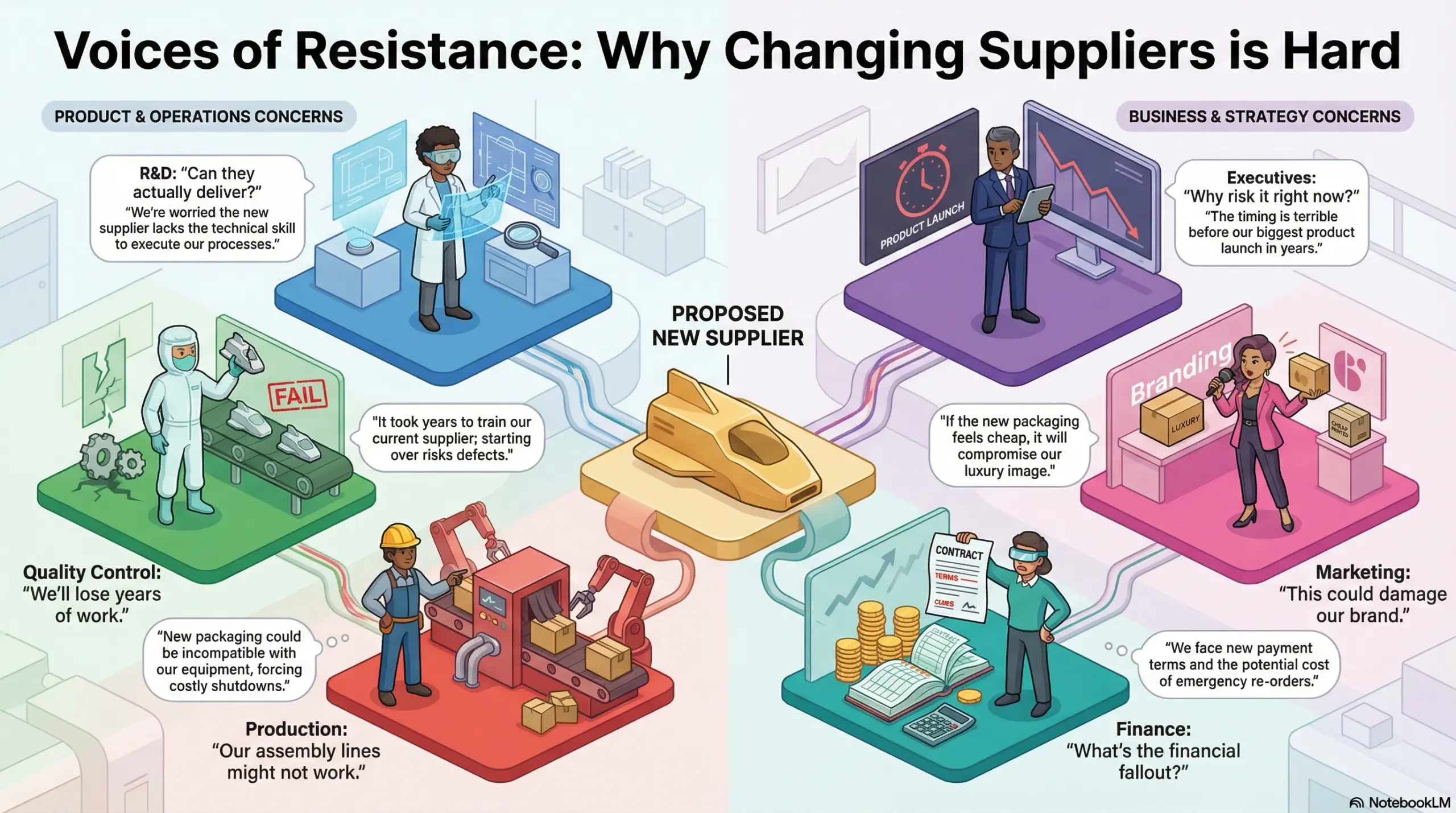
He faced pressure from every direction, and we could hear it in every conversation:
From his executives: “Why should we risk changing suppliers now, right before our biggest product launch in years? What if you’re wrong?”
From their R&D team: “Can they actually execute these new manufacturing processes? How do we know they won’t fail halfway through development?”
From quality control: “We’ve spent years teaching our current supplier what we expect. Starting over means months of recalibration. What if batches don’t match? What if there are defects we don’t catch until products reach stores?”
From production: “Our filling lines are calibrated for the current packaging. Will new bottles even fit? Are we going to shut down production while we retrofit equipment?”
From marketing: “Our brand repositioning depends on packaging that feels luxury. If the new supplier delivers something that looks cheap or feels off-brand, we’ve compromised years of brand building.”
From finance: “Switching suppliers means new payment terms, new inventory management, new working capital requirements. And what happens if we have to emergency-order from the old supplier because the new one falls through?”
Every concern was legitimate. Every voice represented someone protecting their domain from failure. And he stood in the middle of it all, knowing that doing nothing was the safest choice for his career but the worst choice for his company.
When we finally met face-to-face at a trade show, we saw it in his eyes—that mix of hope and exhaustion that comes from believing something is possible while fearing it might destroy you to try.
3. The Moment We Chose to Be Different
Most suppliers would have jumped straight into their pitch: “Our quality is exceptional. Our prices are competitive. We have ISO certifications and client testimonials and…”
We didn’t.
Instead, we said something that seemed to catch him off guard: “What you need isn’t a new supplier. You need a solution that allows you to complete this transition safely and deliver results internally. We’re not here to sell you packaging. We’re here to help you succeed at one of the hardest things a procurement professional can do—change a supplier relationship without betting your entire career on it.”
For a moment, he just looked at us. Then he started talking—really talking. About the sleepless nights. About the spreadsheets he’d built trying to quantify risks that felt unquantifiable. About the colleagues who were supportive in meetings but skeptical in hallway conversations. About his wife asking if this job was worth the stress.
We listened. Not because it was a sales technique, but because we’d been there—on projects where everything was at stake, where one failure could erase a dozen successes, where courage and fear wrestled every single day.
By the time that trade show ended, something had shifted. We weren’t a supplier trying to win his business. We were partners who understood the journey ahead and were willing to walk it together.
4. Building a Bridge Across the Fear
Phase One: Making the Invisible Visible
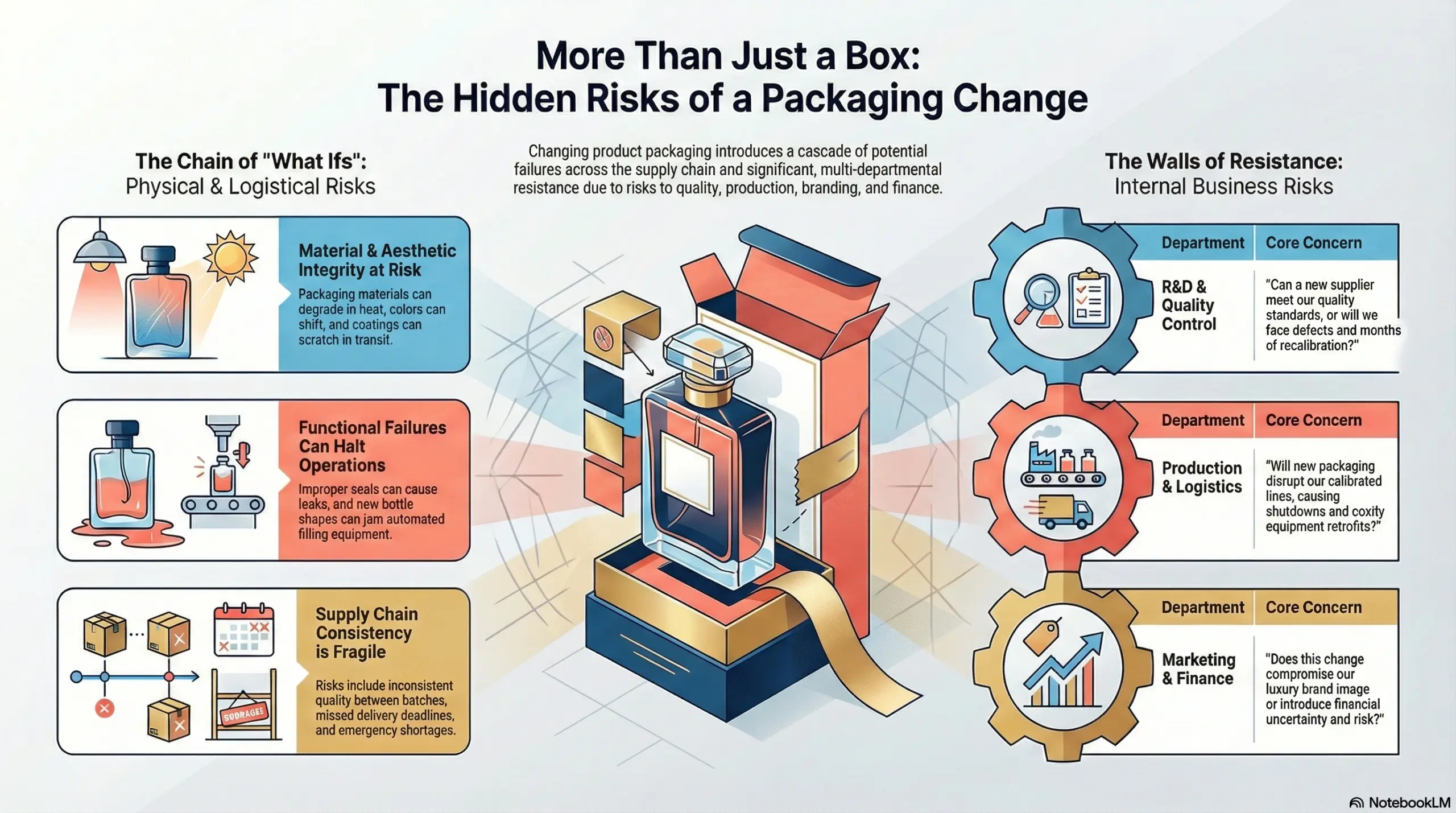
The first thing we did was something that surprised him—we created a risk confirmation checklist. Not a proposal. Not a quote. A detailed, systematic breakdown of everything that could go wrong.
We listed them all:
What happens if bottle materials degrade in Middle Eastern heat?
What if colors shift between batches and suddenly store shelves look inconsistent?
What if our surface coatings scratch during shipping, arriving at retailers looking damaged?
What if bottles don’t seal properly and product leaks during distribution?
What if packaging can’t handle the rough reality of logistics networks—the drops, the bumps, the temperature swings?
What if new bottles jam their filling equipment, shutting down production?
What if the first batch looks perfect but the second looks different?
What if we miss delivery deadlines and product launches get pushed back?
What if there’s an emergency shortage and no backup plan?
Most suppliers hide from these questions. We made them the foundation of our conversation.
For him, this changed everything. Suddenly, he wasn’t defending a vague hope that a new supplier might work out. He was managing a specific, documented list of risks with concrete mitigation strategies. When his R&D team worried about process stability, he could point to checklist item 7. When quality raised concerns about consistency, he could reference items 2 and 6.
He told us later: “For the first time, I wasn’t trying to convince people with words. I was showing them that we’d thought through every nightmare scenario they could imagine—and we had plans for all of them.”
The checklist transformed him from someone pushing for change into someone protecting the company from risk. That’s a very different political position, and we watched his confidence grow with each internal meeting.
Phase Two: Turning Promises Into Proof
Words are cheap. Everyone promises quality. Everyone claims reliability. Everyone says “trust us.”
We decided to show instead of tell.
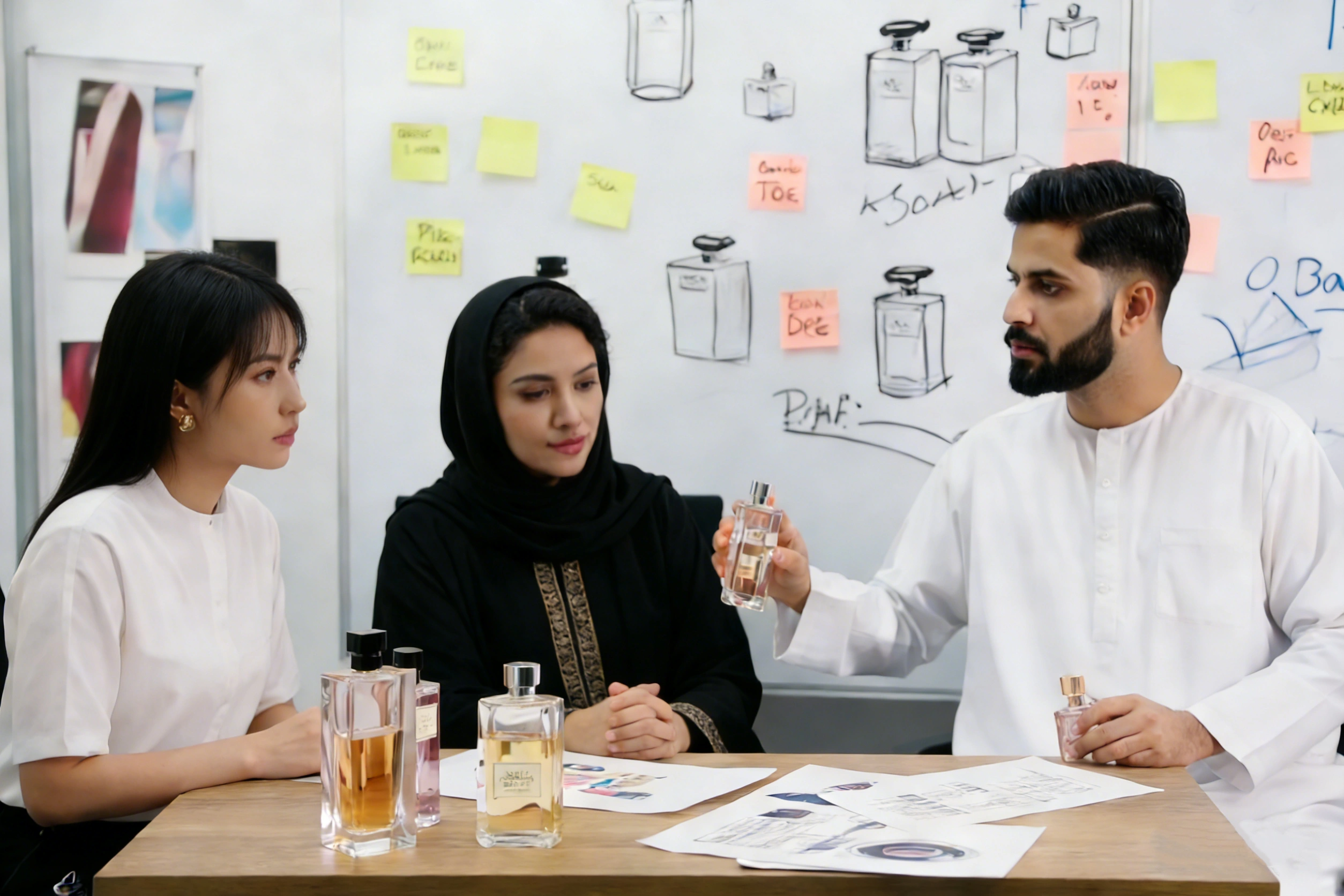
We created a sampling program that went far beyond “here’s what it looks like.” We produced samples that demonstrated every technically challenging requirement—especially those soft, delicate macaron colors that the children’s brand needed. Colors that fade in sunlight. Colors where tiny variations between batches become glaringly obvious. Colors that had caused their previous supplier endless headaches.
But we didn’t just hand over samples. We provided documentation of everything: the manufacturing processes, the materials specifications, the quality control procedures. We ran accelerated aging tests, simulating months of storage and light exposure to prove the colors wouldn’t fade. We showed our batch management protocols—the statistical controls, the raw material qualification, the standardized procedures that ensure consistency isn’t luck but process.
For their quality control team, we opened our systems completely. Here’s how we inspect raw materials. Here’s our in-process quality checkpoints. Here’s our statistical sampling protocols. Here’s how we handle corrective action. Here’s how we trace every component through production.
He distributed these materials in an internal meeting, and he described what happened next: “I watched the energy in the room change. The quality manager started asking specific technical questions instead of expressing vague concerns. R&D began discussing integration requirements instead of questioning feasibility. For the first time, people were evaluating actual evidence instead of defending their anxiety.”
One of the skeptics—someone who’d been openly dismissive of changing suppliers—examined the samples for a long time. Then he looked up and said, “Okay. This is actually impressive. Maybe this could work.”
That moment, he told us, was when he started believing this might actually happen.
Phase Three: One Battle at a Time
Even with documented risks and compelling evidence, we knew asking his company to switch all packaging immediately would trigger every organizational defense mechanism they had. The stakes would feel too high. The fear of catastrophic failure would overwhelm the promise of improvement.
So we suggested something smarter: “Let’s start with one new product launch. Something important enough to matter but contained enough to be recoverable if something goes wrong. Let’s prove this works before we scale it.”
They were launching a new perfume line—part of the 2026 repositioning. It was high-visibility, which meant success would be noticed. But it was also new, which meant there was no established baseline for comparison. If the packaging was excellent, that would be the standard. If there were minor issues, they’d be attributed to new product growing pains rather than supplier failure.
We worked together to define what success would look like:
Hit every delivery milestone—no surprises, no delays
Meet quality acceptance rates that exceeded current performance
Demonstrate responsive communication and fast problem resolution
Show that cross-functional collaboration could be smooth, not painful
Deliver within the agreed commercial terms
The pilot project became a proving ground. For his company, it was a chance to validate our capabilities in real production conditions without risking their entire product line. For us, it was an opportunity to demonstrate that we understood their internal processes, quality expectations, and collaboration style.
For him, it was something even more valuable: a chance to succeed visibly on a bounded project, building the credibility he’d need to expand the partnership later.
5. When Theory Met Reality
The Color That Wouldn’t Fade
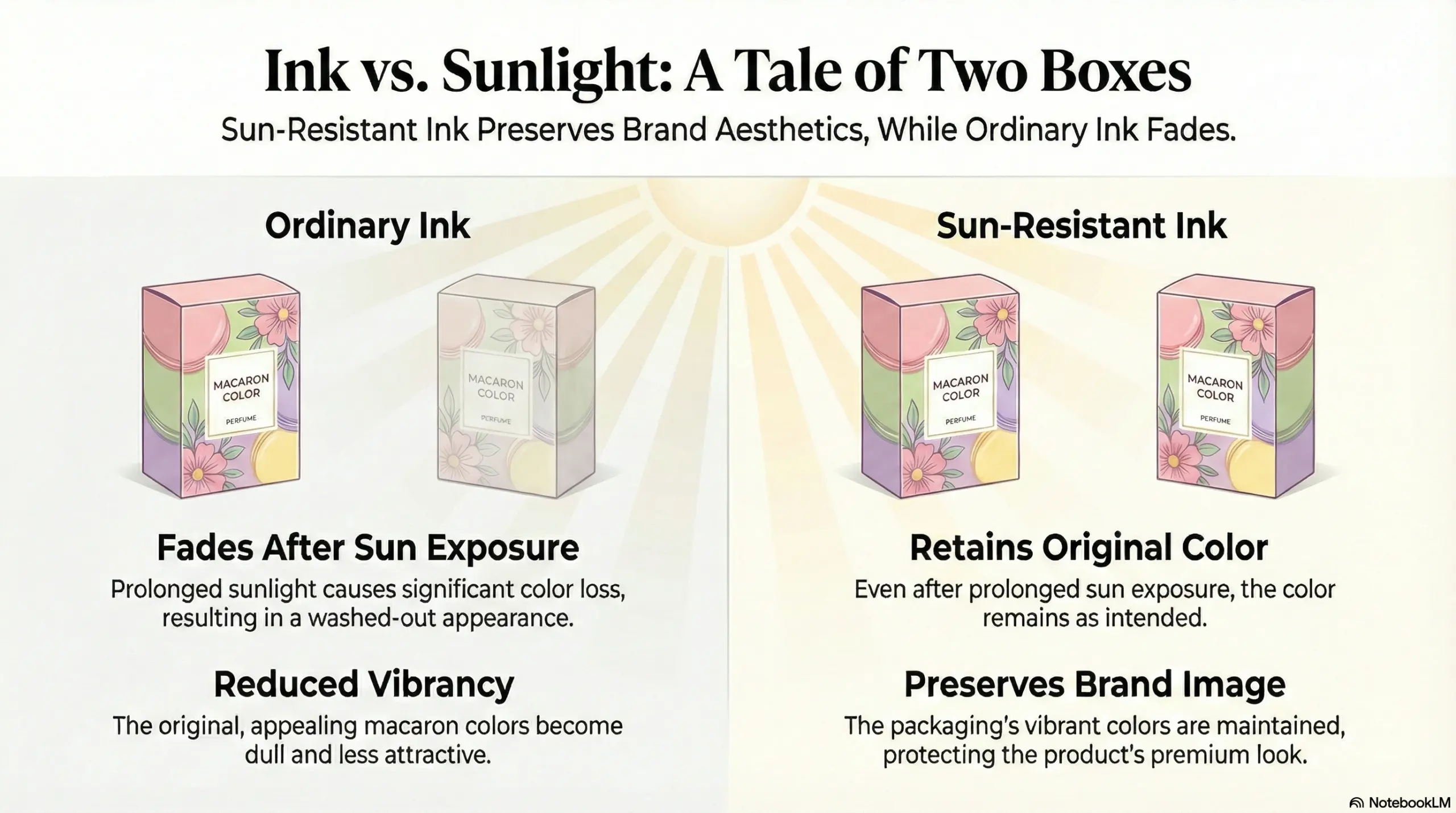
Their children’s brand packaging required these beautiful macaron colors—soft pinks, gentle lavenders, delicate mint greens. They looked perfect in samples. But there was a problem everyone in the industry knew about: those colors fade. Under the harsh Middle Eastern sun streaming through store windows, ordinary inks break down. Within weeks, the gentle pink becomes washed-out. The lavender turns gray. The premium packaging starts looking cheap and old.
Their previous supplier had tried various solutions, but nothing worked consistently. It had become an accepted compromise—beautiful colors that wouldn’t stay beautiful.
We weren’t willing to accept that compromise.
Without being asked, without charging extra, we upgraded to sun-resistant inks. These formulations use more photostable pigments and UV inhibitors that protect against light degradation. They cost more, and we absorbed that cost because we understood something fundamental: our success was tied to their success, and they couldn’t build a premium children’s brand on packaging that faded.
When we explained this to him, he went quiet for a moment. Then he said, “You know, I budgeted for this to be a problem we’d have to manage. I didn’t expect you to just… solve it.”
That decision rippled through his organization. When their marketing team heard that color stability had been eliminated as a concern rather than mitigated, their enthusiasm for the partnership grew. When finance saw that we’d absorbed costs to deliver better results rather than nickel-and-diming the project, their trust deepened.
Sometimes the most powerful sales strategy is simply caring about the client’s success more than maximizing your own short-term profit.
The Battle for Consistency
Even with sun-resistant inks, maintaining perfect color consistency across production batches remained challenging. Manufacturing involves variation—it’s physics and chemistry, not magic. Raw materials vary slightly. Equipment operates within tolerances. Ambient conditions fluctuate.
The question wasn’t whether variation would exist but whether we could keep it invisible to consumers and within their brand standards.
Our sales manager made this her personal mission. She implemented quantitative color measurement rather than relying on visual assessment. She set up statistical process control that monitored output continuously throughout production runs, catching drift before it produced defects. She worked with paper suppliers to minimize substrate variation. She created visual reference standards so everyone aligned on what “acceptable” meant.
But more than the technical controls, what mattered was her attitude. She treated every batch like it bore her personal signature. She’d call him proactively if something looked even slightly off, not waiting for him to discover problems. She’d send photos and measurements without being asked, keeping him informed so he never had to wonder or worry.
He told us later: “I used to dread production runs because I knew I’d be dealing with quality complaints. Now I actually look forward to them because I know she’s watching every detail like it’s her own reputation on the line. Because it is.”
That kind of personal investment can’t be written into a contract. It emerges from people who take pride in their work and who see client success as their success.
The Bottle That Nearly Defeated Us
The paper packaging was going beautifully. Then came the perfume bottles.
Their previous supplier had created a mold, but the bottles it produced had problems—structural flaws that caused sealing issues and aesthetic irregularities. The mold represented significant investment, and they faced an agonizing choice: abandon the mold and start over (expensive and time-consuming), or try to modify it (risky, with no guarantee of success).
When we took over the project, our engineering team analyzed the mold and the problems it created. The data contained errors that manifested as real-world failures. We could have told them they needed to scrap the mold and start fresh—the safest recommendation that would’ve protected us from any responsibility for inherited problems.
Instead, our engineers said, “We think we can fix this.”
They redesigned specific mold elements, correcting the structural errors. But they went further—they improved the aesthetic refinement of the bottle design, making it not just functional but more beautiful. They treated an inherited problem as an opportunity to deliver unexpected value.
When the modified mold produced its first bottles, their quality manager examined them carefully. Then he smiled—really smiled—for the first time in our partnership. “These are better than the original design we envisioned. You didn’t just fix the problem. You elevated it.”
For our engineers, who’d spent late nights perfecting the modifications, that reaction made everything worthwhile. For him, it was another proof point that he’d chosen partners who viewed their challenges as our own.
6. The Moment Everything Changed
The pilot project launch arrived—the moment when months of preparation, sampling, documentation, and trust-building would face the ultimate test: real production, real deadlines, real market pressure.
Our team felt the weight of it. We knew he had staked his reputation on this decision. We knew that every skeptic in his company was watching, some hoping we’d succeed and others—consciously or not—waiting for validation that change had been too risky.
The production runs began. The 30-day timeline we’d committed to held firm. Quality metrics exceeded targets. Communication flowed smoothly. When minor adjustments were needed, we addressed them immediately. The cross-functional coordination that everyone had worried about turned out to be… actually pleasant.
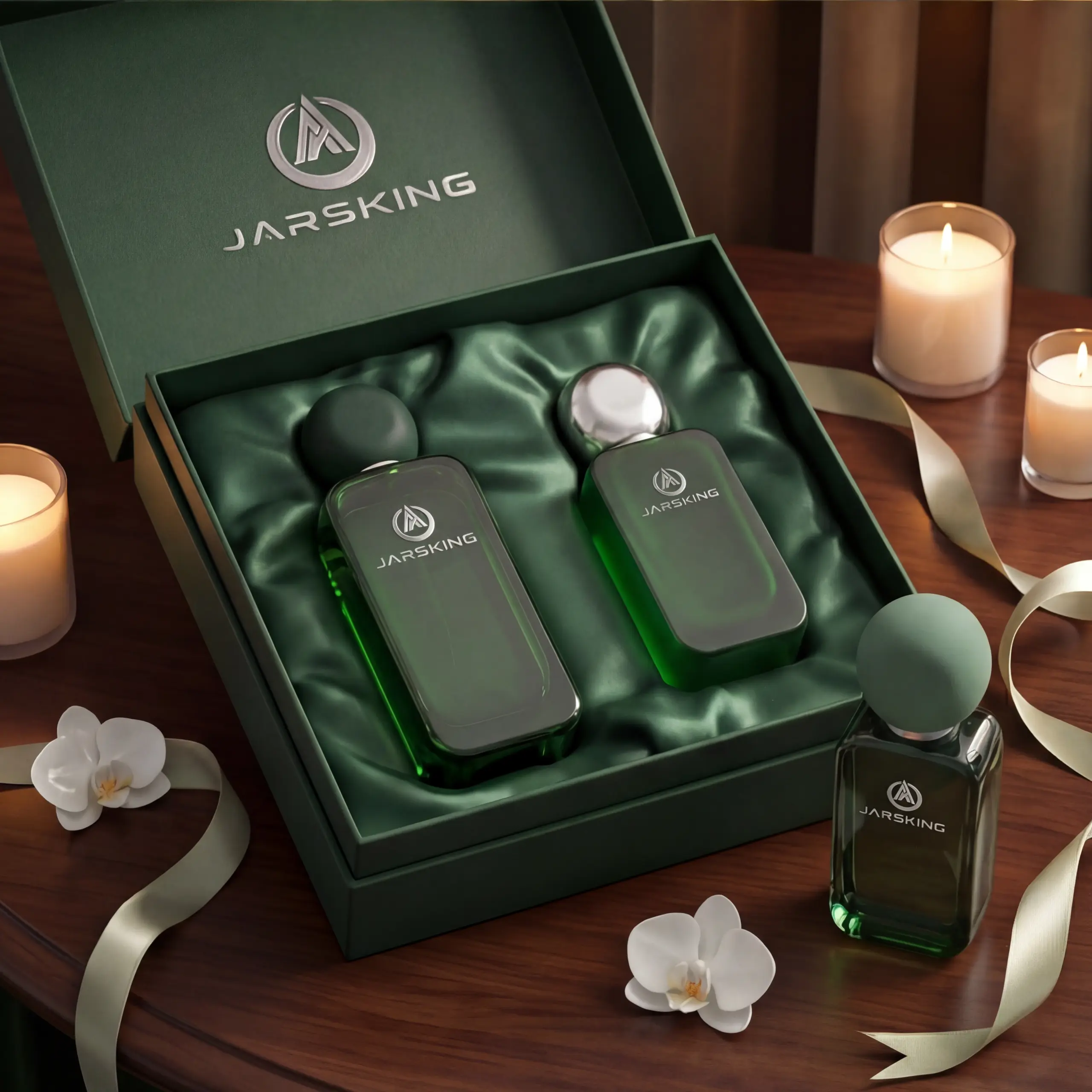
Product launched on schedule. The packaging looked stunning on shelves—colors stable and consistent, structural quality evident, brand identity elevated. Customer response was enthusiastic. Internal stakeholders who’d been skeptical began acknowledging that maybe, just maybe, this supplier transition had been the right call.
In a meeting several weeks after launch, one of the executives who’d initially opposed the change made a comment he would remember forever: “I’ll be honest—I thought this was a mistake. But you were right. We should have done this years ago.”
He called us that evening. We could hear the emotion in his voice: “You know what this means to me? It’s not just that the project succeeded. It’s that I can finally sleep at night. For months, I’ve been carrying this fear that I’d made a catastrophic error in judgment. That fear is gone now. We proved it works. And now we can really build something.”
7. Beyond Transactions to Partnership
The pilot project’s success opened doors. More product lines transitioned to Jarsking. The annual procurement value grew to tens of millions of yuan. But more important than the numbers was the transformation of the relationship itself.
We weren’t their supplier anymore. We were their packaging partners—integrated into their product development conversations, contributing ideas during brand strategy sessions, proactively identifying opportunities for improvement before they were asked.
When challenges arose—and they always do—we solved them together. No finger-pointing, no contract clauses, no adversarial positioning. Just partners figuring things out because both organizations’ success was intertwined.
His career trajectory changed too. He’d entered the role as the new person trying to prove himself. He emerged as a strategic leader who’d successfully transformed a critical supplier relationship, improving quality while enhancing supply chain reliability. His confidence grew. His influence expanded. Other departments started seeking his input on their own supplier challenges.
He built a reputation inside his company as someone who could navigate complex change successfully—not by taking reckless risks, but by managing risks so thoroughly that transformation became controllable rather than chaotic.
For us at Jarsking, the partnership became a reference point for how we wanted to work with every client. Not as vendors trying to maximize short-term transactions, but as partners invested in long-term mutual success.
8. What We Learned About Change
Fear Is the Real Obstacle
Looking back on this journey, the most striking insight is how little the actual obstacles mattered compared to the fear of the obstacles. The technical challenges—color stability, batch consistency, structural redesign—were all solvable with good engineering and disciplined manufacturing. They weren’t easy, but they were manageable.
What almost prevented the partnership wasn’t technical inadequacy. It was organizational fear—fear of the unknown, fear of personal consequences if things went wrong, fear of looking foolish for advocating change that failed.
The three-phase approach we used—risk confirmation, evidence building, phased implementation—worked not because it solved technical problems but because it addressed emotional and political obstacles. It converted vague, paralyzing fear into specific, manageable risks. It transformed internal skeptics from adversaries into evaluators of evidence. It made change feel achievable rather than reckless.
Suppliers who understand that their real competition isn’t other vendors but the client’s fear of change will approach sales completely differently. They’ll invest in de-risking the decision rather than maximizing the promises. They’ll help clients build internal consensus rather than trying to sell directly. They’ll structure engagements to enable controlled validation rather than demanding all-or-nothing commitments.
Trust Can’t Be Demanded
Every supplier claims they’re trustworthy. Every vendor promises to be a reliable partner. The words mean nothing because everyone says them.
Trust emerges from consistent behavior over time, especially when that behavior requires sacrifice:
Absorbing upgrade costs for sun-resistant inks when we could have treated them as change orders
Fixing inherited mold problems rather than blaming the previous supplier and demanding new capital investment
Proactive communication about potential issues rather than waiting to be asked
Personal investment from team members who treated client success as their personal mission
Transparent documentation of our processes and quality systems rather than hiding behind “proprietary methods”
He told us near the end of the first year: “You know when I knew I’d made the right decision? It was when your sales manager called me about a minor color variation that she’d already corrected but wanted me to know about anyway. It was already fixed. She didn’t have to tell me. But she did, because she knew I’d worry if I discovered it later. That’s when I stopped feeling like a client and started feeling like a partner.”
That kind of trust can’t be manufactured through marketing claims or contract clauses. It emerges from genuine commitment to the other party’s success, demonstrated through actions that sometimes cost you something in the short term but build something invaluable over time.
Change Requires Champions
His role in this transformation was absolutely critical. Without his vision, persistence, and willingness to advocate internally despite significant personal risk, no amount of our capabilities would have mattered. The best supplier in the world can’t overcome a client organization that isn’t ready to change.
What made him effective wasn’t just his technical competence or procurement knowledge. It was his emotional intelligence—his ability to understand what different stakeholders feared, what they needed to feel comfortable with change, and how to present evidence in ways that spoke to their specific concerns.
He could have approached the supplier transition as a pure procurement optimization exercise, focused narrowly on cost and quality specifications. Instead, he recognized it as an organizational change initiative requiring communication strategy, stakeholder management, and political savvy.
Our partnership succeeded because we provided tools and evidence that amplified his change leadership, but he was the one who had to wield those tools inside his organization. He was the one who faced skeptical colleagues in meetings. He was the one who staked his reputation on an unproven relationship. He was the champion who made change possible.
Organizations considering significant supplier transitions need to cultivate these champions—procurement professionals who understand both the technical and human dimensions of change, who can build consensus across functions, and who have the courage to advocate for transformation even when the safe path is maintaining the status quo.
9. Looking Forward
At this year, the brand repositioning they’ve been building toward for one year is finally launching. The gender-neutral packaging has been finalized—bold, inclusive, contemporary. The children’s brand continues expanding, with colors that stay vibrant and packaging that whispers quality with every detail. New product concepts are in development, and we’re part of those conversations from the beginning now rather than being brought in after designs are locked.
The annual procurement value has grown to tens of millions of yuan, but that number doesn’t capture what the partnership really represents. We’ve become woven into their product development process, their quality standards, their supply chain strategy.
He—the purchasing manager—has become a confident strategic leader. His successful supplier transformation became a showcase for how procurement can drive competitive advantage rather than simply executing transactions. He’s been promoted, with broader supply chain responsibilities, and he’s applying the same change management principles to other supplier relationships within his company.
For Jarsking, this partnership validated our belief that the most valuable thing we can offer clients isn’t just packaging—it’s the ability to make supply chain transformation controllable and successful. We’ve refined the three-phase approach into a repeatable methodology that we now use with other clients facing similar transitions. The risk confirmation checklist has evolved based on lessons learned. The evidence-building protocols have been enhanced. The phased implementation strategy has been adapted to different client situations.
But what hasn’t changed is the fundamental philosophy: understand the client’s real problem (which is often organizational and emotional rather than purely technical), design engagement approaches that address those real problems, invest in the client’s success even when it costs us something short-term, and measure our success by whether we help clients achieve their goals rather than by how much we sell.