


1. Introduction
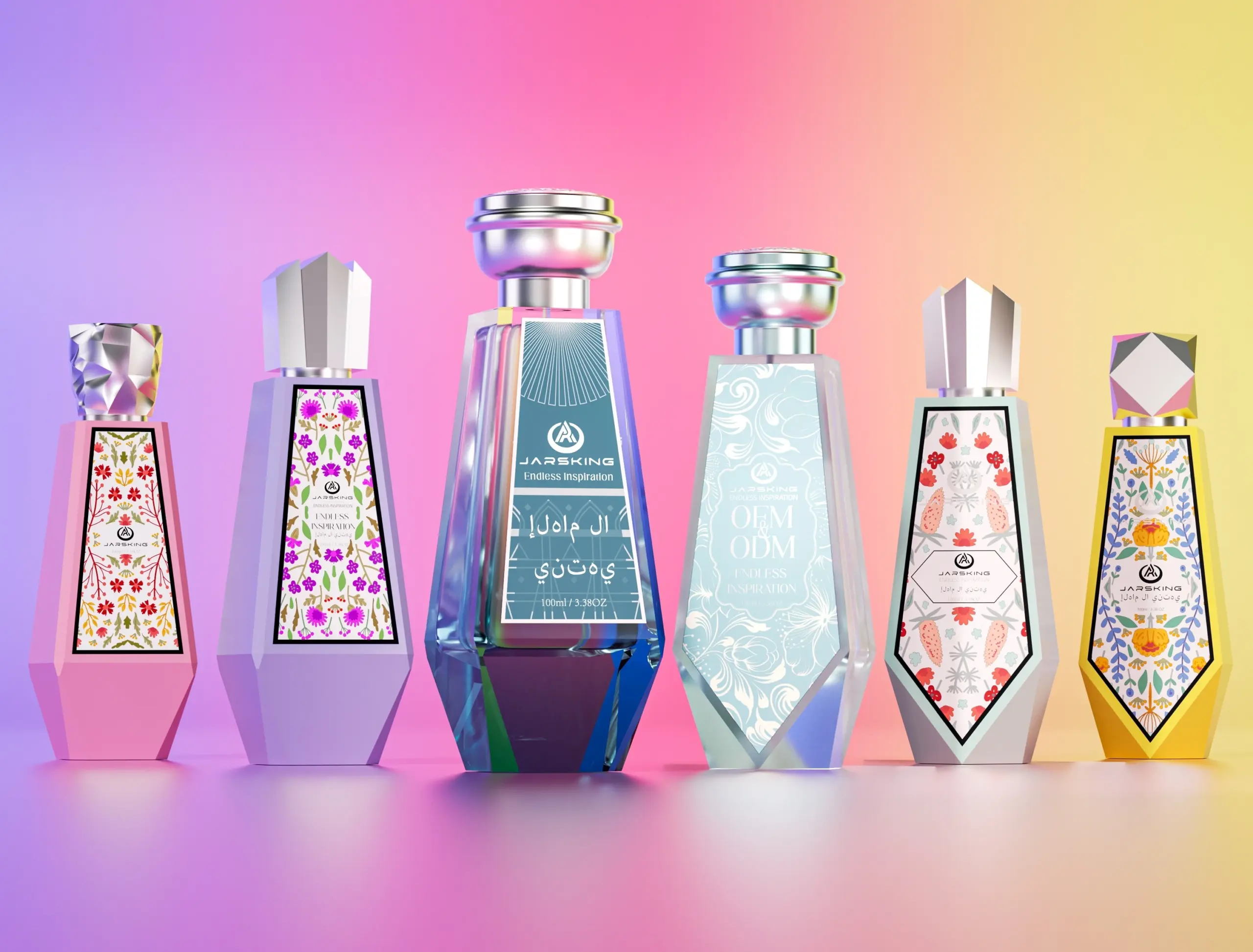
The global perfume market, valued at over $50 billion annually, demands packaging that serves as both functional container and artistic statement. For brands targeting luxury and mid-to-high-end segments, the bottle design often becomes as iconic as the fragrance itself. This case study explores how a Saudi Arabian perfume brand with six distinct labels successfully partnered with us to bring a new product line to market, navigating cultural nuances, technical challenges, and aggressive timelines to achieve their vision.
The story begins at one of the Middle East’s premier beauty industry gatherings and unfolds into a comprehensive examination of international B2B collaboration, design innovation, and manufacturing excellence. Through detailed analysis of the project timeline, technical processes, and relationship-building strategies, this case study offers insights valuable to brands, manufacturers, and industry professionals seeking to understand best practices in cross-border packaging development.
2. The Client: A Multi-Brand Saudi Fragrance House
The Saudi Arabian client represents a sophisticated fragrance conglomerate managing six distinct perfume brands across various market segments. Their portfolio strategy encompasses both mid-range accessible luxury and high-end premium offerings, allowing them to serve diverse consumer preferences while maintaining brand differentiation. With distribution networks spanning global markets, they understand that success in the competitive fragrance industry requires more than exceptional scents—it demands packaging that captures attention, communicates brand values, and justifies price positioning.
What distinguishes this client is their operational sophistication. Unlike many Middle Eastern fragrance brands that rely primarily on local or European suppliers, they’ve invested considerable time understanding the Chinese manufacturing landscape. Their purchasing team regularly conducts factory visits across China, evaluating capabilities, quality systems, and innovation potential. This proactive approach to supply chain management has given them competitive advantages in cost efficiency, design flexibility, and speed to market.
The brand’s decision-makers demonstrate cultural curiosity extending beyond business transactions. Their appreciation for Chinese culture, history, and business philosophy informed their approach to supplier relationships. Rather than viewing manufacturing partners as mere vendors, they sought collaborators who could contribute creative input and technical expertise to enhance their product development process.
3. The Genesis: Beautyworld Middle East Connection
Initial Meeting and Impression Formation
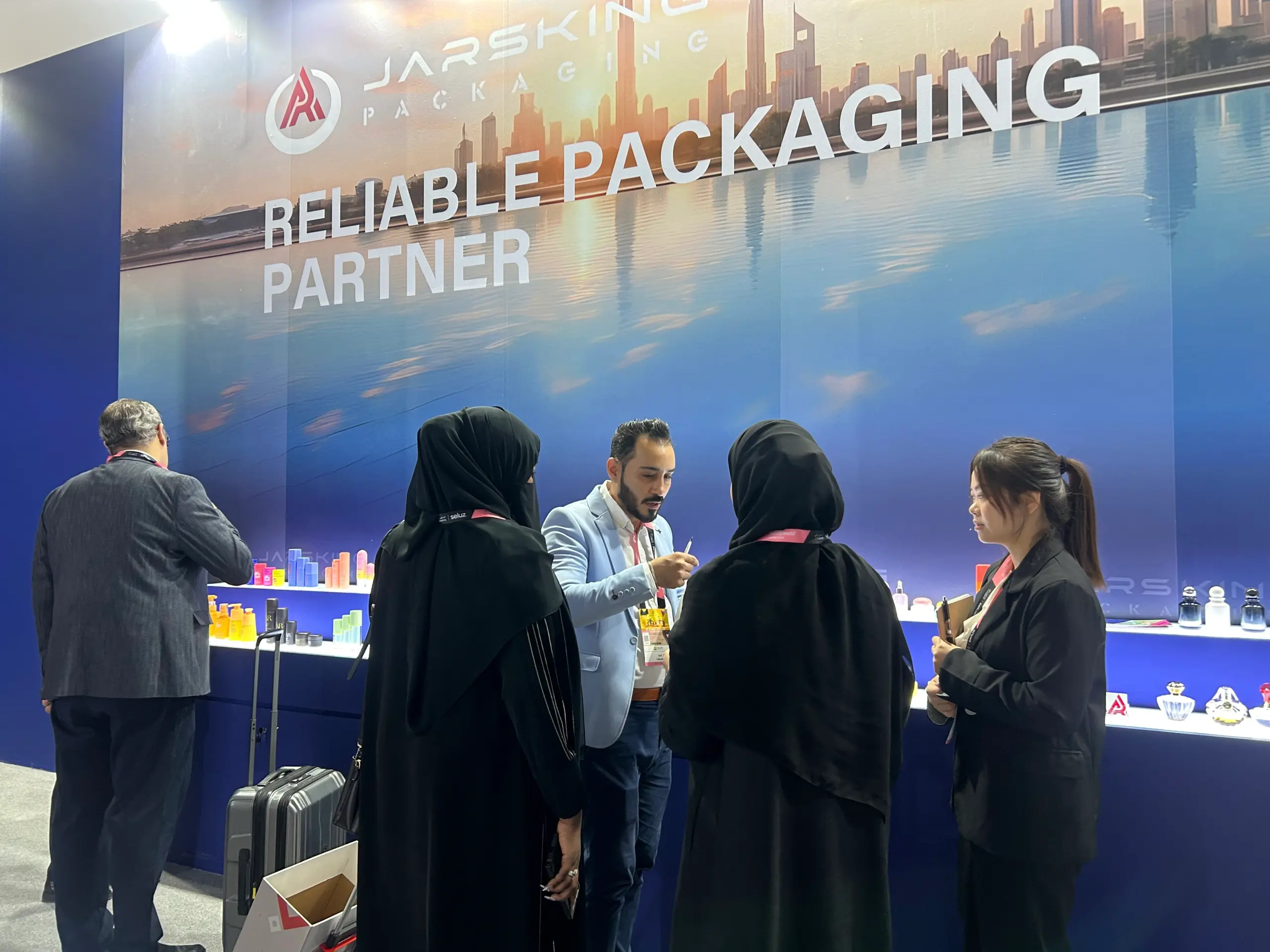
First encounters at trade shows often follow predictable patterns—quick introductions, brochure exchanges, promises to follow up that rarely materialize. The meeting between this Saudi brand and our team diverged from this script. The brand’s purchasing team, experienced in evaluating suppliers, approached our booth with specific criteria in mind. They examined sample bottles for quality indicators: weight distribution, surface finish consistency, decoration precision, and structural integrity. These physical assessments provided immediate data about our manufacturing standards and attention to detail.
What elevated the interaction beyond transactional inquiry was our design portfolio presentation. Our samples demonstrated range—from minimalist geometric forms appealing to contemporary tastes to ornate designs incorporating traditional motifs. This versatility indicated design capability beyond mere production execution. For the Saudi brand, managing six different labels with distinct brand identities, this flexibility represented valuable potential. A supplier capable of producing diverse aesthetics could potentially serve multiple brands within their portfolio, simplifying supply chain management while maintaining brand differentiation.
The conversation revealed mutual alignment on quality philosophy. The Saudi team emphasized that their mid-to-high-end positioning demanded packaging quality matching fragrance quality. Inferior bottles would undermine perceived value regardless of perfume excellence. Our representatives articulated our understanding that premium packaging requires investment in materials, processes, and quality control. This shared perspective on quality as non-negotiable established foundational trust for future collaboration.
Post-Exhibition Communication
Following the exhibition, both parties maintained communication momentum—a crucial factor in converting trade show connections into actual partnerships. The Saudi brand’s purchasing manager initiated follow-up within a week, expressing interest in arranging a factory visit. This proactive approach reflected their established practice of on-site evaluation before committing to new suppliers. For us, the visit request represented positive progress but also created pressure to demonstrate capabilities beyond exhibition samples.
Preparation for the upcoming visit required coordination across our departments. The factory tour needed to showcase production capacity, quality systems, and technical capabilities. Our design teams prepared portfolio presentations highlighting successful projects for international brands. Quality control documentation required organization to demonstrate systematic approaches to defect prevention and process monitoring. This preparation phase, while resource-intensive, represented investment in relationship building with a potentially significant long-term client.
4. The Factory Visit: From Interest to Partnership
Comprehensive Facility Assessment
One month after the Beautyworld Middle East encounter, the Saudi brand’s representatives arrived for their scheduled factory visit. The timing proved strategic—sufficient interval for us to prepare while maintaining momentum from the exhibition introduction. The visit agenda spanned a full day, reflecting the comprehensive evaluation approach characteristic of sophisticated buyers.
For the Saudi visitors, understanding our evolution offered insights into stability, ambition, and capability to scale alongside client growth. Companies with histories of continuous investment in technology and talent typically demonstrate commitment to long-term excellence rather than short-term profit maximization.
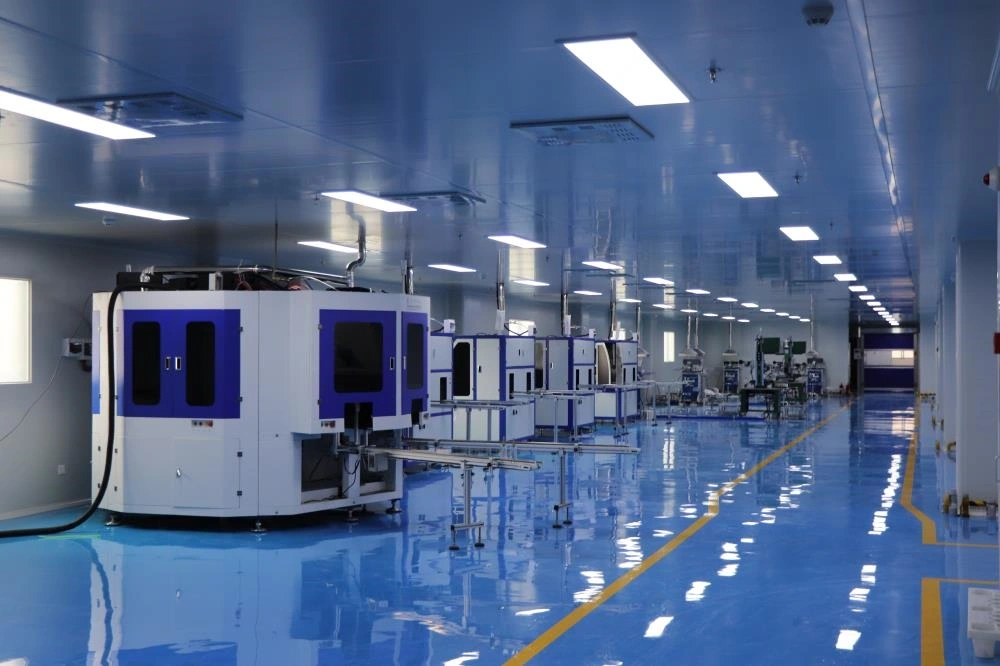
Production capacity assessment formed the tour’s technical core. The visitors observed multiple production lines operating simultaneously, noting output rates, quality monitoring procedures, and workflow organization. They examined equipment specifications, maintenance schedules, and operator training protocols. These observations provided data for evaluating whether we could handle their volume requirements while maintaining quality standards. The ability to see production in action, rather than relying solely on stated capabilities, offered confidence grounding for partnership decisions.
Quality control systems received particular scrutiny. The Saudi team reviewed our inspection procedures at various production stages, from raw material verification through final product examination. They discussed defect rates, corrective action processes, and continuous improvement initiatives. Documentation of quality metrics demonstrated systematic approaches rather than ad hoc responses to problems. For a brand where packaging quality directly impacts perceived value, these quality assurance mechanisms represented critical partnership criteria.
Service Capabilities Exploration
Beyond manufacturing capacity, the visit explored value-added services distinguishing us from competitors. Our design studio showcase proved particularly impactful. The Saudi visitors met with our designers and engineers who could translate brand concepts into technical specifications and physical prototypes. This in-house design capability meant clients could work directly with the team executing their vision, eliminating communication friction inherent in working with separate design consultancies and manufacturers.
Our engineering department presentation highlighted technical problem-solving capabilities. Engineers discussed how they optimized bottle designs for manufacturability without compromising aesthetic intent. They shared examples of overcoming technical challenges—achieving specific surface finishes, accommodating complex decoration requirements, or meeting unusual dimensional specifications. This technical depth reassured the Saudi team that their future design requirements, however demanding, could be feasibly executed.
Supply chain management capabilities also featured in discussions. We outlined our raw material sourcing practices, inventory management systems, and logistics coordination. For international clients, understanding how a supplier manages the supply chain from raw materials through finished goods delivery provides confidence in reliability. The Saudi brand, managing global distribution, valued partners who could coordinate shipments to multiple destinations and navigate international logistics complexities.
Cultural Connection and Relationship Foundation
Throughout the visit, informal conversations revealed the Saudi team’s appreciation for Chinese culture. They asked about local customs, business traditions, and cultural values. This genuine curiosity created rapport transcending typical client-supplier interactions. Our representatives, recognizing this interest, shared insights about Chinese business philosophy emphasizing long-term relationships over transactional exchanges—a perspective resonating with Middle Eastern business culture.
These cultural exchanges established personal connections complementing professional assessment. In both Chinese and Middle Eastern business cultures, relationship quality significantly influences partnership success. Trust, mutual respect, and personal rapport facilitate communication during challenging situations and create willingness to accommodate special requests or compressed timelines. The foundation laid during this visit would prove valuable when timeline pressures emerged later in the project.
By day’s end, both parties recognized partnership potential. The Saudi brand found us combining technical capability, design expertise, and cultural affinity. We identified a client with sophisticated requirements, global ambitions, and appreciation for quality—precisely the customer profile aligning with our market positioning. The stage was set for collaboration.
5. Project Initiation: New Product Line Development
Brand Strategy and Market Positioning
The collaboration’s focal project involved developing packaging for a new fragrance line under one of the Saudi brand’s mid-to-high-end labels. This market positioning presented specific packaging challenges. Mid-to-high-end products must signal quality and sophistication justifying premium pricing while remaining accessible to aspirational consumers. The packaging needed to communicate luxury without venturing into ultra-premium territory where production costs would undermine profit margins.
The brand’s strategy targeted global markets with particular emphasis on Middle Eastern, Asian, and European distribution channels. This geographic diversity meant packaging designs needed cross-cultural appeal. Aesthetic preferences vary significantly across markets—what resonates as elegant in one culture might appear understated or excessive in another. The design challenge involved finding universal luxury language while allowing sufficient flexibility for regional market adaptations.
The decision to launch multiple fragrances simultaneously created packaging requirements for three distinct bottle designs. This multi-design approach served several strategic purposes. It allowed the brand to test different aesthetic directions with consumers, provided retail variety preventing redundant shelf presence, and accommodated different fragrance profiles—lighter scents might suit more delicate bottle forms while intense fragrances could warrant bolder design statements.
Initial Design Brief and Requirements Communication
The brand’s purchasing manager articulated design requirements combining specific parameters with creative flexibility. Technical specifications included bottle capacity, neck dimensions for compatibility with their chosen dispensing systems, and base stability requirements for retail display. These constraints provided necessary boundaries ensuring designs would function practically within their distribution and retail environment.
Aesthetic direction proved more nuanced. The brand desired contemporary elegance avoiding both minimalist severity and ornate excess. They referenced successful fragrance packaging from luxury brands as inspiration—not for direct imitation but to calibrate aesthetic positioning. These references helped our design team understand the quality perception and emotional response the brand sought to evoke. Visual benchmarking ensures designers and clients share understanding of subjective terms like “elegant,” “sophisticated,” or “modern.”
Material and finish requirements reflected the mid-to-high-end positioning. The brand specified glass bottles rather than plastic, recognizing that material choice immediately signals quality level. They requested metallic accents and decorative elements elevating visual appeal beyond basic glass containers. These specifications acknowledged that premium positioning requires investment in materials and processes justifying higher retail prices.
Learning from Past Successes
A crucial aspect of initial collaboration involved reviewing our previous design projects. Our engineering and design teams presented case studies of successful bottle development for other brands, explaining design rationale, technical execution, and problem-solving approaches. These examples served multiple purposes beyond mere portfolio demonstration.
First, they established our credibility in handling complex design requirements. Seeing completed projects similar in complexity to their own requirements built client confidence in capability. Second, they provided a shared reference library for design discussions. When proposing design elements, our team could reference specific previous examples rather than relying on abstract descriptions prone to misinterpretation. Third, they revealed our design methodology—our process for translating concepts into manufacturable products.
The Saudi team contributed their own insights from past packaging projects, discussing what succeeded in market and what underperformed. They shared consumer feedback about bottle ergonomics, aesthetic appeal, and perceived quality. This knowledge exchange created collaborative dialogue rather than one-directional briefing. We gained valuable market intelligence informing design decisions, while the brand gained confidence that we understood the commercial context beyond technical execution.
6. Design Development: From Concept to Selection
Creative Exploration Phase
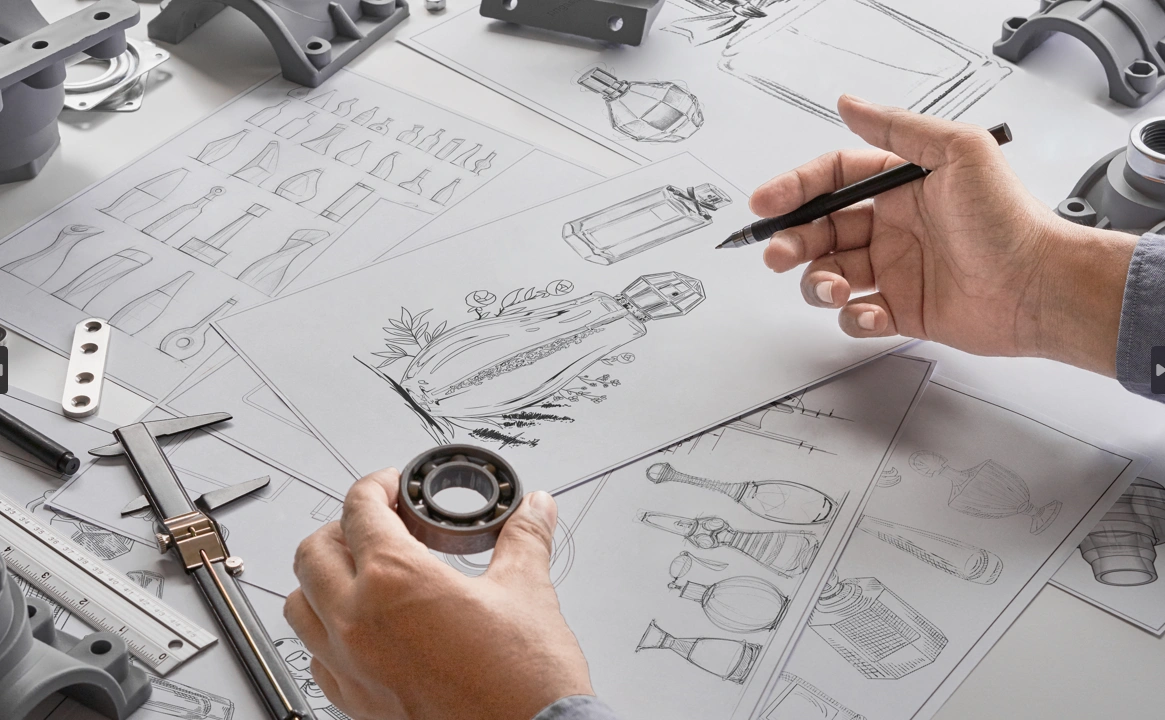
Armed with comprehensive understanding of brand requirements, market positioning, and aesthetic preferences, our design team initiated creative exploration. Our approach involved generating diverse concepts along multiple aesthetic axes—from organic to geometric forms, from minimal to decorative treatments, from traditional to avant-garde expressions. This range ensured the client would see sufficient variety to recognize their vision when encountered while avoiding overwhelming choice paralysis.
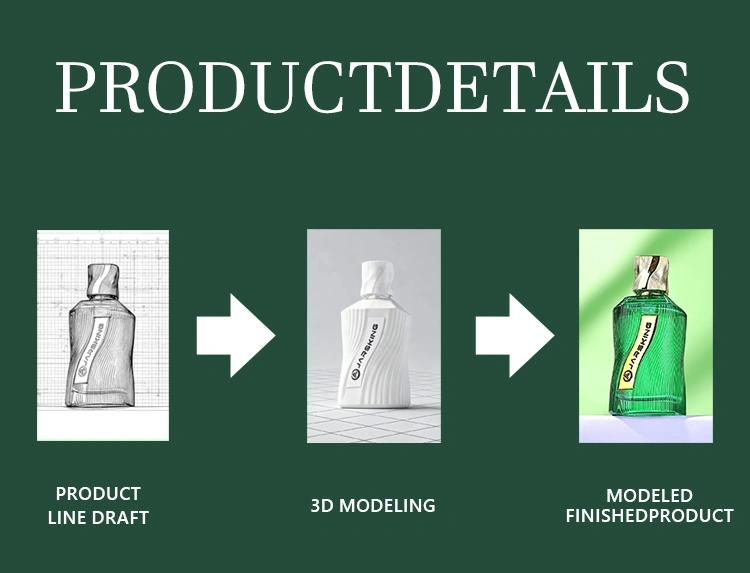
Our team produced ten distinct design sketches, each rendered with sufficient detail for meaningful evaluation. These renderings included multiple views showing bottle proportions from different angles, cap designs and their integration with bottle forms, and preliminary decoration suggestions. Visual presentation quality mattered significantly—professional renderings communicate respect for the client’s project and facilitate accurate assessment of design potential.
Each concept included design rationale explaining aesthetic choices and strategic alignment with brand positioning. These narratives helped clients understand our thinking rather than judging designs purely on immediate visual appeal. Sometimes the most commercially successful designs require context to appreciate—understanding the design logic helps clients recognize strengths not immediately obvious in static renderings.
Collaborative Selection Process
The client review meeting represented a critical collaboration moment. Rather than presenting designs for simple approval or rejection, our team engaged in dialogue exploring each concept’s merits and limitations. This consultative approach positioned us as partners in decision-making rather than order-takers awaiting instructions.
Discussion revealed the client’s thought process and priorities. They gravitated toward designs balancing contemporary aesthetics with subtle traditional references—a combination resonating with their target consumers who appreciate modernity while maintaining cultural connection. They evaluated how different designs would differentiate the three fragrances while maintaining cohesive brand identity. They considered practical factors like production feasibility, shipping durability, and retail display effectiveness.
From the ten concepts, the client selected three distinct styles. Each design offered different character aligning with the individual fragrance profiles in their new line. The selection demonstrated sophisticated brand management—the chosen bottles maintained sufficient family resemblance for brand recognition while providing enough distinction for product differentiation. This balance between unity and variety represents strategic thinking elevating packaging beyond mere containers into brand-building assets.
Design Refinement and Technical Specification
Selection marked the beginning rather than conclusion of design work. The chosen concepts required refinement translating sketch-level designs into precise technical specifications. Dimensions needed exact definition ensuring manufacturability and functional performance. Wall thickness specifications balanced aesthetic proportions with structural integrity and production feasibility. Base designs required engineering for stability across various retail display conditions.
Decoration specifications demanded particular attention. The client’s vision included metallic finishes requiring the water plating process discussed later in production. Our design team mapped decoration zones, specified finish types for different bottle areas, and detailed transition points between different surface treatments. These specifications would guide tooling development and production setup, making precision at this stage essential for achieving the desired aesthetic outcome.
Our engineering team conducted feasibility analysis for each refined design, identifying potential production challenges and proposing solutions. Some design elements might require specialized tooling or additional processing steps. Others might need slight modification for improved manufacturability without compromising aesthetic intent. This technical validation prevented problems from emerging during production when corrections would prove more costly and time-consuming.
7. Timeline Challenges: Pre-Chinese New Year Pressure
The Calendar Complication
Project timing introduced significant complications. Design finalization occurred mere weeks before Chinese New Year, the most important holiday period in China when factories traditionally close for extended periods. This timing created compressed schedules for completing pre-holiday milestones while facing the reality that some project phases would span the holiday shutdown.
Chinese New Year’s impact on manufacturing timelines cannot be overstated. The holiday typically spans two weeks officially, but many factories extend closures as workers travel to home provinces and return gradually. Supply chains experience disruptions as component suppliers, material vendors, and logistics providers all operate on reduced capacity. For projects requiring progression through multiple stages, the holiday creates a timeline chasm requiring careful planning to navigate.
The Saudi brand faced market pressures driving their timeline requirements. Fragrance launches often coordinate with seasonal retail cycles, promotional campaigns, and distribution agreements with retail partners. Delays in packaging availability cascade through launch plans, potentially missing critical market windows and disappointing retail partners whose shelf space and marketing commitments depend on timely product delivery. These commercial realities made timeline acceleration imperative despite calendar challenges.
Accelerated Drawing and Model Development
Our response demonstrated commitment to meeting client needs despite difficult circumstances. We allocated additional resources to the project, essentially fast-tracking development that would typically span longer timeframes. Our design and engineering teams worked extended schedules completing technical drawings with exceptional speed while maintaining accuracy essential for subsequent production stages.
Within half a month—an remarkably compressed timeframe for three distinct bottle designs—our teams completed comprehensive technical documentation. These drawings specified every dimension, tolerance, material specification, and process requirement for each design. The documentation quality needed to support tooling development and production setup, making thoroughness crucial despite time pressure. Rushing this stage risks errors that multiply in cost and delay through subsequent production phases.
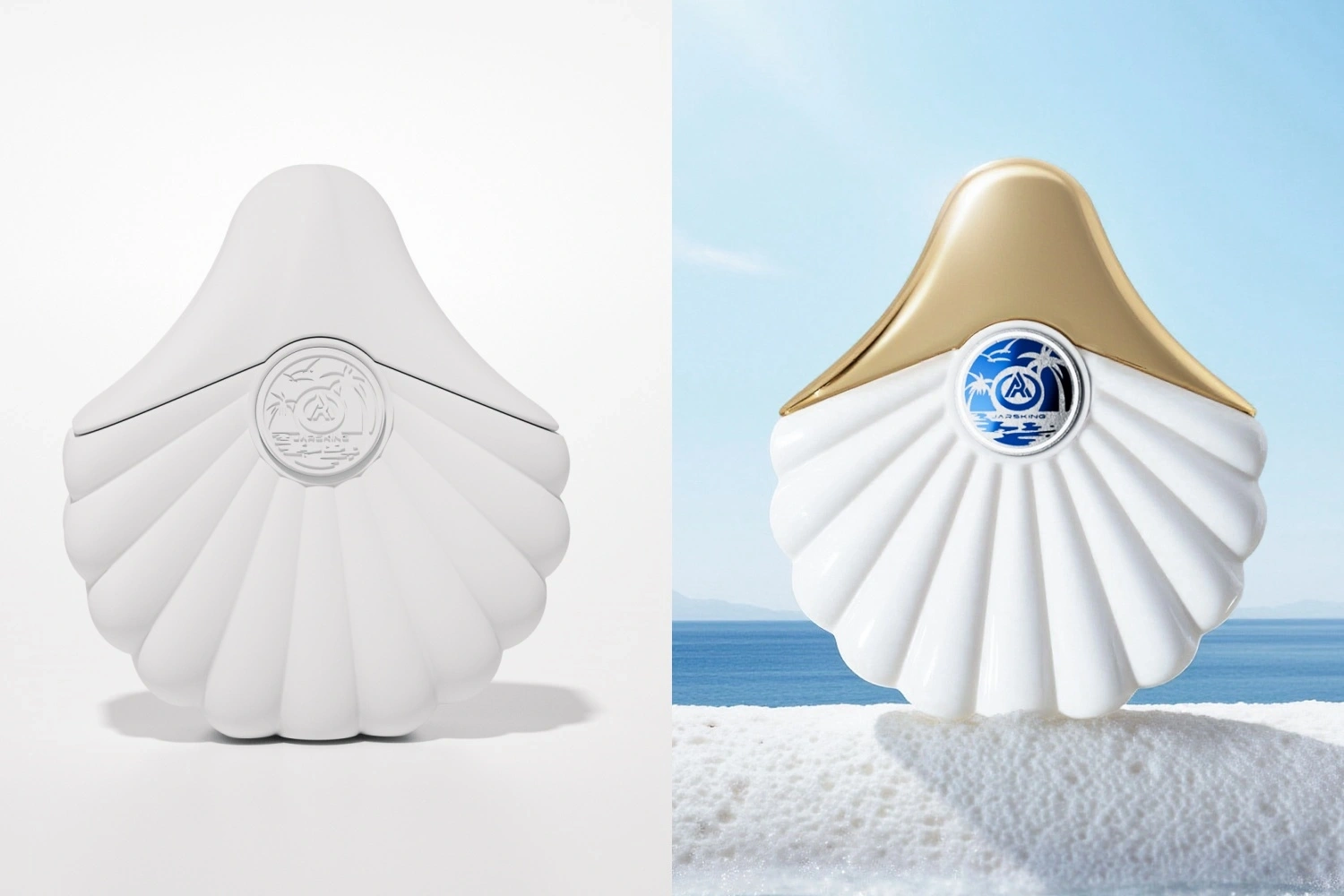
Concurrent with drawing completion, our team produced white models—physical prototypes demonstrating bottle forms without final surface treatments or decoration. These models, typically created through rapid prototyping technologies like 3D printing or CNC machining, allowed physical evaluation of designs before committing to expensive production tooling. The client could assess proportions, ergonomics, and overall aesthetic presence in three dimensions rather than relying solely on renderings.
The models served multiple purposes. They confirmed that designs translated successfully from two-dimensional sketches to three-dimensional reality—sometimes designs appearing perfect in renderings reveal unexpected issues when physically realized. They provided references for decoration application planning, helping visualize how surface treatments would interact with bottle forms. They enabled early detection of any modifications needed before tooling investment, when changes remain relatively inexpensive and quick.
Style Confirmation and Holiday Planning
Client review of completed drawings and white models provided final style confirmation before the Chinese New Year break. This milestone represented crucial project progress—with designs locked and documented, post-holiday work could proceed immediately without awaiting further client input. The confirmation meeting reviewed technical specifications ensuring mutual understanding and agreement on all details that would guide subsequent production phases.
We developed a detailed post-holiday plan accounting for realistic restart timelines. We communicated transparently about when full production capacity would resume, when material supplies would normalize, and when tooling development could commence. This honest timeline communication, while perhaps not what the client hoped to hear, built trust through realism rather than making optimistic commitments unlikely to be met.
Both parties used the holiday period for parallel preparation. We placed material orders for post-holiday delivery, engaged tooling suppliers to prepare for mold production, and organized production schedules. The client finalized fragrance formulations, coordinated with other packaging component suppliers, and prepared marketing materials. This parallel progress ensured efficient collaboration resumption when work recommenced.
8. Technical Excellence: Water Plating Process
Process Selection Rationale
The client specified water plating for metallic finishes on their bottles—a decision reflecting sophisticated understanding of decoration technologies and willingness to invest in premium processes. Water plating, also known as vacuum metallization or physical vapor deposition (PVD), differs fundamentally from traditional electroplating in both process mechanics and result characteristics.
Water plating creates metallic coatings through vaporizing metal in vacuum chambers and depositing it onto bottle surfaces. This process produces exceptionally uniform coating thickness, superior adhesion, and consistent color matching across production runs. The resulting finish exhibits high reflectivity, smooth surface texture, and excellent durability against handling and environmental exposure. These quality attributes make water plating particularly suitable for premium fragrance packaging where surface appearance significantly impacts perceived value.
The cost differential between water plating and alternatives like electroplating or metallic paint reflects process complexity and quality outcomes. Water plating requires specialized equipment, controlled environment conditions, and precise process parameters. The investment in this premium process signaled the client’s commitment to packaging quality matching their fragrance quality and market positioning. For mid-to-high-end products, the incremental cost translates directly into enhanced consumer perception and competitive differentiation.
Process Implementation and Quality Control
Implementing water plating for these bottle designs required technical planning beyond standard decoration processes. Bottle forms needed preparation for coating—surface cleaning to remove any contaminants, base coating application if required for optimal metal adhesion, and masking of areas not receiving metallic finish. These preparatory steps significantly impact final quality, making careful execution essential.
Our experience with water plating processes enabled optimization for these specific bottle geometries. Bottle placement within vacuum chambers affects coating uniformity—positioning must ensure metal vapor deposits evenly across complex three-dimensional forms. Process parameters including chamber pressure, metal vaporization rate, and deposition time require calibration for each bottle design to achieve specified finish characteristics.
Quality control for water plated bottles encompasses multiple assessment criteria. Visual inspection evaluates coating uniformity, color consistency, and surface defect absence. Adhesion testing verifies coating bonding strength through standardized tape tests or scratch resistance evaluation. Optical measurements confirm reflectivity levels meet specifications. This comprehensive quality validation ensures bottles meet the premium standards demanded by the client’s market positioning.
Aesthetic Impact and Market Differentiation
The water plated finishes on these bottles achieved the aesthetic elevation intended by both client and ourselves. The metallic surfaces caught light dramatically, creating visual interest on retail shelves and in consumer hands. The reflective quality suggested luxury and craftsmanship, supporting the mid-to-high-end positioning and justifying premium pricing versus competitors with simpler packaging.
Different metallic finishes for the three bottle designs—potentially including silver chrome, gold tones, or colored metallics—provided product line variety while maintaining cohesive brand identity through consistent application of this signature process. This approach created recognizable brand aesthetic while allowing individual product distinction—an elegant solution to the challenge of multiple SKU management within a single product line.
The durability of water plated finishes offered practical benefits beyond aesthetics. Premium perfumes often become collector items displayed prominently in consumers’ homes. Packaging that maintains appearance over time enhances satisfaction and brand perception. The scratch resistance and tarnish resistance of properly executed water plating ensure bottles retain visual appeal throughout their consumer lifecycle, contrasting with cheaper finishes that degrade quickly and diminish perceived value.
9. Project Completion and Results
Delivery Achievement
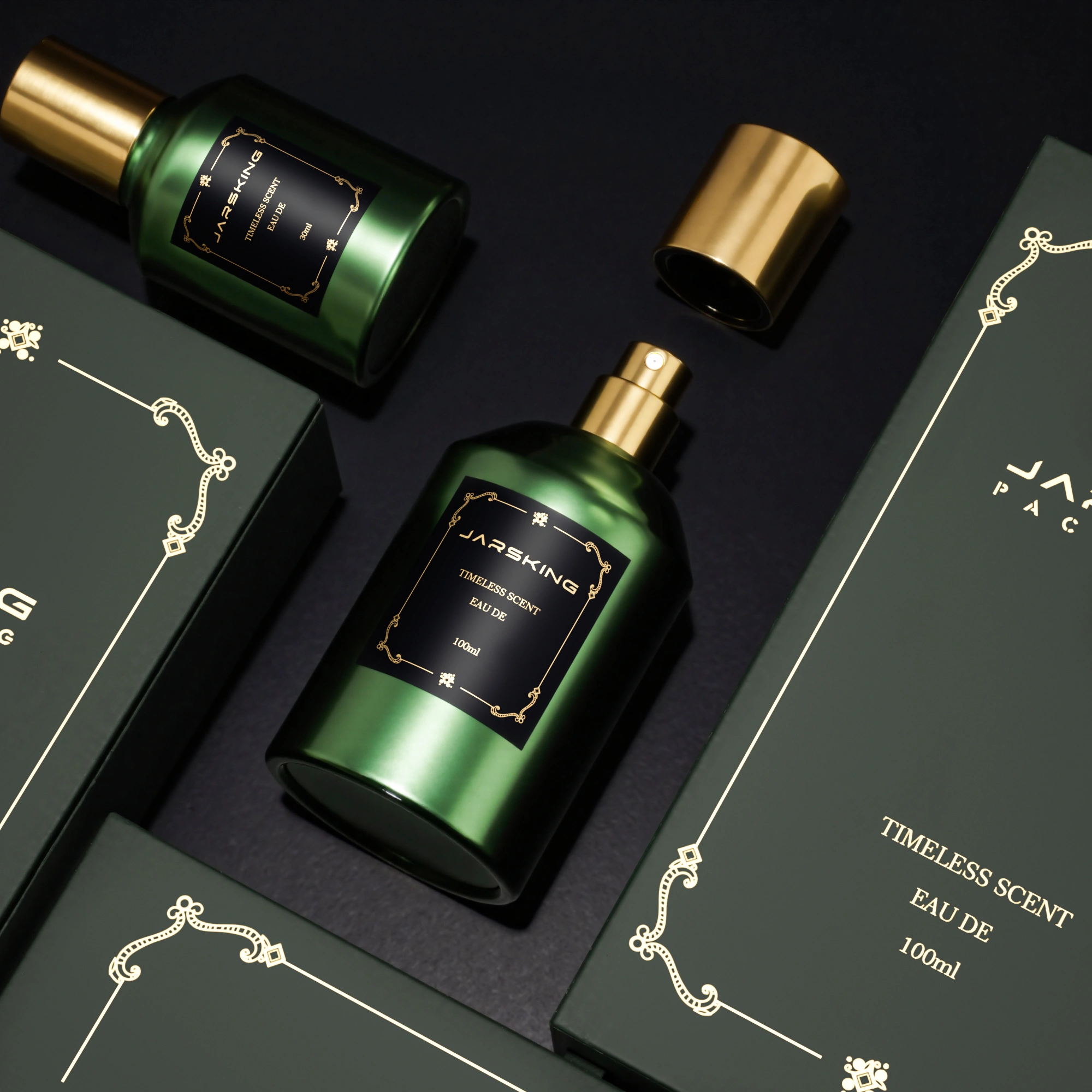
We successfully completed production and delivered finished bottles within the promised timeframe despite the compressed schedule bridging Chinese New Year. This achievement represented successful navigation of multiple complexity layers—technical challenges of producing three distinct designs, timeline pressures of accelerated development, and coordination demands of managing tooling, materials, processes, and logistics simultaneously.
Delivery completion marked significant milestone for both parties. For the Saudi brand, it enabled proceeding with fragrance filling, final packaging assembly, and market launch activities. The on-time delivery maintained their carefully planned introduction schedule, preserved retail relationships built on reliable supply, and enabled capitalizing on optimal market timing. For us, successful delivery demonstrated capabilities in handling complex, time-sensitive international projects—validation reinforcing our competitive positioning.
Quality verification of delivered bottles confirmed they met all specifications established during design development. Dimensional accuracy, surface finish quality, decoration precision, and functional performance all achieved target standards. This quality consistency across the entire production run rather than just initial samples demonstrated manufacturing discipline and process control—capabilities essential for long-term supplier relationships where initial quality must sustain through repeat orders.
Client Satisfaction and Relationship Foundation
The project outcome generated high client satisfaction reflected in both stated feedback and behavioral indicators like future business discussions. The Saudi brand’s representatives expressed appreciation for our handling of timeline challenges, design expertise contribution, and quality delivery. These positive sentiments extended beyond polite professional courtesy to genuine recognition of partnership value.
Several project elements particularly impressed the client. Our design team’s creative range and willingness to iterate based on feedback demonstrated collaborative spirit rather than defensive attachment to initial concepts. Our engineering team’s technical problem-solving during production setup prevented delays and quality issues. Our project management transparency around timelines and challenges built trust through realistic communication rather than overpromising.
The successful completion established foundation for expanding our relationship beyond this initial project. The client expressed interest in potentially consolidating more of their bottle sourcing with us given demonstrated capabilities. Our ability to serve multiple brands within the client’s portfolio created efficiency opportunities—shared understanding of quality standards, established communication protocols, and proven reliability reduced friction for future projects.
10. Cultural Dimensions of Success
Cross-Cultural Business Dynamics
This collaboration’s success owed significantly to effective navigation of cultural differences between Saudi Arabian and Chinese business practices. Both cultures value relationship building, respect for hierarchy, and long-term thinking over transactional short-term focus. These shared values created compatible expectations about how business relationships should develop and function.
However, differences required mutual adaptation. Communication style differences—Chinese business culture’s tendency toward indirect communication versus Middle Eastern directness—required both parties to adjust. Our team learned to seek clarity when requests seemed ambiguous while appreciating diplomatic phrasing. The Saudi team learned to interpret Chinese politeness conventions without mistaking courtesy for agreement or capability confirmation.
Decision-making process differences also required navigation. Chinese manufacturing organizations often involve multiple layers of approval for significant decisions, while Middle Eastern business structures may concentrate authority more narrowly. Understanding these structural differences prevented frustration about response timing or decision-making procedures. Both parties developed realistic expectations about how quickly various decisions could be made and implemented.
Cultural Appreciation as Relationship Asset
The Saudi team’s expressed appreciation for Chinese culture created unique relationship dynamic transcending typical client-supplier interactions. Their interest in Chinese history, philosophy, and customs signaled respect for the culture producing their manufacturing partner. This cultural curiosity opened conversations beyond immediate business matters, building personal connections alongside professional relationships.
Our reciprocal interest in Saudi culture, Middle Eastern business traditions, and Islamic customs created mutual cultural exchange. Our team members took time to understand the significance of Islamic holidays, appropriate business etiquette when working with Middle Eastern clients, and cultural considerations affecting product design and marketing in Muslim-majority markets. This cultural competence enhanced collaboration effectiveness and demonstrated respect for the client’s background.
Cultural appreciation manifested practically in business conduct. We accommodated prayer time considerations during the Saudi team’s factory visit, arranged halal meal options, and scheduled meetings respectfully around religious observances. These considerations, while seemingly minor, communicated cultural awareness and respect that strengthened relationship foundation. The Saudi team reciprocated by learning Chinese business greeting customs and gift-giving traditions.
Professional Capability as Cultural Bridge
Ultimately, cultural affinity and mutual respect required foundation of professional competence to translate into successful business partnership. The Saudi brand chose us because we demonstrated technical capabilities, design expertise, and quality standards meeting requirements. Cultural connection enhanced the relationship but did not substitute for professional capability.
Our team recognized that professional excellence served as the ultimate cultural bridge. Delivering exceptional results, meeting commitments, and solving problems effectively transcends cultural boundaries and creates universal foundation for business success. Our focus on demonstrating capability through actions rather than merely claims built credibility that cultural affinity alone could not establish.
This dynamic illustrates important principle in international business—cultural competence and relationship building amplify professional excellence but cannot replace it. The most culturally sensitive partnership fails if deliverables disappoint. Conversely, professional excellence combined with cultural respect and relationship investment creates powerful foundation for sustained business success and mutual growth.
11. Lessons Learned and Future Implications
Critical Success Factors
Analysis of this collaboration reveals several factors critical to successful outcome. Professional capability formed the foundation—without demonstrated technical expertise, quality execution ability, and operational reliability, no amount of relationship building would have produced successful results. Our core competencies in design, engineering, and production provided essential foundation.
Effective communication throughout the project prevented misunderstandings and enabled rapid problem-solving. Both parties invested in clarity—confirming understanding, documenting agreements, and maintaining regular contact. This communication discipline becomes especially important in cross-border partnerships where distance, time zones, and language differences create potential for confusion and delay.
Timeline realism balanced client urgency with manufacturing reality. While we accommodated aggressive schedules, we communicated honestly about constraints and managed expectations realistically. This transparency built trust and prevented the relationship damage that occurs when unrealistic commitments lead to disappointing delays.
Cultural competence enhanced collaboration without substituting for professional excellence. Mutual respect, cultural curiosity, and adaptation to different business customs created comfortable working relationship that facilitated effective collaboration. This cultural dimension amplified professional capability rather than attempting to compensate for its absence.
Broader Industry Trends
This case study reflects larger trends reshaping global manufacturing and brand-supplier relationships. Chinese manufacturers increasingly position themselves as value-added partners offering design, engineering, and problem-solving capabilities rather than merely low-cost production. This evolution responds to client demands for suppliers contributing to competitive advantage rather than simply executing specifications.
Brands increasingly recognize that supplier relationships significantly impact market success. The era of treating suppliers as interchangeable commodity providers gives way to strategic partnerships with carefully selected manufacturers offering differentiated capabilities. This shift drives supplier consolidation and deeper engagement with fewer, more capable partners.
Cross-border collaboration continues growing despite occasional trade tensions and geopolitical complexity. Brands seeking optimal combinations of quality, capability, cost, and innovation look globally rather than limiting supplier options geographically. Manufacturers competing effectively in this environment invest in international market understanding, cultural competence, and relationship building capabilities.
12. Future Collaboration Prospects
The successful initial project establishes foundation for expanded partnership. The Saudi brand’s multi-brand portfolio creates opportunity for us to serve additional labels, potentially consolidating more packaging sourcing with a proven partner. The efficiency gains from working with familiar suppliers—shared quality expectations, established communication protocols, reduced learning curve—incentivize relationship expansion.
We demonstrated capabilities likely applicable to future projects beyond bottle designs. Our design expertise, engineering capabilities, and quality execution transfer to other packaging components the client might source. The relationship foundation built through this project reduces friction for exploring collaboration on different product types or more complex projects.
Both parties gained valuable market intelligence through collaboration. We learned about Middle Eastern market preferences, premium perfume packaging requirements, and successful brand strategies in this segment. The Saudi brand gained insights into Chinese manufacturing capabilities, process technologies, and cost-performance tradeoffs. This mutual learning creates foundation for more sophisticated future collaboration as each partner better understands the other’s capabilities, constraints, and market context.
13. Conclusion
This case study demonstrates how professional excellence, cultural respect, and collaborative spirit combine to create successful cross-border manufacturing partnerships. The Saudi Arabian perfume brand and our team navigated geographical distance, cultural differences, and timeline pressures to deliver premium packaging enabling new product line launch. Our success offers valuable lessons for brands and manufacturers pursuing international collaboration in the competitive global fragrance market.
Several themes emerge as particularly significant. First, the importance of professional capability as partnership foundation—no amount of relationship building substitutes for technical competence and operational excellence. Second, the value of collaborative rather than transactional approaches—viewing suppliers as partners contributing expertise rather than merely executing orders enhances outcomes. Third, the power of cultural competence and mutual respect in facilitating effective collaboration across borders.
The project’s successful completion within challenging timelines despite spanning Chinese New Year demonstrates what becomes possible through commitment, coordination, and capability. Our design expertise contributed to creating distinctive packaging supporting the client’s brand strategy. The premium water plating process elevated aesthetic quality matching the perfume’s mid-to-high-end positioning. The reliable delivery enabled timely market launch maintaining competitive timing and retail commitments.
Looking forward, this initial success establishes foundation for potential long-term partnership. Both parties demonstrated qualities that make relationships durable and mutually beneficial—integrity, competence, cultural respect, and commitment to excellence. As the Saudi brand’s product lines evolve and our capabilities expand, the relationship built through this project creates platform for future collaboration generating continued value for both partners and ultimately for consumers enjoying beautifully packaged fragrances.