


I remember the first time a customer picked up a vanilla musk and said, “This doesn’t smell like a dessert. It smells like skin.” That sentence stuck with me — because in seven words, she captured exactly what the new gourmand fragrance era is trying to do. Take something comforting, something familiar, something almost embarrassingly warm, and make it feel like you.
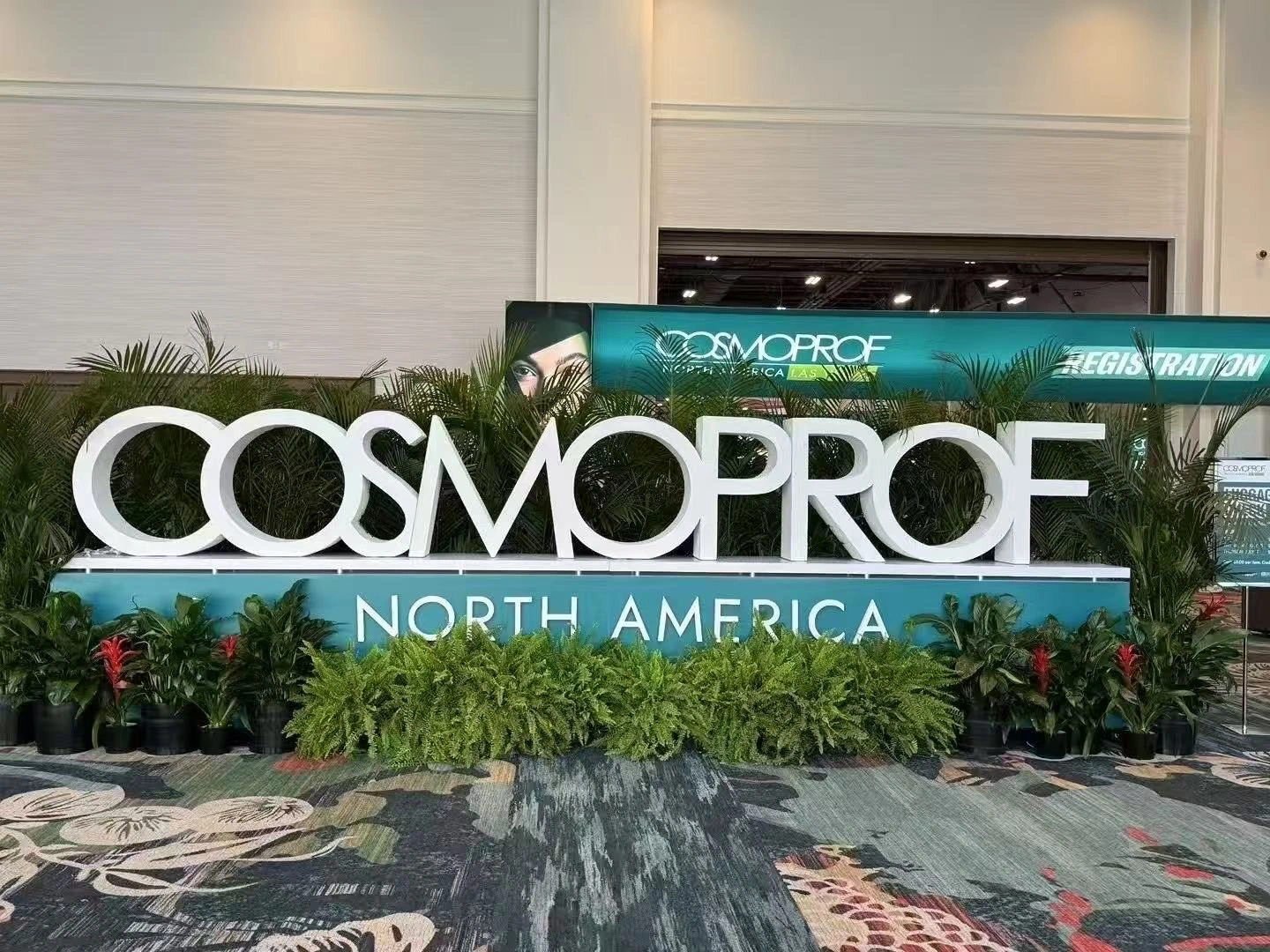
In 2026, that shift is no longer a whisper in niche perfumery circles. It is one of the loudest signals in the global fragrance market. And for beauty brands heading to Cosmoprof North America Las Vegas 2026 — running July 13–15 at the Mandalay Bay Convention Center — it carries specific, urgent implications for how they approach packaging decisions on the show floor.
1. What Cosmoprof North America Actually Is — and Why That Matters
Before diving into fragrance, let’s be honest about what Cosmoprof Las Vegas really represents. A lot of people arrive thinking it is a showcase. It is not, or at least not only.
The 23rd edition of Cosmoprof North America Las Vegas is the leading B2B beauty trade show in the Americas, organized by USA Beauty LLC — a joint venture between BolognaFiere Group, Informa Markets, and the Professional Beauty Association. It is where over 1,100 exhibitors meet an expected 25,000+ beauty professionals from across retail, distribution, investment, manufacturing, and brand development. The 22nd edition drew over 26,000 visits from this exact mix of decision-makers.
Crucially, the show is organized into two parallel but complementary universes. Cosmoprof North America focuses on finished beauty products — skincare, haircare, nail care, fragrance, tools, and accessories, all presented with professional retail and distribution in mind. Cosmopack North America runs concurrently and is the only event in the Americas fully dedicated to the beauty supply chain — raw materials, private label and contract manufacturing, primary and secondary packaging, machinery, and every other production solution the industry needs.
That dual structure is not a logistical detail. It is the show’s essential value proposition.
Most beauty industry trade shows force brands to choose between inspiration and execution. You either attend a trend conference or visit a packaging fair. Cosmoprof Las Vegas compresses both into three days. A brand can wake up on Monday morning at Cosmoprof and discover the fragrance concept that will define its next launch, then walk across the hall to Cosmopack and start identifying the glass supplier, decoration partner, and box manufacturer that will bring it to life. Country pavilions from approximately 40 nations — including China, Australia, Colombia, and others — ensure that sourcing options span everything from European precision manufacturing to Asia-Pacific cost efficiency.
This is the context in which gourmand fragrance stops being a perfumery conversation and becomes a business conversation.
2. The CosmoTrends Report: Where Trends Get Legitimized
Every edition of Cosmoprof North America produces the CosmoTrends report — an annual editorial curation of the most innovative, directional products from exhibitors. It is the beauty industry’s closest equivalent to a validated trend forecast, because the products it features are not concepts or runway ideas. They are real products being sourced, licensed, or launched by real brands.
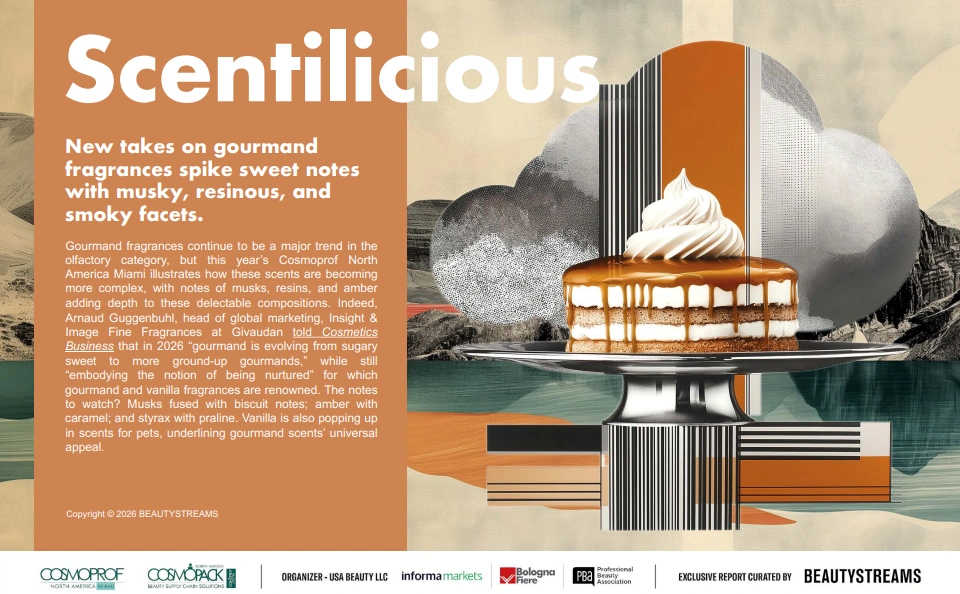
For 2026, one of the key CosmoTrends directions highlighted both at the Miami edition and confirmed in Las Vegas preview coverage is “Scentilicious: The Evolution of Gourmand.” This direction describes gourmand fragrance as a category that is moving beyond simple sweet compositions, layering edible notes with musky, resinous, smoky, and amber facets to create scents that are deeper, more complex, and more wearable.
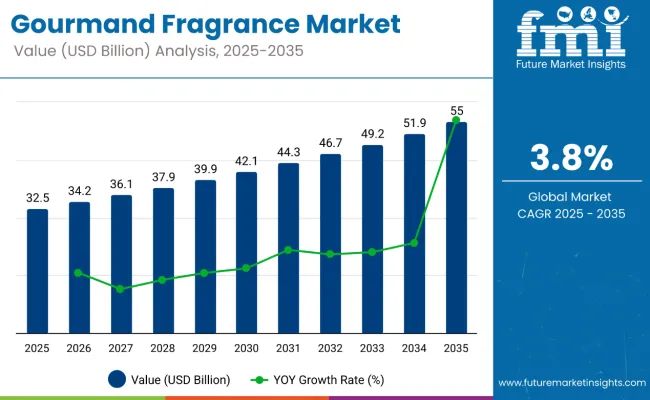
The CosmoTrends Miami 2026 report cited specific scent combinations driving this direction: banana cream with musk, caramel with amber and oakmoss, styrax with praline — all of which represent a deliberate move from flat sweetness toward textured, multi-dimensional sweetness. The same report pointed to a 57.6% year-over-year increase in U.S. searches for gourmand scents and referenced a global market projected to reach USD 55 billion by 2035.
When a trend lands in CosmoTrends, it stops being a signal and becomes a brief. For packaging buyers walking the Cosmopack floor, it answers one of the most important strategic questions of the show: What does the market actually need me to build right now?
The answer, in 2026, includes bottles and systems that can express the new gourmand aesthetic. Not just any bottle. The right bottle — the one that communicates premium sweetness without looking like a candy store window display.
3. Gourmand’s Quiet Reinvention
For most of its commercial history, gourmand fragrance followed a simple contract: smell like something edible and people will feel happy. Vanilla cake. Caramel syrup. Chocolate. Cotton candy. Warm cookies. The emotional shortcut worked because food memories are some of the most emotionally durable things humans carry.
But something has shifted. Sephora UK’s 2026 fragrance trend forecast describes the new gourmand as “way more cool coffee order than sugary cupcake” — think espresso, rum, roasted nuts, pistachio, and hazelnut smoothed over by woods and musks, creating a warm, addictive, wearable complexity. Perfumania’s 2026 fragrance forecast adds that new gourmand releases focus on balance and depth: vanilla blended with wood, coffee softened by florals, creamy notes anchored by spice.
The result is a category growing without abandoning its core identity. Sweetness is not leaving. Flat sweetness is.
4. Why This Trend Has Exceptional Commercial Staying Power
Here is the part that most fragrance coverage misses: gourmand’s emotional architecture is unusually durable.
Vanilla, caramel, chocolate, coffee, honey, and cream are not abstract luxury symbols. They are sensory memories that virtually every consumer shares. For younger buyers especially, those memories are tied to comfort, intimacy, and mood management — categories that have become central to how Gen Z and Millennial consumers define self-care and personal expression.
The market numbers reflect this staying power. Future Market Insights estimates the global gourmand fragrance market at USD 32.55 billion in 2025, projecting growth to USD 55.0 billion by 2035 at a 3.8% CAGR. The segment is also expanding well beyond fine fragrance into body mist, hair fragrance, home care, and even pet care — product categories that require entirely different packaging architectures.
Reuters has reported that L’Oréal launched NYX hair and body mists targeting Gen Z with accessible price points, while mass-market fragrances in the U.S. were growing faster than prestige formats, with TikTok accelerating demand for layerable, everyday fragrance formats. That is the commercial reality that matters most for brands at Cosmoprof Las Vegas 2026: gourmand fragrance is no longer one product. It is a multi-format brand ecosystem. And ecosystems require systems — not just one beautiful bottle.
5. The Packaging Problem Nobody Talks About Openly
Sweet can look cheap. That is the central tension every gourmand brand must resolve, and most packaging briefs never state it directly.
When a perfume smells like caramel or praline, the instinctive design response is often to reach for warm pastels, dessert graphics, candy tones, or bakery-inspired ornamentation. For some mass-market or youth-facing products, that works. But as gourmand matures into premium retail and niche boutiques, that instinct becomes a liability.
The new gourmand packaging challenge is about creating a visual language that is simultaneously:
Indulgent without being heavy
Edible in feeling but not literal in execution
Sophisticated enough for premium retail, viral enough for social media
Consistent across different formats — from hero perfume bottle to body mist to gift set
This is not a small design brief. It requires aligned decisions across color, material, finish, bottle shape, cap construction, secondary packaging, and print technique — all reinforcing the same scent story at once.
6. Color: Repositioning Sweet as Premium
Color is the fastest signal a package sends before anyone picks it up. And for gourmand in 2026, the color conversation needs to move beyond pink and brown.
Traditional gourmand palettes — pastel pink, cream, pale yellow, chocolate brown — are immediately legible. But legible and premium are not the same thing. In 2026, the more interesting color moves for gourmand packaging include:
Caramel amber in transparent or semi-transparent glass: communicates warmth and sweetness while retaining visual sophistication
Cream beige and milky white: suggest vanilla, musk, biscuit, and almond without the visual noise of pastel pink
Deep cocoa and warm brown: read as elegant when combined with gold accents or matte black, especially for coffee, chocolate, toasted nut, and resin-driven scent profiles
Soft gold, champagne, and brushed bronze: lift the dessert feeling into a gift-worthy, evening-appropriate register
Deep burgundy and plum: add night-out depth for gourmand fragrances built around fruit, liqueur, praline, or amber-resin notes
The critical discipline is that color should not be chosen independently from the scent architecture. A caramel amber fragrance and a vanilla musk fragrance are both gourmand, but they should not share the same visual palette if the brand wants each product to communicate its specific olfactory character.
7. Material: Glass Still Does the Heavy Lifting
For premium fragrance packaging in 2026, glass remains the dominant material — but the type of glass expression has become significantly more nuanced.
Clear glass allows the juice color itself to become part of the visual story. For amber or caramel-toned fragrances, the warm liquid inside a clear bottle already communicates the scent direction before anyone reads the label.
Frosted glass softens the visual temperature, making it ideal for vanilla, musk, cream, or powdery gourmand directions that want to feel intimate and skin-like rather than bright and bold.
Thick-bottom glass adds physical weight that translates directly into a perception of value. For premium gourmand launches, holding a heavy bottle reinforces the idea that comfort has substance.
Tinted glass — amber, smoky brown, champagne, rose-beige — can carry the entire color concept within the material itself, reducing the need for additional spray coating.
Gradient spray glass allows brands to build layered, temperature-shifting visual worlds: cream transitioning to caramel, transparent warming to amber, nude deepening to gold.
8. Finish: The Layer That Makes Packaging Feel Like Perfumery
If color is the first impression and material is the foundation, finish is where packaging earns long-term emotional loyalty.
Consider the difference: a caramel fragrance in a standard clear bottle communicates a note. A caramel fragrance in warm amber glass with soft gold lettering, a weighted cap, and a matte outer box communicates a world. That is the power of finish — and for gourmand fragrance, it is the single most underutilized tool in the packaging brief.
Finish techniques that work particularly well for the new gourmand direction include:
Spray coating for building color depth and gradient transitions that feel warm and layered
Frosted surface treatment for softness and intimacy, particularly useful for musk and cream-based gourmand products
Silk screen printing for minimal, integrated decoration that keeps the bottle silhouette uninterrupted
Hot stamping in warm gold, bronze, or copper tones for adding richness without visual heaviness
Soft-touch box coating for secondary packaging that communicates tactile quality the moment the consumer picks it up
Textured paper with embossing for a handcrafted register that resonates with indie fragrance and niche positioning
9. Bottle Shape: What the Silhouette Promises Before the Cap Comes Off
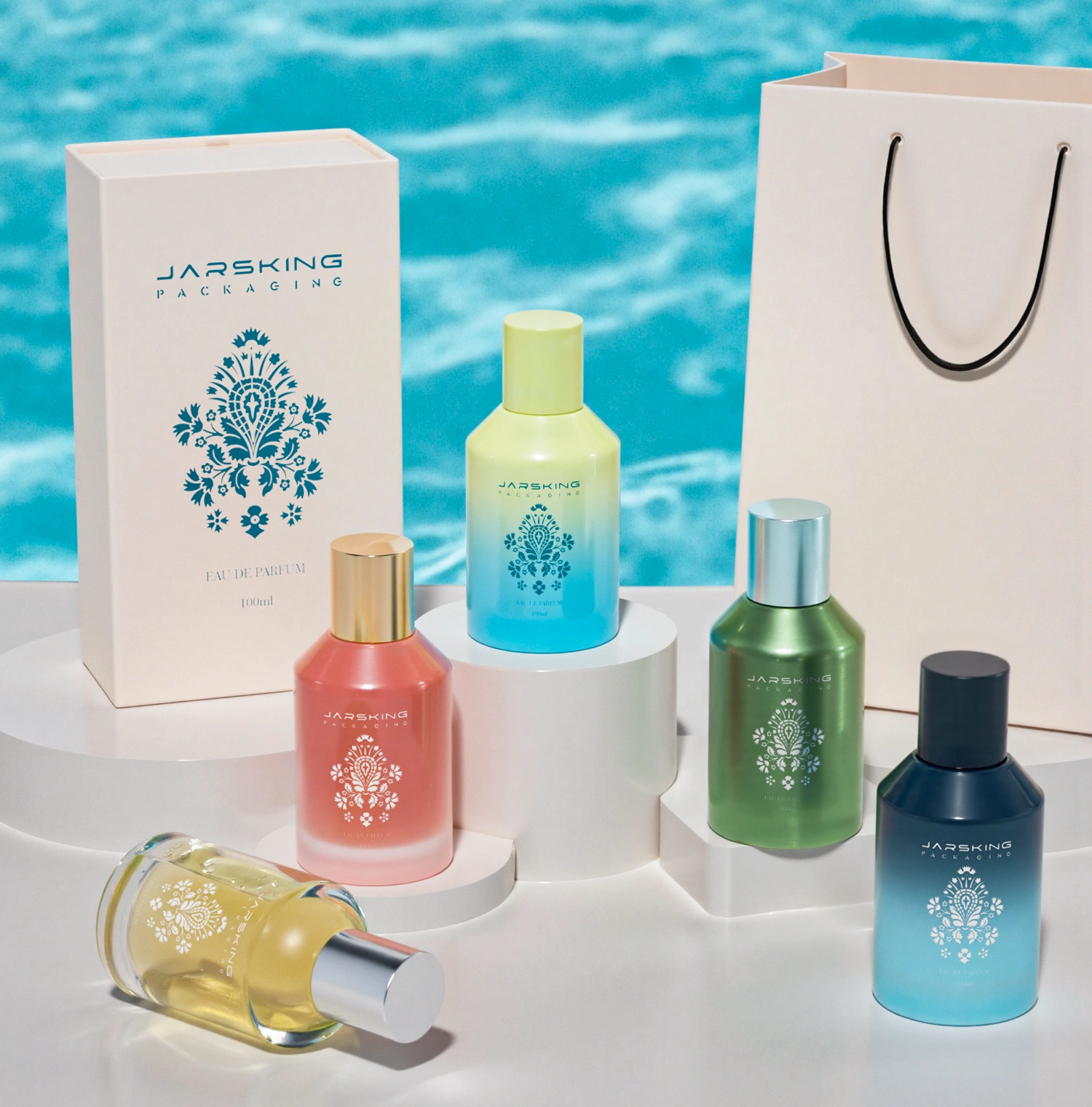
Shape carries meaning before words are read. A sharp, architectural bottle suggests niche modernity. A rounded bottle suggests softness and comfort. A thick, heavy form suggests richness. A tall slim format suggests daily use and routine.
For 2026 gourmand, the shape conversation connects directly to the scent’s emotional positioning:
Rounded, organic forms suit creamy, musky, and skin-like gourmand scents — approachable, tactile, intimate
Heavy rectangular or barrel-shaped bottles are appropriate for caramel, amber, praline, and resin-heavy directions — giving sweetness physical authority and shelf credibility
Tall mist bottle formats work for body and hair fragrance extensions targeting everyday layering among Gen Z consumers
Mini and collectible bottles serve the discovery-and-gifting behavior that is increasingly central to how fragrance is purchased
Refillable and hinged gift formats suit premium retail positions where sustainability and elevated experience converge
The most important rule: do not force every gourmand scent into the same bottle because it is available at a low unit cost. The bottle shape is a promise about what the fragrance will feel like. Breaking that promise before the cap is even removed is a costly mistake — one that becomes highly visible on a competitive shelf.
10. Building a Gourmand Packaging System, Not Just a Bottle
One of the most common and most expensive errors in fragrance launches is treating a trend as a single SKU opportunity.
Modern fragrance consumers do not buy one product. They layer. They build scent wardrobes. They use body mist during the day, parfum at night, and hair mist in between. Sephora UK’s 2026 layering guide literally recommends a three-step fragrance stack — body lotion, EDP, and hair mist — as a standard routine. Discovery sets and minis are no longer promotional afterthoughts; they are primary entry points for new customers.
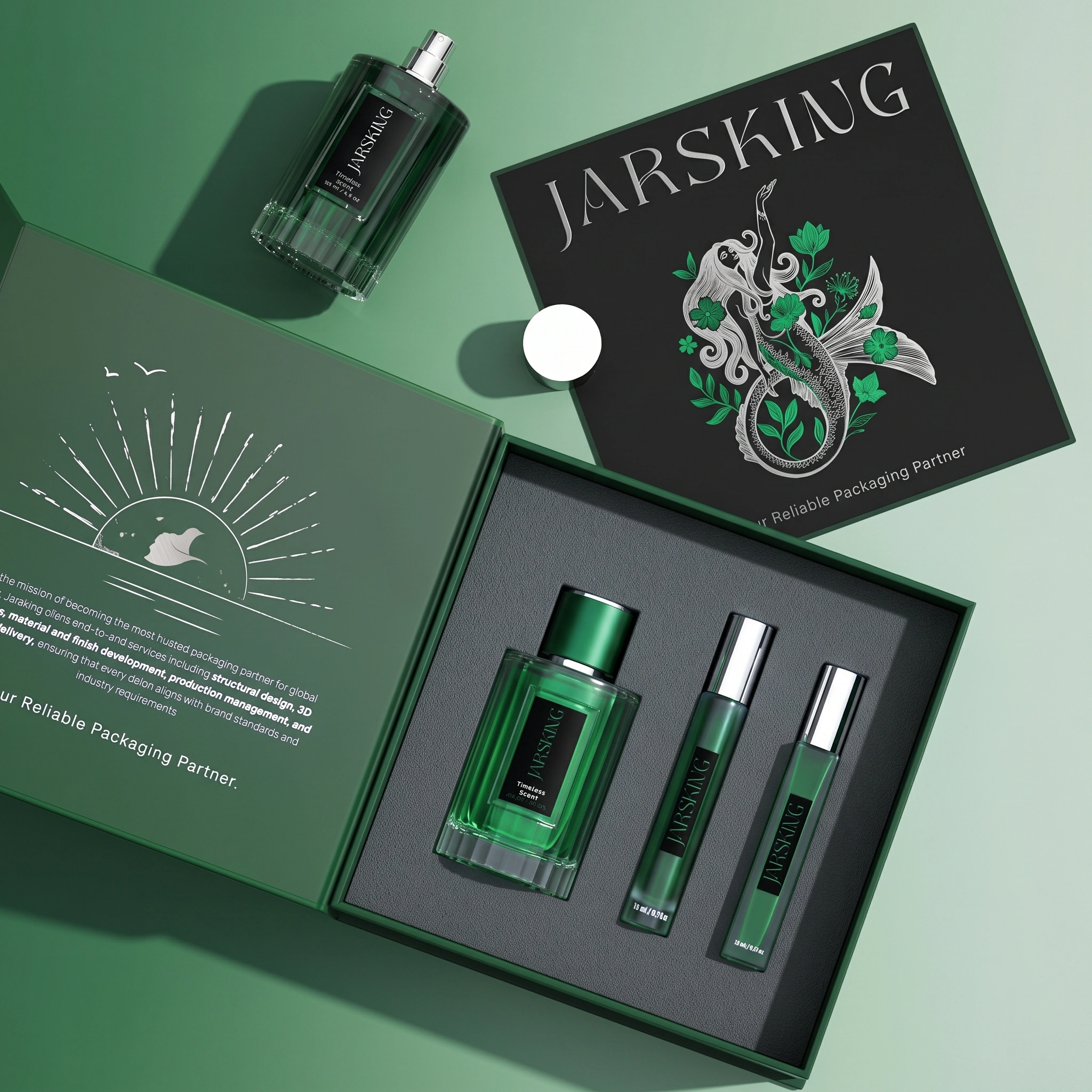
A commercially scalable gourmand packaging system in 2026 should span:
A hero 50ml or 100ml perfume bottle with the brand’s fullest visual language
A 30ml travel format that preserves the design without the full price barrier
A body mist or hair mist in a lighter, more accessible format with consistent color and finish codes
A mini discovery bottle for gifting, sampling, and e-commerce onboarding
A premium outer box for retail presentation
A gift set assembly for seasonal and holiday activation
A consistent CMF (Color, Material, Finish) system running across every single format
Series packaging — the principle that every SKU in a line shares a coherent visual grammar — is one of the most powerful tools available to a beauty brand for building shelf recognition and emotional loyalty. A well-designed product family turns individual bottles into a brand universe: the consumer recognizes the language immediately, trusts the family instinctively, and returns not just for one product but for the world it represents.
For gourmand brands, this is especially important because consumer behavior in the category naturally gravitates toward collection and layering. A customer who loves your caramel amber EDP is already predisposed to want the matching body mist, the travel spray, and the discovery set. The question is whether your packaging gives them a reason to see all four as one story — or whether each product looks like it came from a different brand.
11. What Cosmoprof Las Vegas Makes Possible That Nothing Else Does
Here is something that does not get discussed enough in fragrance industry coverage: the structural advantage of sourcing at Cosmoprof Las Vegas is not just about cost or convenience. It is about compressed decision-making across multiple specialisms at once.
Fragrance packaging involves at least five distinct supplier categories: glass manufacturer, cap and pump supplier, decoration and finish specialist, outer box producer, and assembly or gift set constructor. In normal sourcing conditions, finding and qualifying vendors across all five categories might take three to six months of outreach, sampling, and travel.
At Cosmoprof Las Vegas, with over 1,100 exhibitors and Cosmopack running in parallel, a brand can evaluate all five supplier categories in one visit. Country pavilions from approximately 40 nations bring together options from European precision manufacturing, Korean innovation-driven packaging, Chinese volume production, and emerging markets with unique material capabilities. The CosmoTalks conference program — Cosmoprof’s format combining creativity, inspiration, and business — adds direct insight from industry leaders on the same floor.
For a fragrance brand launching a gourmand line, the show’s value is not simply the number of booths. It is the ability to move from trend validation (via CosmoTrends) to design exploration (via finished product exhibitors) to supply chain qualification (via Cosmopack) all within three days — with the fragrance brief in one hand and a supplier shortlist in the other by Wednesday afternoon.
That is a compressive advantage that no sourcing platform, trade magazine, or Instagram trend report can replicate.
12. The Strategic Questions to Ask on the Show Floor
Most fragrance brands arrive at trade shows with strong creative intent but incomplete production maps. These are the supplier conversations worth prioritizing at Cosmoprof Las Vegas 2026 to turn gourmand inspiration into executable packaging:
Can this bottle shape support a premium gourmand positioning, or does it read as generic stock?
Can the same visual language extend to body mist, mini format, and gift set without losing coherence?
Can the supplier develop a warm, scent-specific color palette — caramel, cream, amber, cocoa, praline — rather than applying a color from their existing catalog?
Can decoration stay consistent between sample and bulk production at scale?
Can the cap, pump, collar, bottle, and box be developed as a fully integrated system?
Does the supplier offer CMF strategy consulting, or do they only present existing molds?
Can the packaging survive shipping, filling, assembly, and retail handling without compromising the finish?
That last question about CMF consulting matters more than it seems. Packaging suppliers who only offer stock catalog options may be sufficient for a basic launch. But for a brand building a differentiated gourmand line across multiple formats and price tiers, the difference between a supplier and a development partner is ultimately the difference between a product and a brand world.
13. The Bigger Picture: From Scent Trend to Complete Brand Experience
The evolution of gourmand fragrance is one of the clearest signals in 2026 beauty that consumer taste is becoming genuinely more layered. People still want sweetness — they just want sweetness that has done the work. That has earned depth. That feels warm rather than saccharine, intimate rather than childish, sophisticated rather than safe.
Sephora’s 2026 forecast describes the new gourmand mood as “cosy meets confidence.” That dual register — warmth and maturity — is exactly the brief that packaging must answer. And it is a harder brief than most brands initially realize, because cosy and confident are not naturally the same visual language. Cosy pulls toward softness, warmth, and familiarity. Confident pulls toward structure, precision, and restraint. The best gourmand packaging in 2026 is the work of holding both simultaneously.
At Cosmoprof North America Las Vegas 2026, that challenge is not theoretical. It is structural, material, and commercial. The brands that translate the new gourmand language most convincingly into cohesive packaging systems — not just attractive bottles, but scalable, multi-format, visually unified brand identities — will be the ones that earn shelf space, generate repeat purchase, and build the brand equity that outlasts any single trend cycle.
Because sweetness, done right, is timeless. The question is whether your packaging is saying sweet — or saying something.
It starts before the first spray. It starts with the bottle.