
Introduction: More Than Just a Vessel
Perfume bottles have moved from being hidden, purely functional containers to becoming the focal point of many vanities, arranged like small sculptures that tell a story about their owner. Their shapes, colors, and textures—whether tall and architectural or rounded and soft—matter almost as much as the scent itself, turning fragrance into a visual and tactile experience as well as an olfactory one. The way bottles catch the light, feel in the hand, and harmonize with a space now plays a central role in how people interact with perfume.
This transformation reflects a broader cultural shift in how objects are used to express identity and taste. Fragrance used to be understood mainly through its invisible trail in the air, but now the bottle has become part of its public face. People photograph “shelfies,” film unboxings, and curate their perfume displays with the same care they bring to interior styling or fashion, folding bottles into the visual language of social media and personal branding. The container is no longer secondary; it is a visible declaration that a scent belongs in one’s aesthetic world.
At the same time, rising awareness of sustainability is reshaping what bottle artistry can and should look like. Heavy, elaborate designs that once signaled luxury are being reassessed in light of their material and environmental costs, prompting brands to explore refillable systems, modular components, and more restrained but still refined forms. The evolving story of perfume bottles sits at the intersection of design, identity, and responsibility, asking how objects can remain beautiful and expressive while responding to new expectations about durability and care for the planet.
From Functional Flask to Design Icon
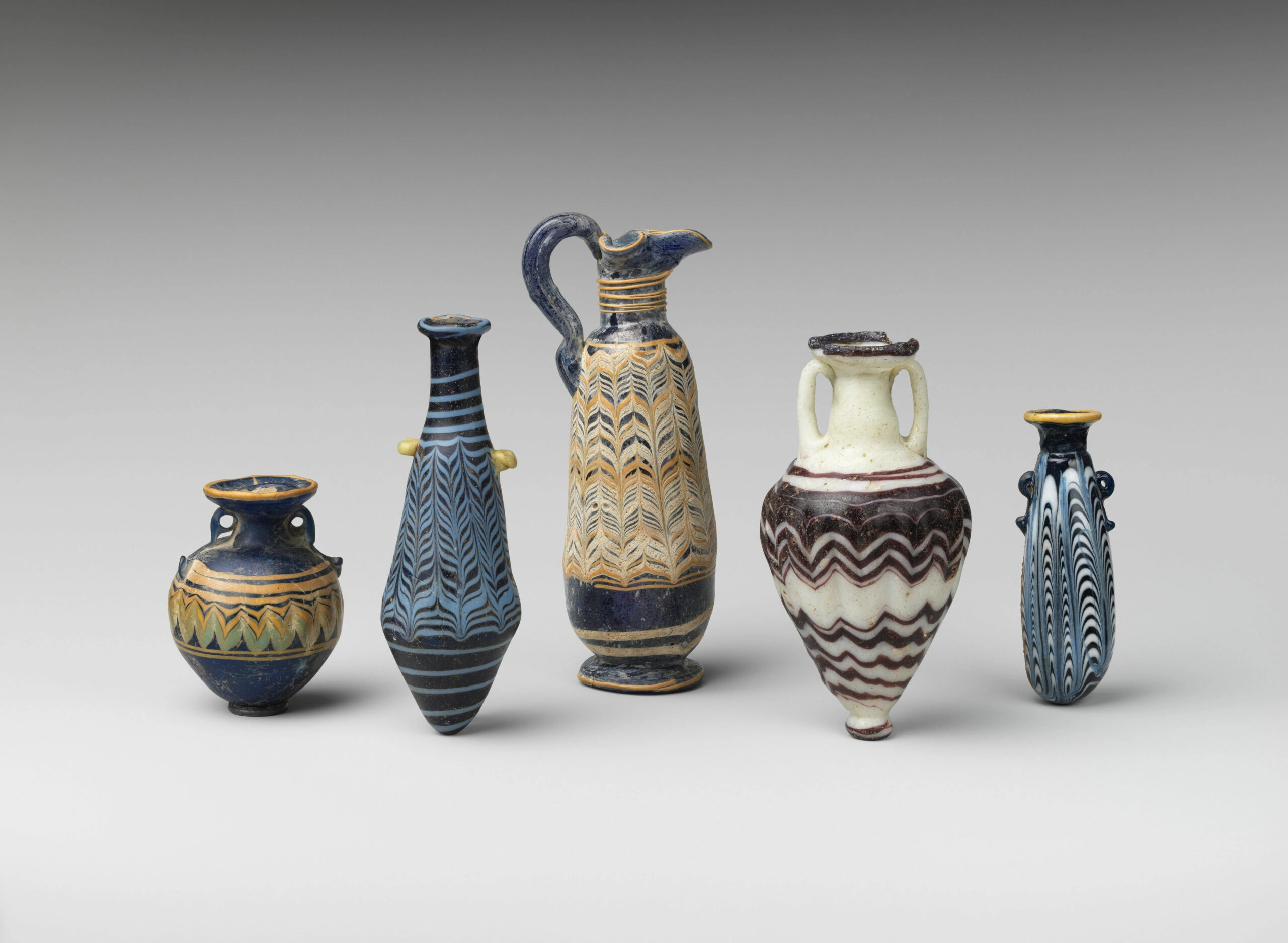
Perfume bottles began life as strictly practical objects, designed to protect volatile, precious liquids from light, air, and contamination while allowing careful, waste free application. Early glassmakers and apothecaries leaned on simple, repeatable forms—plain cylinders, rectangles, or modest bulb shapes—that were inexpensive to produce and easy to store, with any flourish usually limited to a paper label or a basic stopper. As perfumery became entangled with ideas of elegance and social standing, however, makers started to introduce subtle decorative touches: gently curved shoulders that felt more refined in the hand, colored or tinted glass that hinted at richness, and etched or molded patterns that signaled craftsmanship and made a bottle feel like more than just a container.
With the rise of modern commercial perfumery and department store retail, the stakes around visual distinction grew considerably, and the perfume bottle began to function as a kind of three dimensional logo. Fashion houses and fragrance companies realized that shape, proportion, and detailing could communicate brand identity instantly, even before a shopper read the name or smelled the scent. Certain silhouettes became strongly associated with particular houses, reinforced over time through repetition and small variations, so that a glance at a counter was enough to pick out a favorite brand from among many. Over the years, these design decisions produced truly iconic forms—bottles recognizable even with the labels turned away, defined by a specific curve of glass, a signature cap, or a distinctive balance of height and width that no competitor dared to copy too closely.
Today, these icons serve as anchors in the visual landscape of perfumery, embodying both history and continuity. New fragrances may come and go, but a house’s core bottle often remains, subtly updated yet fundamentally unchanged, acting as a tangible link between past and present. In this way, the journey from functional flask to design icon illustrates how something as humble as a container can evolve into a powerful symbol: a small, everyday object that carries brand heritage, cultural memory, and personal nostalgia in equal measure.
The Bottle as Miniature Sculpture
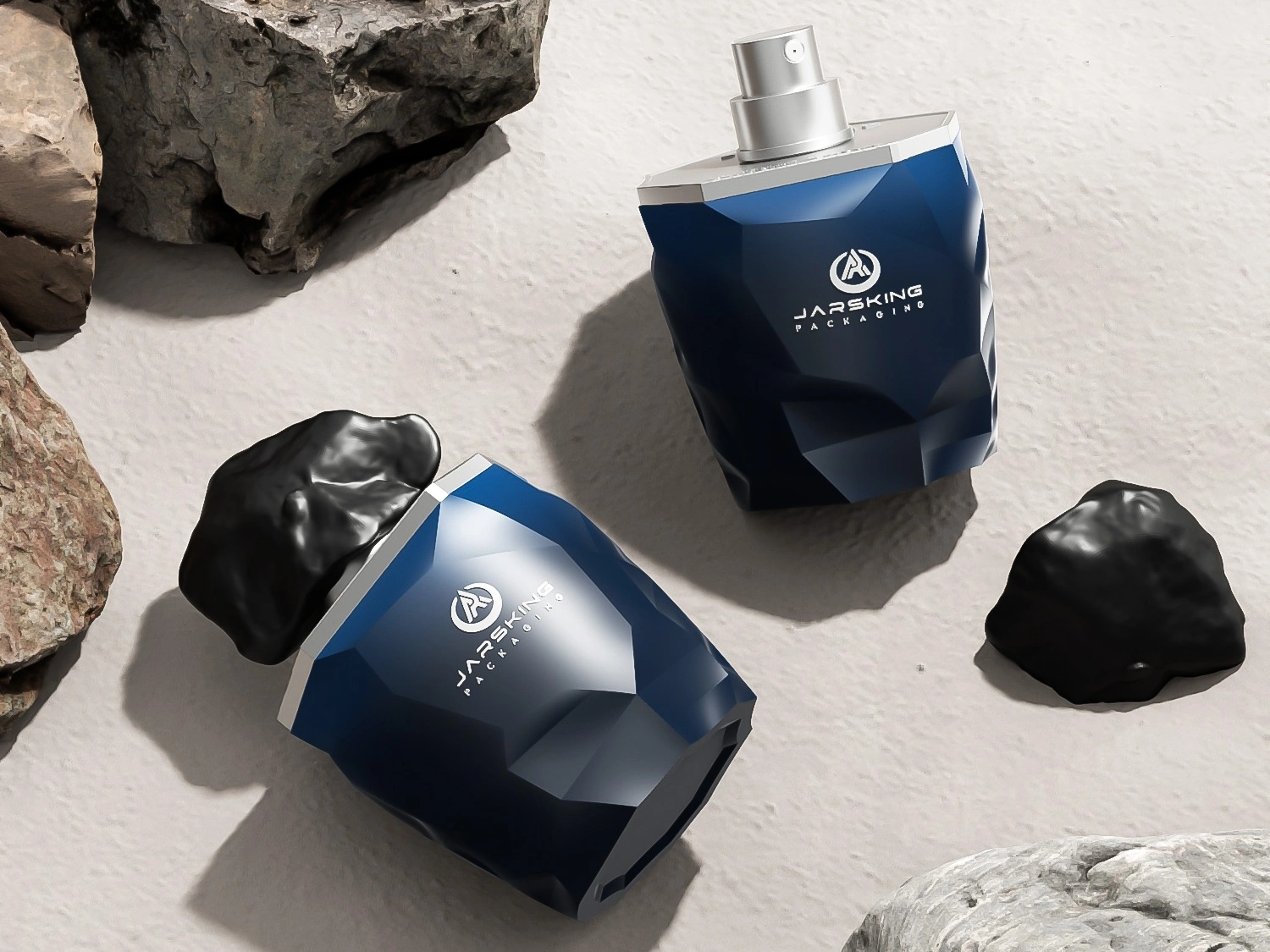
Modern perfume bottles increasingly resemble small sculptures, designed to give a visual and tactile form to something that cannot be seen: scent itself. Instead of treating packaging as a neutral container, designers think of each bottle as a three-dimensional translation of mood, character, and story, using line, volume, and material to convey ideas like mystery, softness, boldness, or nostalgia. A sharp, angular bottle with clean edges and high-contrast finishes can suggest a crisp, urban, or avant-garde fragrance, while a rounded, softly tinted bottle communicates warmth, intimacy, or comfort long before the first spritz touches skin. This sculptural quality makes bottles feel like objects worth displaying in their own right, which is why so many people line them up on vanities, shelves, and dressing tables even after the perfume inside has been used.
The more a bottle leans into this artistic identity, the easier it becomes to see it as a collectible object rather than disposable packaging. Limited editions heighten that sensation by keeping a familiar core silhouette but reimagining it through special finishes, unusual colors, artist-designed patterns, or seasonal motifs that exist only for a short time. In these cases, the appeal often rests as much on the visual twist or collaboration as on the scent itself, and a single bottle design may appear in multiple “costumes” across years. Collectors and enthusiasts are drawn to this interplay between continuity and novelty, hunting for rare or short-lived variations the way art lovers might search for prints or special editions. The story behind each piece—where it was found, why it was released, what collaboration or event inspired it—layers extra meaning onto the object, turning a simple perfume bottle into a personal artifact that carries memory, effort, and discovery along with fragrance.
Visual Language: Shape, Color, and Material
Bottle design speaks a visual language long before a single drop of fragrance is sprayed. Shape, color, and material work together to communicate who a perfume is “for” and when or how it might be worn, turning each bottle into a kind of silent storyteller. When these elements are deliberately orchestrated, a consumer can often guess whether a scent feels clean, cozy, daring, or glamorous just by looking at the flacon.
Shape as storytelling
Shape is one of the most immediate cues. Architectural geometries—sharp angles, flat planes, and crisp edges—tend to emphasize clarity, structure, and modernity, suggesting scents that feel urban, minimalist, or cutting-edge. Organic curves, by contrast, evoke softness, nature, or sensuality; round shoulders, flowing lines, and asymmetrical contours hint at skin, petals, or waves and often suit romantic or comforting fragrances. Figurative bottles shaped like bodies, hearts, shells, or other recognizable objects make the narrative more literal, telling the wearer exactly what kind of story they’re stepping into. At the opposite extreme, minimalist blocks rely on proportion and subtle detail rather than overt decoration; careful attention to height, thickness, and balance can make a simple rectangle feel either austere and intellectual or quietly luxurious. Together, these choices allow a perfume’s personality to register in seconds.
Color as mood
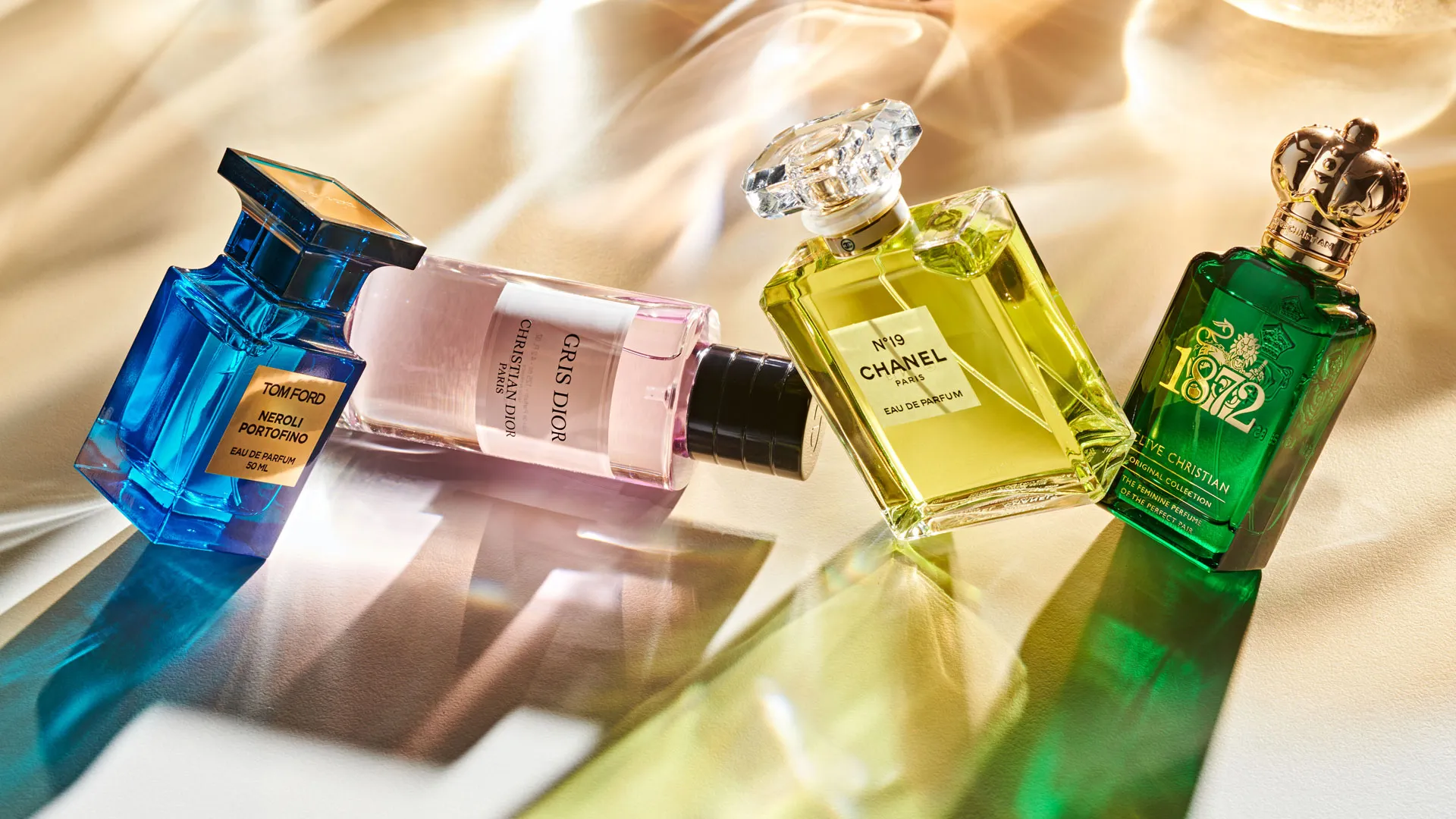
Color adds another powerful layer to this language by shaping emotional expectations at a glance. Pale, translucent hues—soft pinks, champagne golds, or whisper-light greens—tend to suggest lightness and freshness, hinting at airy florals, citrus, or clean musks. Deep ambers and browns evoke warmth, smoke, or richness, often signaling resinous, spicy, or gourmand compositions suited to evening or cooler weather. Cool blues and greens point toward aquatic, airy, or herbal scents, conjuring images of sea spray, forests, or crisp mountain air. Bright, saturated tones—electric corals, vivid purples, bold yellows—hint at playful, youthful, or energetic fragrances with fruity, sparkling, or fun-loving accords. Sometimes the liquid itself carries this color; other times tinted or lacquered glass creates the effect. In either case, color functions as a form of visual shorthand for the fragrance’s emotional tone.
Materials and finishes
Materials and finishes complete the impression, often making the difference between a bottle that feels generic and one that feels special. Thick, weighty glass conveys luxury and permanence, giving the impression of substance and care; when a bottle feels solid in the hand, the fragrance inside can seem more precious. Frosted or matte textures lend a soft, intimate character, inviting touch and suggesting comfort or subtlety. Metallic accents, enamel plaques, or polished collars introduce jewelry-like associations, aligning the bottle with bracelets, watches, or rings rather than everyday packaging. Textured surfaces, engraving, and faceting catch the light and create dynamic reflections, making the bottle visually alive as it moves or turns. Caps, though often overlooked, are crucial in this composition: they may mimic gemstones, architectural details, or sculptural forms, and when they echo or complete the silhouette of the glass below, they become an integral part of the overall design instead of a purely functional closure.
Behind the Scenes: How a Bottle Is Born
Starting with a story
The design process often begins with a narrative brief rather than a sketch, anchoring the bottle in a clear emotional world. A brand may describe the fragrance through a place, a time of day, a feeling, or even a fictional character, and the bottle is expected to crystallize that entire story into a single object that fits comfortably in the hand. This narrative acts as a compass, guiding decisions about silhouette, color, materials, and detailing so that the final design instantly “feels” like the scent it contains.
Designers translate keywords and moodboards into possible shapes, motifs, and proportions, testing how well each idea captures the intended mood. They consider not only how the bottle will look on its own, but also how it will sit alongside existing products in the brand’s lineup, ensuring it feels fresh without breaking the visual language that customers already recognize.
Collaboration across disciplines
Creating a perfume bottle is always a collaborative effort that blends creativity with technical expertise:
- Designers explore form, proportion, gesture, and overall aesthetics
- Engineers ensure structural stability, technical feasibility, and consistent production
- Packaging specialists match materials and components to budget, sourcing, and sustainability goals
- Brand and marketing teams safeguard coherence with the house’s story and visual identity
Beyond appearance, every element must work with real-world systems: existing pumps, caps, and filling equipment all impose precise technical requirements. The bottle also needs to withstand shipping, handling, and everyday use without chipping, leaking, clouding, or losing its finish, so early concepts are refined repeatedly until they meet both artistic and practical standards.
Balancing creativity and constraints
Behind every graceful bottle is a long list of constraints that shape what is possible:
- The base must be wide and stable enough not to tip easily on a counter or shelf
- The neck has to fit standard atomizers or carefully engineered custom mechanisms
- Glass thickness must be strong enough for durability but not so heavy that it becomes impractical or costly to ship
- Safety, labeling, and regulatory requirements must be met without overwhelming the design
The most successful perfume bottles hide these limitations so completely that they never cross the wearer’s mind. Instead, the object simply feels harmonious and “right” in the hand, giving the impression of effortless beauty—even though that effortlessness is the result of countless invisible decisions and compromises.
Source: Penhaligon
Signature Silhouettes and Brand Identity
Recognizability as power
For established fragrance houses, a signature bottle can be as influential as a logo or monogram because it carries the brand’s identity in three-dimensional form. When customers can recognize a silhouette instantly—even in a blurred photo or from across a store—it builds a sense of trust, continuity, and familiarity that makes every new release feel like part of an ongoing story rather than a risky unknown. A distinctive outline, the curve of the glass, or the profile of a cap becomes a kind of shorthand for the house’s values and aesthetic.
To keep this visual identity alive yet evolving, brands often reuse their signature silhouettes with small but meaningful variations. New colors, different textures, special caps, or limited-edition finishes allow variety and seasonality while preserving the underlying form that consumers already know. This balance between consistency and change helps maintain brand equity: the bottle feels new enough to be exciting but familiar enough to be reassuring and clearly “on brand.”
Story continuity across lines
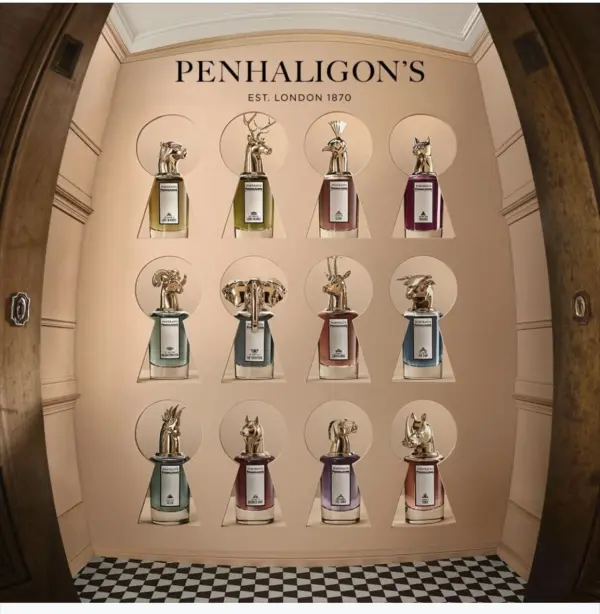
Using related bottle designs across a family of fragrances reinforces the idea that they all belong to the same creative universe. One straightforward strategy is to adopt a single core form for all scents and differentiate them through color, label design, or subtle decorative details, so each fragrance has its own identity but still reads as part of a cohesive collection. Even when shapes differ, brands may maintain a shared structural language—similar shoulders, glass weight, cap shape, or proportions—that ties different lines together visually.
Many houses also rely on “hero” bottles for their flagship scents, giving these icons the most distinctive or elaborate treatments, then designing flankers and offshoots as more understated variations on the same theme. Small shifts in finish, opacity, or accent color can signal a new mood or concentration while clearly echoing the original. Together, these strategies create a visual map of the brand’s portfolio, helping consumers intuit how fragrances relate to one another and guiding them toward bottles that feel like natural companions within their personal collection.
Social Media, Display Culture, and the “It” Bottle
Bottles as visual content
On visually driven platforms, perfume bottles have become stars in their own right, often seen long before anyone encounters the scent in person. People share photographs and short videos of their fragrance shelves, unboxings, and close up shots of glass catching the light, turning each bottle into a small performance. A distinctive silhouette, unusual color, or striking cap can make a bottle instantly recognizable in a feed crowded with images.
When a bottle photographs well, it is more likely to be reposted, saved, and discussed, which amplifies its presence far beyond traditional advertising. This kind of visibility can spark curiosity and desire even among viewers who have never smelled the fragrance, because the design alone suggests a certain mood or lifestyle. Over time, some bottles achieve “it” status purely through their visual impact, becoming aspirational objects that people want on their shelves as much for how they look as for how they smell.
Shelfies and home décor
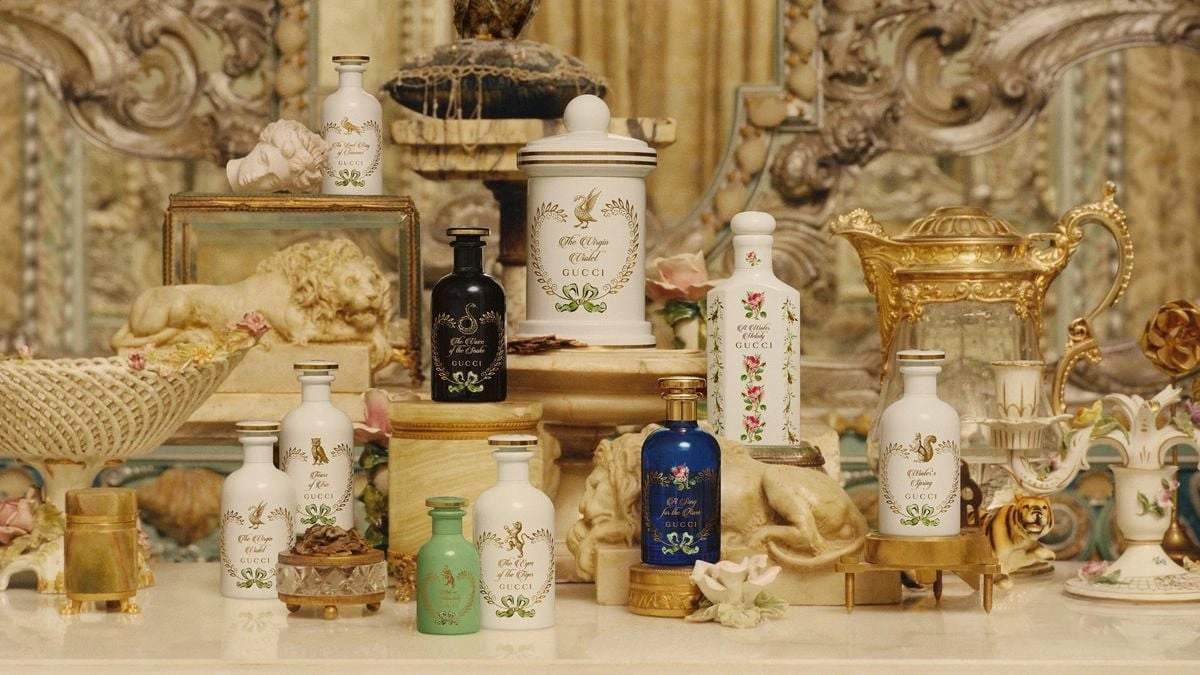
As fragrance has become more visible online, the practice of arranging perfume bottles as décor has moved into everyday life. Many people curate color coordinated shelves, pairing bottles in similar hues to create pleasing gradients or bold contrasts. Others style their fragrances alongside books, flowers, candles, or art objects, using trays, stands, or mirrors to build mini displays that feel like tiny gallery corners inside the home. Each arrangement reflects a personal sense of order and beauty, turning functional items into part of the interior landscape.
In this context, the bottle must do more than protect the formula; it has to harmonize with the overall aesthetic of a room. Minimalist spaces often favor clean, understated bottles, while maximalist or vintage-inspired interiors welcome ornate shapes and rich detailing. As a result, people sometimes choose between fragrances with similar scents based on which bottle better suits their décor, treating the flacon as both a design object and a finishing touch in their visual environment.
Luxury, Identity, and Emotional Value
Perfume as accessible luxury
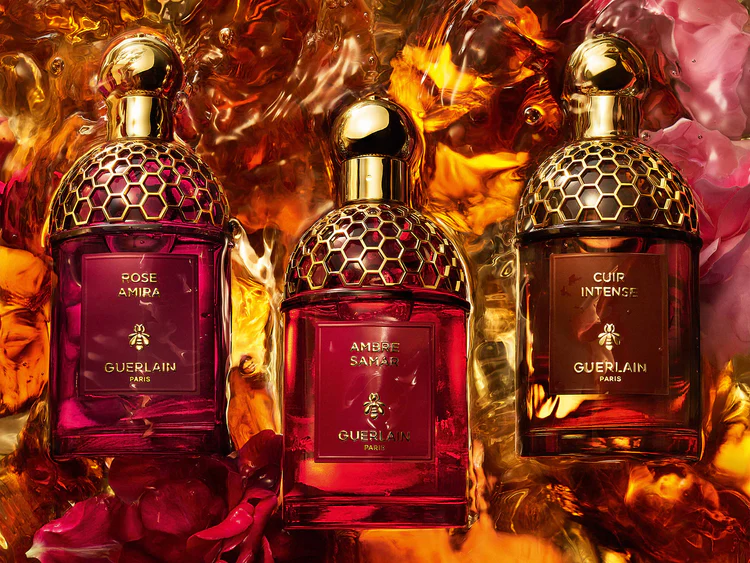
A bottle of perfume is often the most approachable way to step into a luxury brand’s world, costing far less than its handbags, clothing, or fine jewelry yet carrying the same name and aesthetic. Owning the bottle lets people participate in that narrative in a tangible way, placing a small piece of the brand’s universe on their dresser or bedside table rather than only admiring it from afar.
The perceived value of a fragrance goes well beyond the formula inside; the bottle’s weight, finish, and design strongly influence how “worth it” the purchase feels. A substantial, well-balanced bottle with carefully finished details can make a higher price seem justified, because the object itself feels like a lasting luxury rather than mere packaging that will be thrown away when the perfume is gone.
Expressing identity through design choices
The kinds of bottles someone gravitates toward often say as much about their personality as their wardrobe or home décor. Minimalist designs—clean lines, clear glass, subtle labels—may appeal to those who see themselves as understated, modern, or quietly confident, while ornate, sculptural, or highly decorated bottles often attract people who enjoy drama, romance, or bold self-expression. Some fragrance lovers deliberately seek out unusual or niche bottle designs that stand apart from mainstream trends, using them as a way to signal individuality and a more offbeat or connoisseur sensibility.
Over time, a row of bottles on a dresser can function almost like a mood board or visual diary. The collection reflects changing interests, aspirations, and phases of life: light, playful designs might dominate during one period, while darker, more architectural forms appear in another. Seeing these objects each morning can subtly shape how a person feels and presents themselves that day, whether they reach for something soft and comforting or sharp and assertive.
Memory and attachment
Because scent is so tightly linked to memory, the combination of a fragrance and its bottle often becomes a powerful anchor for specific moments and emotions. A perfume chosen for a first big job, kept in a sleek, confident-looking bottle, can forever recall the nerves and excitement of that new beginning. A “wedding day” bottle might evoke not just the scent worn during the ceremony but the look of the glass catching light on a dressing table covered in flowers. A fragrance discovered while traveling—its bottle shaped or colored in a way that echoes that place—can instantly bring back the atmosphere of that trip years later.
These layered associations help explain why people so often keep empty bottles instead of throwing them away. Discarding the glass can feel like erasing a chapter of their personal story, even if they could technically repurchase the same scent. Over time, the bottle becomes a physical symbol of relationships, life stages, and milestones, holding onto memories long after the last drop of perfume has disappeared.
How to Create a Unique Perfume Bottle for Your Brand
Creating a unique perfume bottle for your brand means turning your brand identity into a clear, memorable object that people recognize instantly. It starts with a strong concept—what your brand stands for and how the fragrance should feel—and translates that into a fitting shape, color, and material language. A distinctive silhouette and a few consistent signature details help build recognition over time, while attention to comfort, durability, cost, and sustainability ensures the bottle is as practical and long-lasting as it is beautiful.
Here is a simplified version of the section on creating a unique perfume bottle for your brand:
Start with a clear concept
Decide what your brand is about and what this fragrance should represent. Think in simple words: modern, romantic, playful, natural, etc. Write one short sentence that describes your brand and one that describes the scent as a scene or mood. Use a few key words from those sentences to guide every design decision.
Turn the story into shape
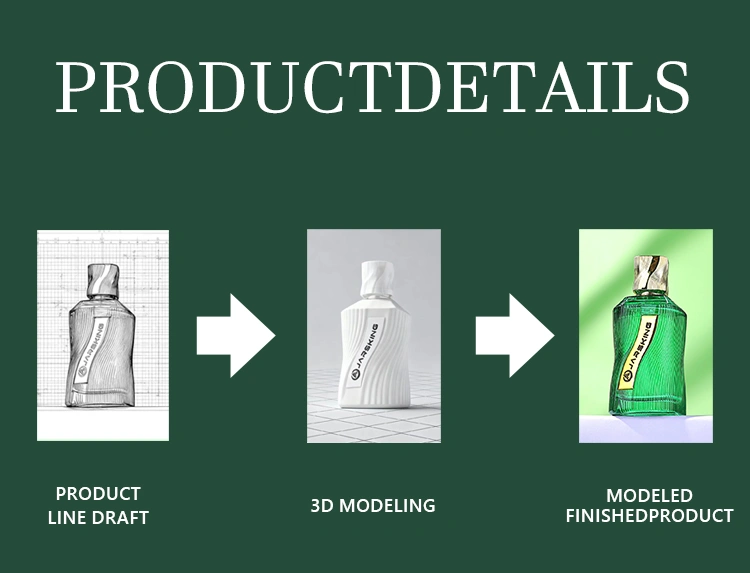
Choose a basic shape that matches your story. Sharp, straight lines feel modern and bold; soft, rounded shapes feel gentle and intimate. Sketch simple outlines and think about how the bottle will sit in someone’s hand. Make sure it looks good and feels stable and comfortable to hold.
Use color and materials wisely
Pick colors that fit the mood of the fragrance: light shades for fresh scents, deeper tones for rich or intense ones. Decide if the color will come from the liquid, the glass, or the label. Use glass as your main material, and add small touches of metal, wood, or resin in the cap or collar if you want an extra sense of quality.
Create a memorable cap and details
Treat the cap as part of the design, not just a lid. It can repeat the bottle’s shape or contrast with it to make the whole silhouette more interesting. Keep branding details simple but consistent: a small logo, a special edge, or a distinct label style can all become recognizable signatures for your brand.
Respect practical limits
Make sure your ideas can actually be produced and used. Avoid shapes that are too thin, fragile, or unstable. The bottle needs a solid base, a neck that fits standard sprayers, and enough glass thickness to survive normal handling and shipping. Plan space for required text and labels so they don’t spoil the look at the last minute.
Prototype and test
Try to see your design in real life before finalizing it. Even basic prototypes can show whether the size, weight, and feel are right. Ask a few people in your target audience to handle the bottle and tell you what it suggests to them. Use their feedback to make small improvements to shape, finish, or graphics.
Think about the future
Design your first bottle as the start of a family, not a one-off. Decide which parts must stay the same in future launches (for example, overall shape or cap style) and which parts can change (color, label, special finishes). This helps every new scent feel fresh but still clearly part of your brand.
Conclusion: The Future of Perfume Bottle Art
Perfume bottle artistry sits at the intersection of design, emotion, and daily ritual, turning something fleeting and invisible into an object that feels permanent and deeply personal. Each bottle distills a whole world—a brand’s heritage, a perfumer’s vision, a wearer’s memories—into curves of glass, the click of a cap, the way light pools in tinted liquid. What might otherwise be a quick, automatic gesture becomes a small, intentional moment: choosing a bottle, feeling its weight, seeing its reflection, then stepping into the day imbued with both scent and symbolism.
Looking ahead, this art form will only grow more layered as culture, technology, and values shift. Visual culture will keep rewarding designs that photograph beautifully and tell clear stories at a glance, ensuring that silhouettes, colors, and finishes remain central to how fragrances are discovered and desired. At the same time, rising expectations around sustainability will push brands to reconcile opulence with responsibility—experimenting with refillable systems, modular exteriors, recycled materials, and lighter forms that still feel indulgent in the hand. In parallel, digital tools may inspire new kinds of customization, limited drops, or collaborations that blur the lines between physical bottles and virtual experiences.
Through all these changes, perfume bottles will continue to serve as compact time capsules and personal emblems. Some will be remembered as icons of a particular decade; others will live on quietly on a shelf, tied to one person’s milestones and private stories. Whether sleek and minimal or ornate and baroque, whether heavy glass heirlooms or intelligent refillable designs, they will keep playing the same essential role: making the invisible visible, giving shape to emotion, and turning the everyday act of wearing scent into a ritual of beauty, memory, and self expression.

