


1. The New Allure of Solid Perfume
Solid perfume has re-emerged as one of the most intriguing formats in modern fragrance, combining a hands-on, tactile ritual with practical, everyday convenience. Instead of a liquid mist from a bottle, it comes as a balm poured into small tins or compacts and is applied with the fingertips so it softens and melts into the warmth of the skin. This physical act of application slows the moment down and makes putting on fragrance feel more deliberate, almost like a small self-care ritual woven into the day.
As more people look for cleaner ingredient lists, travel-friendly routines, and more sustainable options, solid perfumes have shifted from niche curiosity to a realistic alternative to classic sprays. The format fits easily into modern life: it is compact, won’t leak in a bag, and is simple to slip into a pocket, makeup pouch, or carry-on without worrying about liquid limits or glass breakage. Because the balm is concentrated, a small tin can last for many applications, which appeals to minimalists who prefer one small object that does a lot.
These perfumes also offer an intimate, close-to-skin way to wear scent, keeping the fragrance primarily in the wearer’s personal space rather than broadcasting it across a room. That makes them ideal for shared environments such as offices, public transport, or classrooms, where strong sprays can feel overwhelming, yet a soft, personal aura of fragrance still feels comforting and polished. By promising portability, subtlety, and often gentler, alcohol-free formulations, solid perfumes invite people to rethink what fragrance can be: not just a final spritz before leaving home, but a small, private luxury they can reach for throughout the day.
2. From Ancient Unguents to Pocket Compacts
The idea of wearing fragrance in a solid, oil-based form is far from new, and understanding that history adds depth to the modern solid perfume trend. Archaeological and textual evidence points to early perfumed balms in ancient Egypt and across the Mediterranean, where fats or beeswax were gently heated and combined with resins like myrrh and frankincense, along with aromatic woods and herbs. These rich unguents were smoothed over the body, hair, and even textiles, functioning as adornment, protection from dry climates, and a sensory bridge to the sacred in religious or funerary rituals.
In many of these early cultures, fragrance was tied to status and spirituality as much as to beauty. Scented cones of fat, for example, were sometimes depicted in Egyptian art perched atop wigs, slowly melting and releasing fragrance during banquets or ceremonies. Unguents stored in carved stone or alabaster jars were precious commodities, traded across regions and offered to deities or the deceased as symbols of care and reverence. In this sense, the idea of perfume as a tactile, close-to-the-skin experience is deeply rooted in the earliest known cosmetic traditions.
As distillation techniques advanced and perfumery knowledge spread, especially through the Islamic Golden Age and then into Renaissance Europe, the way fragrance was produced began to change. Steam distillation allowed perfumers to isolate essential oils from flowers, herbs, and spices more efficiently, leading to clearer, more concentrated aromatic ingredients. When combined with high-proof alcohol, these oils created lighter, brighter compositions that could be splashed or dabbed onto the skin, eventually evolving into familiar categories like eau de cologne and eau de parfum.
By the 18th and 19th centuries, alcohol-based liquid perfumes had become the dominant format in Europe, thanks in part to their refreshing feel, easier application, and association with luxury and modernity. Glassmaking and bottle design flourished in parallel, turning perfume flacons into objets d’art that signaled taste and status on vanities and dressing tables. Yet despite this shift in mainstream fashion, solid and semi-solid fragrances continued to coexist in quieter, more intimate forms.
Pomanders—small containers filled with aromatic materials—were worn or carried to mask unpleasant odors and, in some eras, to ward off disease. Scented sachets tucked into clothing and linens lent a gentle perfume to garments long before modern laundry products existed. In the late 19th and early 20th centuries, ornate boudoir compacts and lockets sometimes held wax-based perfumes or solid creams, allowing women to touch up their scent discreetly in public without the need for glass bottles or liquid.
What has changed in recent decades is less the basic idea of a solid fragrance and more the cultural story wrapped around it. Solid perfume is no longer seen merely as an old-fashioned relic or novelty gift; instead, it is being reframed as an innovative solution to contemporary concerns about sustainability, portability, and ingredient transparency. Modern brands emphasize waterless, alcohol-free formulas, compact and often refillable packaging, and reduced use of complex materials compared with traditional atomizers, aligning the format with eco-conscious and minimalist lifestyles.
At the same time, the intimacy and tactility that defined ancient unguents resonate strongly with today’s desire for slower, more intentional beauty rituals. To slip a small tin from a pocket, warm the balm with a fingertip, and press fragrance onto the skin is to participate in a gesture that echoes millennia of scented self-adornment, even as the surrounding aesthetics are thoroughly modern. In this way, the journey from temple oils and carved ointment jars to sleek, pocket-sized compacts shows how solid perfume continually adapts—bridging past and present while offering fragrance lovers a format that feels both nostalgically rooted and newly relevant.

3. What Exactly Is Solid Perfume?
At its core, solid perfume is a concentrated fragrance suspended in a base of waxes, butters, and oils. The base ingredients provide structure, spreadability, and skin feel, while the aromatic components supply the olfactory character that defines the perfume.
Common waxes include beeswax, candelilla, and carnauba, which give the perfume its firmness and help lock in fragrance molecules. These waxes melt close to body temperature, allowing the balm to soften under the warmth of the fingertips and release its scent on contact with skin. Butters such as shea or cocoa add creaminess and emollience, improving glide and contributing a subtle conditioning effect. Lightweight carrier oils—like jojoba, sweet almond, coconut, or sunflower—help dissolve aromatic compounds and influence how quickly the scent blooms and fades.
The fragrance portion of the formula can be made from natural essential oils, CO₂ extracts, absolutes, and resins, from carefully designed synthetic aroma chemicals, or from a combination of both. Natural materials often appeal to those seeking “botanical” or “clean” stories, while modern synthetics provide stability, consistency, and access to olfactory nuances that nature alone cannot offer.
4. Why Solid Perfume Is Having a Moment
Solid perfume is gaining attention now because it solves several modern beauty frustrations at once while fitting neatly into broader lifestyle trends. It feels gentler on the skin, is easier to carry and use discreetly, and often comes wrapped in an appealing sustainability story that resonates with today’s consumers.
Several converging preferences are driving this shift:
- Many people are increasingly wary of high-alcohol formulas because alcohol can feel drying or sensitizing, especially on already delicate or compromised skin. Solid perfumes, built on a base of oils and butters, avoid that initial “sting” and instead create a soft, cushioned texture that can double as a very light moisturizing step on pulse points.
- The format is perfectly suited to busy, mobile lives. A small tin or compact can slip easily into a pocket, clutch, gym bag, or carry-on without taking up much space or adding weight. There is no risk of shattered glass, leaking atomizers, or overspraying in a confined space, and because these balms are not pressurized liquids, they tend to sidestep some of the stricter travel rules and anxieties around carrying fragrance.
- Solid perfume also taps into a growing desire for sustainability and minimalism in beauty routines. Concentrated balms use very little product per application, so a single pan lasts a long time, and they do not rely on pumps, tubes, or complex atomizer mechanisms that mix multiple materials. Many are sold in metal or other durable, refillable cases, which allows brands to reduce packaging waste and gives users the satisfaction of reusing a beautiful object rather than discarding yet another bottle.
- On an emotional level, the format supports a “less but better” approach. Rather than a lineup of half-used bottles, a single compact can become a signature scent, a daily ritual, and a small piece of personal design all at once. That combination of practicality, sensorial pleasure, and perceived eco-friendliness is what makes solid perfume feel so timely—and why it is likely to remain part of the modern fragrance landscape.
5. Benefits on Skin, in Daily Life, and for the Planet
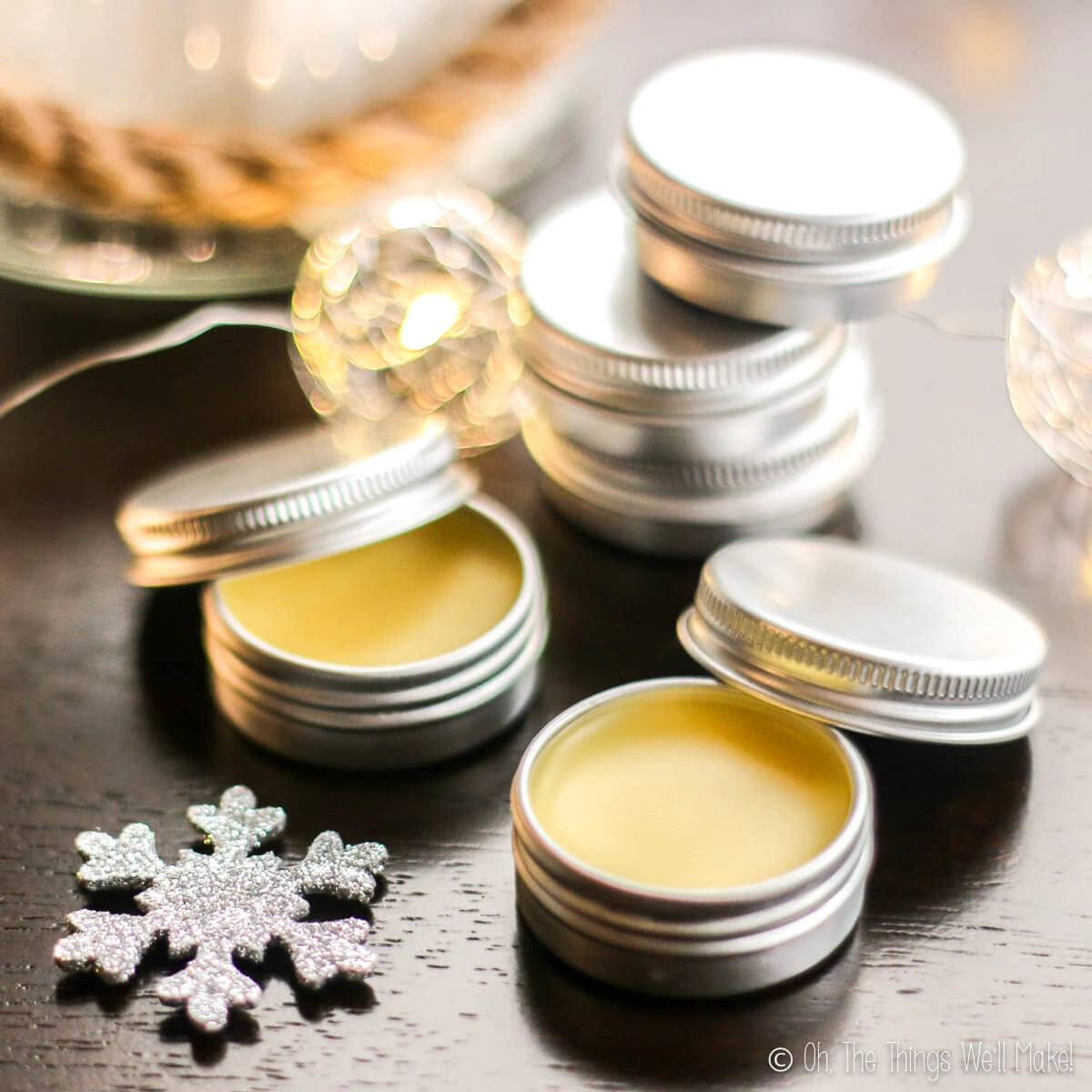
From a skin perspective, many people appreciate that solid perfumes are alcohol-free and frequently formulated with nourishing ingredients. The oils and butters in the base can help soften dry areas like wrists or elbows, and the occlusive qualities of waxes may lightly protect the skin barrier. For those with reactive skin, this can feel more comfortable than a sharp spray of ethanol-heavy fragrance, although personal sensitivity to specific fragrance ingredients remains a key consideration.
In terms of daily practicality, solid perfumes shine where precision and discretion matter. Unlike sprays, which create a mist that can travel several feet, solids allow the user to apply scent exactly where desired, in the amount desired, without scenting the entire room. This close-to-skin quality is ideal for shared workspaces, public transport, or environments where strong fragrance is discouraged.
Environmentally, the format is attractive because of its low volume and simplified packaging. A small tin of solid perfume can represent dozens or hundreds of applications in a container that uses significantly less material than a large glass bottle, metal pump, and plastic cap. Many brands use metal or paperboard packaging that can be refilled, recycled, or composted, further reducing waste compared with mixed-material atomizer systems that are difficult to disassemble.
6. Where Solid Perfume Has Limits
Despite its advantages, solid perfume is not a one-size-fits-all solution. Some users find that solids feel less projecting—that is, the scent remains closer to the body instead of creating a noticeable aura or trail. This effect is partly intentional; the waxy base keeps the fragrance on the skin rather than sending it airborne in the same way as an alcohol spray. For people who love bold, room-filling perfumes, this subtlety can be a drawback.
There are also practical considerations related to climate and storage. Because the base is wax-and butter-rich, high temperatures can cause softening or even partial melting, which may lead to texture changes or product shifting inside its pan. Very cold temperatures, on the other hand, can make the balm feel hard and less easy to pick up with fingertips until it warms slightly. Good packaging mitigates these issues, but they remain inherent to the format.
Hygiene is another consideration. Solid perfumes are usually applied with the fingers, so clean hands are essential to avoid introducing dirt or microbes into the product over time. People who prefer not to touch their face or neck with fingers during the day may find sprays more convenient, although some users simply apply solids to upper chest, wrists, or even hairline where touch feels less intrusive.
7. How to Apply Solid Perfume for Best Results
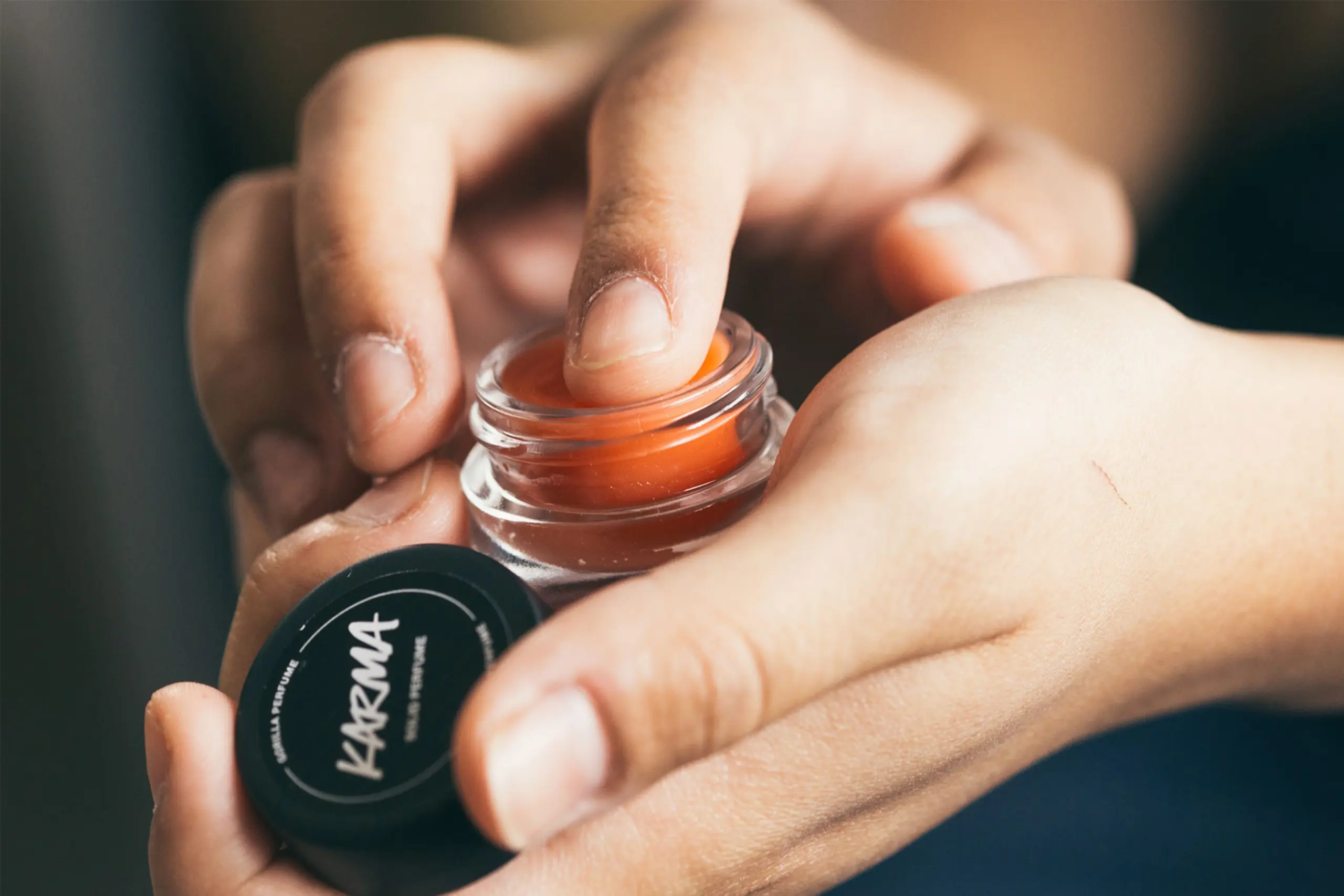
Using solid perfume is simple, but a few small techniques can dramatically improve performance. To apply, many users start by swirling a clean fingertip over the surface of the balm, allowing the warmth of the skin to soften the top layer. Once enough product has been picked up, it is dabbed or lightly massaged onto pulse points such as the wrists, inner elbows, and the sides of the neck, where blood flow and body heat help radiate the scent.
Because solids have a more intimate sillage, some people like to apply to areas that create gentle wafts of scent throughout the day: the collarbone, behind the ears, or even the ends of hair (provided the formula is not too waxy). Reapplication can be done as needed, often every few hours, and is easy to manage discreetly in a bathroom, car, or quiet corner.
Layering is another strength of solid perfumes. A solid can act as a “base coat,” with a matching or complementary spray applied over top to boost projection and complexity. Alternatively, different solids can be combined to create customized blends, such as adding a clean citrus solid over a deeper woody one to brighten it for daytime wear.
8. Inside the Packaging: Design, Materials, and Storytelling
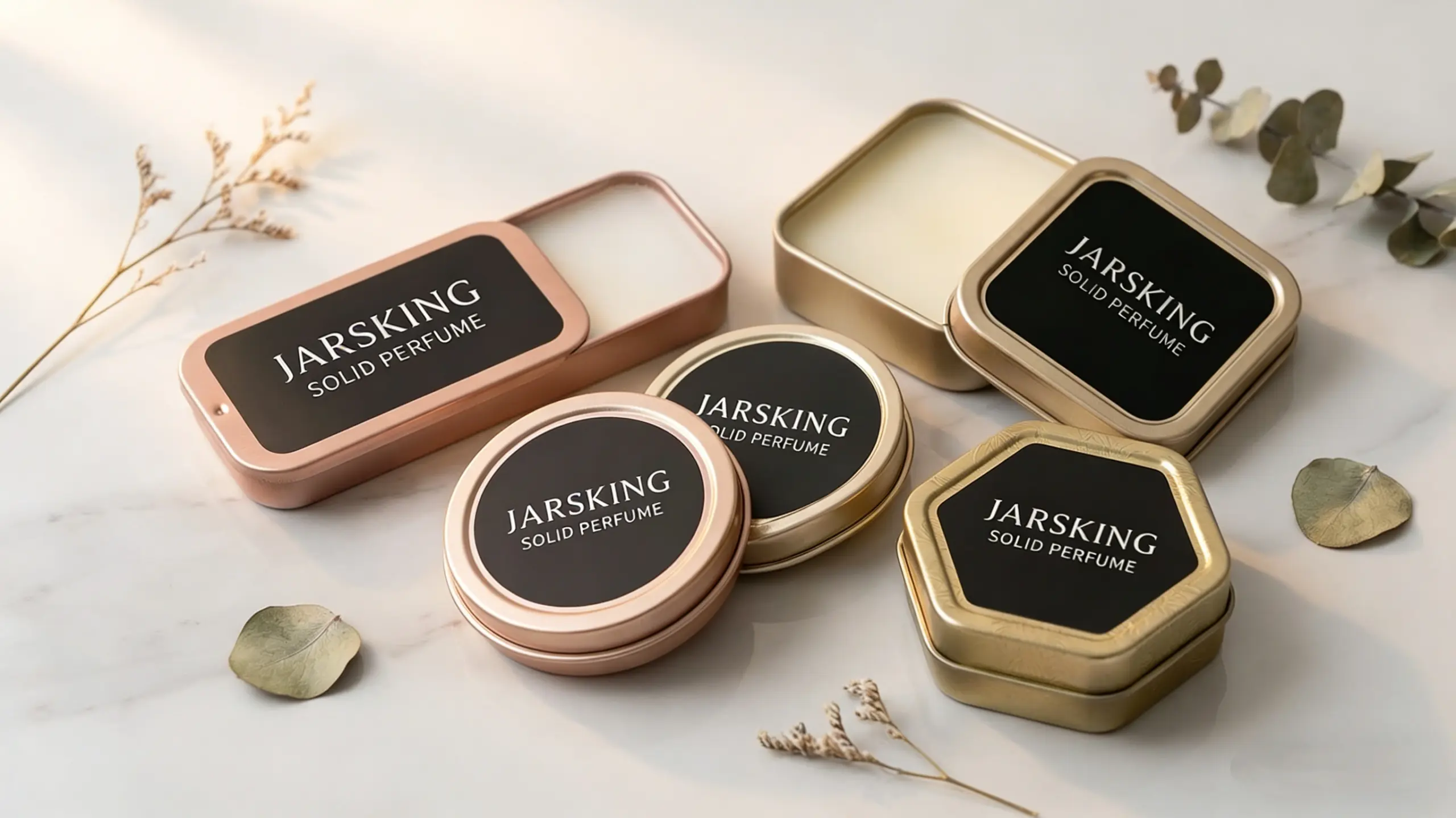
If the formula is the heart of a solid perfume, the packaging is its face and armor. Common formats include small, screw-top tins and sliding metal cases that are flat, lightweight, and virtually leak-proof. These containers fit easily into pockets and protect the balm from excessive airflow and light, helping to preserve fragrance integrity.
Other designs echo makeup compacts, sometimes including mirrors, magnets, or decorative embossing. This approach positions solid perfume as a beauty accessory on par with lip balm or pressed powder, inviting touch-ups during the day in a way that feels polished and deliberate. Refillable systems—where the inner perfume pan is removable—extend the life of the outer case, allowing consumers to replenish the scent or switch fragrances while keeping the same shell.
Material choice strongly influences both sustainability and user experience. Durable metal tins or aluminum cases are widely used and are generally recyclable in many household systems. Some brands experiment with robust paperboard or cardboard packaging, sometimes with wax coatings, to create lower-impact containers that can biodegrade or be composted if kept dry. Compared with traditional perfume bottles that combine glass, painted finishes, metal pumps, and plastic caps, these simpler formats are easier to recycle and involve fewer components overall.
Ergonomics matter: a compact that is too small may feel fiddly, while one that is too large becomes cumbersome in a small bag. Closure mechanisms—from screw-tops to snap-shut lids and magnets—must balance ease of opening with security to avoid accidental spills in pockets or purses. Inside, the surface area and depth of the balm determine how easily a finger can pick up product and how evenly it wears down with use, affecting both convenience and visual appeal over time.
Visually, packaging is a key canvas for brand storytelling. Minimalist designs rely on simple typography, color blocks, and tactile labels to signal modernity or “clean” credentials. Others draw inspiration from vintage solid perfumes, featuring ornate metalwork, hinges, or cameo-like motifs that evoke a sense of nostalgia and luxury. For some consumers, the compact itself becomes collectible; finishing a pan and refilling the case can feel like a ritual that deepens attachment to both fragrance and brand.
Caring for packaging is straightforward but important. Users are generally advised to keep their solids out of direct sun, away from radiators, and not in hot cars, particularly in warmer months. If dust or residue builds up around the rim, it can be gently wiped with a clean cloth, and the balm surface can be smoothed by lightly swiping with a clean finger or spatula. As with any cosmetic, changes in texture, color, or smell may signal that the product is past its ideal lifespan and ready to be replaced.
9. Performance, Longevity, and Projection
A common question is whether solid perfumes last as long as their liquid counterparts. The answer depends on the specific formula, the fragrance materials used, and the wearer’s skin chemistry, but solids can achieve surprisingly good longevity when well formulated. Waxes and oils hold fragrance molecules close to the skin and release them more gradually than an alcohol spray, which evaporates quickly and sends a burst of aroma into the air.
Where solids usually differ most is in projection. Because there is no high-pressure mist dispersing scent through the air, the fragrance tends to remain closer to the body, noticeable within arm’s length but less likely to flood a room. For many modern users, this subtlety is a feature, not a flaw: it suits fragrance-sensitive workplaces and personal preferences for scents that feel like a second skin rather than a public announcement.
Reapplication is also simpler with solids. A quick dab during a lunch break or before an evening event can refresh the scent without drawing attention. For those who enjoy fragrance as a daily ritual, these small touchpoints become opportunities to pause, breathe, and reconnect with a favorite aroma.
10. Safety, Sensitivity, and Ingredient Transparency
As with any fragrance product, safety and sensitivity are crucial topics. Solid perfumes often appeal to consumers seeking “natural” or “clean” options, and brands sometimes highlight the absence of parabens, phthalates, or specific synthetic ingredients. However, whether the fragrance components are natural or synthetic, they can still cause irritation or allergic reactions in susceptible individuals.
Dermatological research underscores the importance of patch-testing cosmetic products and paying attention to how the skin responds over time, especially in people with a history of fragrance allergies or eczema. Essential oils, while natural, can contain strong sensitizers and should be used within recommended concentration limits in leave-on products. Responsible solid perfume formulations respect these thresholds and rely on tested blends of aromatic materials that balance impact with tolerability.
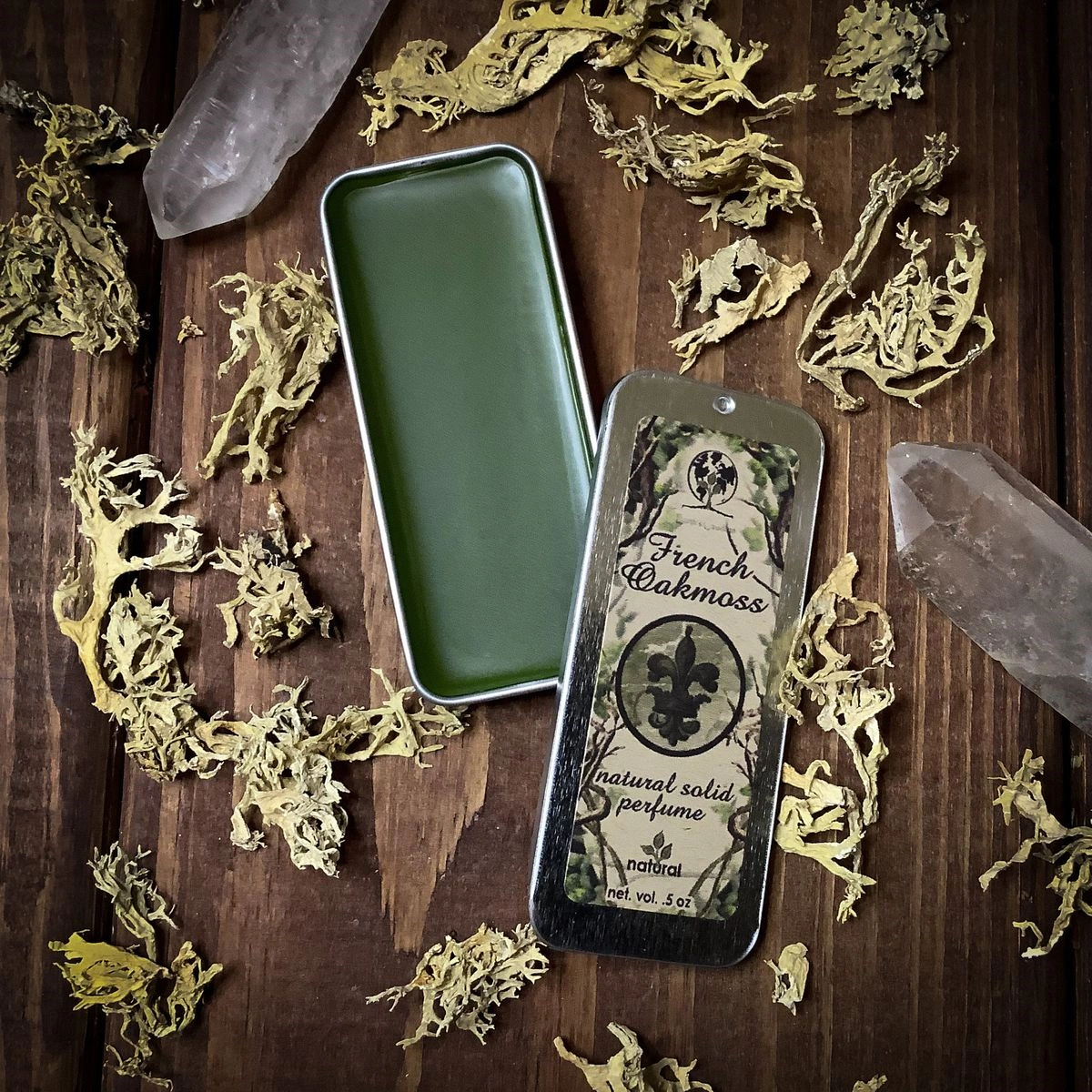
Transparency is another emerging expectation. Many artisanal and indie brands provide detailed ingredient lists and outline which components are of natural origin, which are synthetic, and which potential allergens are present. This allows consumers to make informed choices based on personal values and sensitivities, whether they prioritize vegan formulations, avoidance of certain synthetics, or minimized use of known fragrance allergens.
11. How to Choose the Right Solid Perfume
Choosing the right solid perfume is about matching scent, formula, and packaging to your body, values, and lifestyle. Thinking through each of these angles helps narrow hundreds of options down to the few that will genuinely get used and loved.
Start with scent families
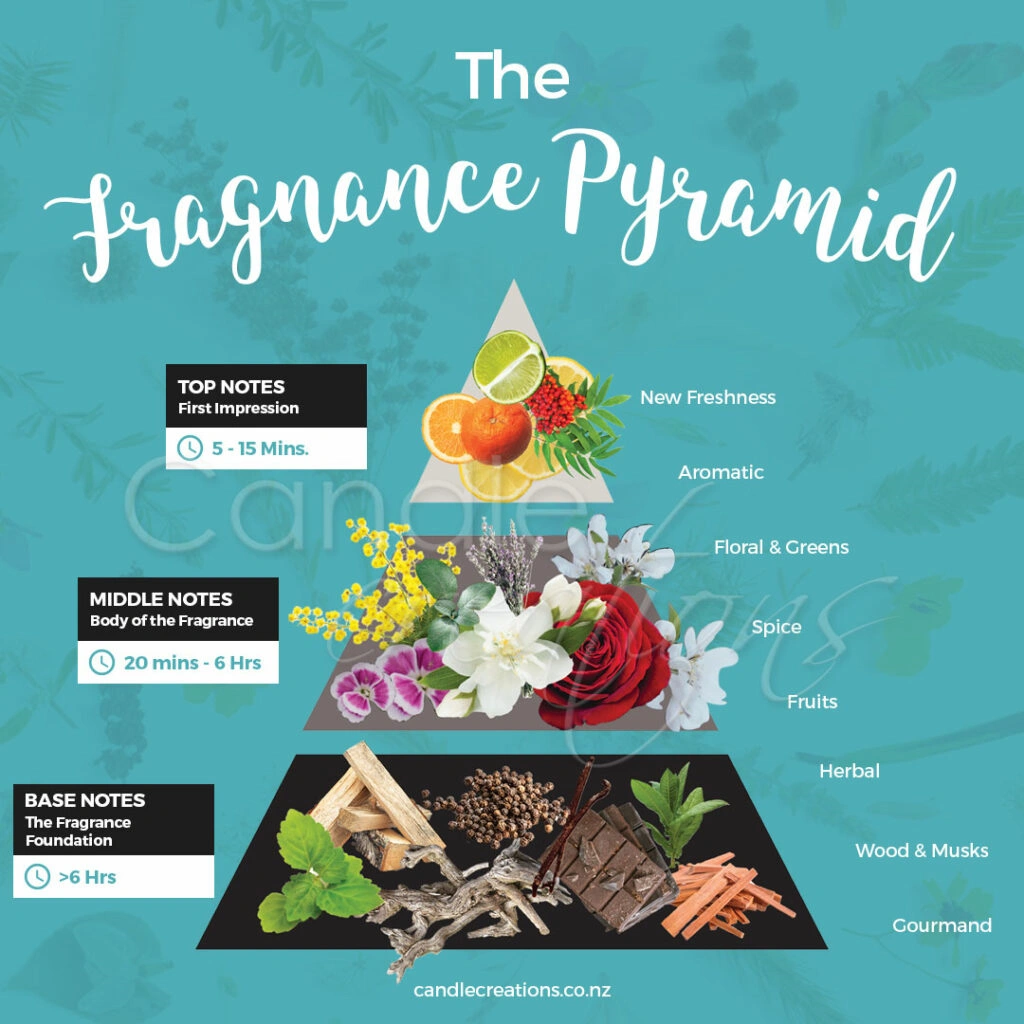
Scent families are still the most important filter, just as with traditional sprays. Some people naturally gravitate toward bright citruses, others toward soft florals, spicy orientals, woods, or sweet gourmand notes. Reading note lists and, whenever possible, testing a small amount on your own skin shows how the fragrance develops over several hours and whether it feels like a comfortable “fit” for your daily life.
Look closely at base ingredients
The base of waxes, butters, and oils will affect both comfort and ethics. Those with dry or sensitive skin may appreciate formulas rich in gentle oils and butters that feel cushioning and moisturizing on pulse points. Vegans or those avoiding animal-derived ingredients can look for beeswax-free recipes that rely instead on plant waxes such as candelilla or carnauba to provide structure.
Consider sustainability and ethics
If sustainability is a priority, packaging and brand practices matter. Minimal or refillable formats, such as metal tins or reusable compacts, reduce waste compared with complex glass bottles and pumps. Transparent sourcing claims and third-party certifications for cruelty-free or environmentally responsible practices can further indicate alignment with your values.
Match the format to your context
Where and how you plan to wear the perfume should guide the final choice. For office environments, classrooms, or other shared spaces, softer, close-to-skin solids are ideal because they create a personal scent bubble without overwhelming others. Frequent travelers might prioritize slim, sturdy packaging that resists heat, impact, and leaks in bags or pockets. If you enjoy bold evening scents, you can use a solid as a moisturizing, intimate base layer and add a matching or complementary spray on top, building a small “wardrobe” that shifts with time of day, season, and mood.
12. Solid Perfume in the Modern Fragrance Landscape
Solid perfume now occupies a distinctive niche in the wider fragrance world, bridging very old practices with very current priorities. Its roots in wax-and oil-based unguents echo some of the earliest ways people scented their bodies, yet its compact, leak-proof format speaks directly to modern concerns about portability, sustainability, and skin comfort. Instead of trying to replace liquid perfumes outright, solid fragrances expand the toolkit, offering another way to wear scent that can feel slower, more tactile, and more intentional.
For many fragrance lovers, solid perfume becomes the intimate option—a favorite worn close to the skin for workdays, travel, or quiet social settings—while bottled eau de parfum or extrait remains the go-to for occasions that call for more projection and drama. The two formats can coexist in the same wardrobe: a solid layered underneath a matching spray can add depth and longevity, or a single compact can be reserved for moments when discretion and comfort matter more than sillage. This flexibility helps solids feel less like a compromise and more like a deliberate choice tuned to context.
For minimalists and frequent travelers, a well-designed solid perfume can go even further, effectively replacing multiple bottles. One small compact can act as signature scent, daily accessory, and calming ritual: something to reach for on a plane, in a hotel, or between meetings when a quiet moment of sensory pleasure is needed. Because the format is concentrated, it is easy to carry enough fragrance for weeks in a space smaller than a typical lipstick.
From the industry side, rising expectations around ingredient transparency, ethics, and environmental impact are making solids increasingly attractive. Their waterless, low-packaging nature meshes well with efforts to reduce waste, eliminate unnecessary components like pumps and caps, and highlight responsibly sourced materials. For brands, solid perfume offers a canvas to experiment with refillable systems, innovative materials, and storytelling that emphasizes care for both skin and planet.
For wearers, the payoff is a format that is inherently efficient yet unusually versatile. With thoughtful formulation and well-considered packaging, these small balms can deliver a full-bodied, emotionally resonant fragrance experience that feels luxurious without excess. They demonstrate that perfume does not have to come in a heavy glass bottle to be modern, desirable, and deeply personal—it simply has to fit seamlessly into the way people live, move, and care for themselves today.